Primula sieboldii
E. Morren
Sakura-So
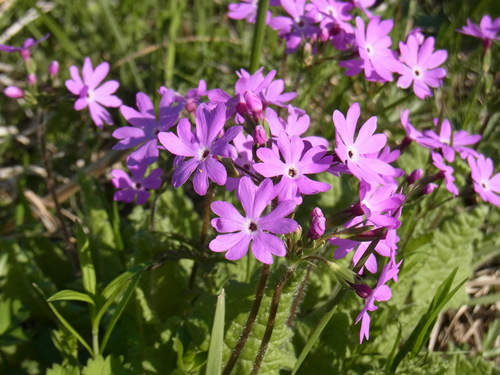
(c) nmehner, some rights reserved (CC BY-NC), uploaded by nmehner
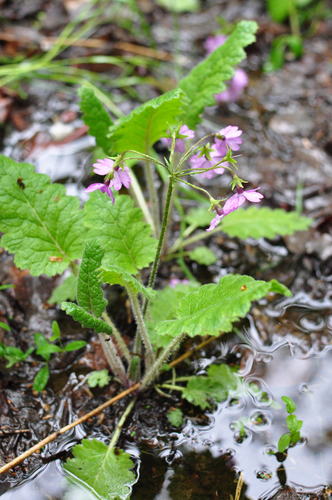
no rights reserved, uploaded by Татьяна Прозорова

(c) Юрий, some rights reserved (CC BY-NC)
What to Eat
Edible parts: Leaves
The young plant is edible when cooked.
Where to Find It
A temperate plant. In north China it grows in wet areas in forests. It suits hardiness zones 5-9.
Asia, Australia, China, Japan, Korea, Russia, Siberia, Slovenia,
How to Identify
A herb. It keeps growing from year to year. It grows 30 cm high and spreads 30-60 cm wide. It has a ring of leaves near the base. The leaves are heart shaped at the base and have coarse teeth. The flowers are white, pink or purple. They are in small heads.
How to Grow
Easily grown in a moist but well-drained fertile leafy soil in cool sun or partial shade. Grows well in heavy clay soils. There are many named forms selected for their ornamental value.
Propagation: Seed is best sown as soon as ripe in a cold frame. Stored seed can be sown in early spring in a cold frame — germination is inhibited by temperatures above 20°C. When large enough to handle, prick seedlings into individual pots and grow on in a greenhouse through their first winter. Plant out into permanent positions in late spring or early summer, after the last expected frosts. Divide in autumn, ideally every other year.
Medicinal Uses
None known
Other Uses
None known Special Uses
Wikipedia
Source ↗Primula sieboldii, the Japanese primrose, is a species of primrose that is endemic to East Asia. The species goes by common names such as Siebold's primrose, cherry blossom primrose, Japanese woodland primrose Snowflake, Geisha girl, Madam butterfly and the Japanese primrose which also applies to the related species Primula japonica. It is a recipient of the Royal Horticultural Society's Award of Garden Merit.
Notes
There are about 400 Primula species.
References (5)
- Belgique Hort. 23:97, t. 6. 1873
- Cundall, P., (ed.), 2004, Gardening Australia: flora: the gardener's bible. ABC Books. p 1083
- Hibbert, M., 2002, The Aussie Plant Finder 2002, Florilegium. p 239
- http://www.botanic-gardens-ljubljana.com/en/plants
- Plants for a Future database, The Field, Penpol, Lostwithiel, Cornwall, PL22 0NG, UK. http://www.scs.leeds.ac.uk/pfaf/