Jumellea fragrans
(Thouars) Schltr.
Bourbon tea, Faham tea
(c) Aurélien Bour, some rights reserved (CC BY-NC), uploaded by Aurélien Bour

(c) CORDENOS Thierry, some rights reserved (CC BY-NC)
What to Eat
Edible parts: Leaves - tea
A tea called 'The de Bourbon' is made from the aromatic leaves. The best flavour is obtained from leaves picked green. Carefully cut off a few leaves and let them dry in a dark and airy place. When you can smell their sweet fragrance, they are ready to use.
Where to Find It
It is a temperate plant.
Africa, Europe, France, Madagascar, Mauritius, North America, USA.
How to Identify
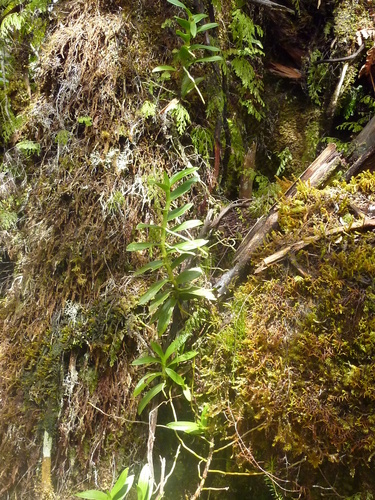
An epiphytic orchid with fragrant properties, found in temperate regions.
How to Grow
Propagation: Seed - surface sow, preferably as soon as it is ripe, and do not allow the compost to dry out. The seed of this species is extremely simple, it has a minute embryo surrounded by a single layer of protective cells. It contains very little food reserves and depends upon a symbiotic relationship with a species of fungus. The fungal hyphae invade the seed and enter the cells of the embryo. The orchid soon begins to digest the fungal tissue and this acts as a food supply for the plant until it is able to obtain nutrients from decaying material in the soil. It is best to use some of the soil that is growing around established plants in order to introduce the fungus, or to sow the seed around a plant of the same species and allow the seedlings to grow on until they are large enough to move.
Medicinal Uses
The fragrant leaves and flowers are boiled in hot water to extract its aromatic qualities. This is used to flavour rum on Reunion Island. Other uses that have fallen out of favour include digestive aid, remedy for respiratory disease, ice cream and custards. The plant's use for medicinal purposes on Mauritius is thought to be critically endangered.
Wikipedia
Source ↗Jumellea fragrans, also known as faham, is a species of orchid in the genus Jumellea. It is native to the islands of Mauritius and Réunion.
Notes
There are (140) 250 Angraecum species.
Names & Synonyms
Fahamy
References (4)
- Bircher, A. G. & Bircher, W. H., 2000, Encyclopedia of Fruit Trees and Edible Flowering Plants in Egypt and the Subtropics. AUC Press. p 28 (As Angraecum fragrans)
- Brouk, B., 1975, Plants Consumed by Man. Academic Press, London. p 354 (As Angraecum fragrans)
- Hedrick, U.P., 1919, (Ed.), Sturtevant's edible plants of the world. p 56 (As Angraecum fragrans)
- Hist. orchid. t. 54. 1822 (As Angraecum fragrans)