Pterocladia capillacea
(Gmel.) Born. et Thur.
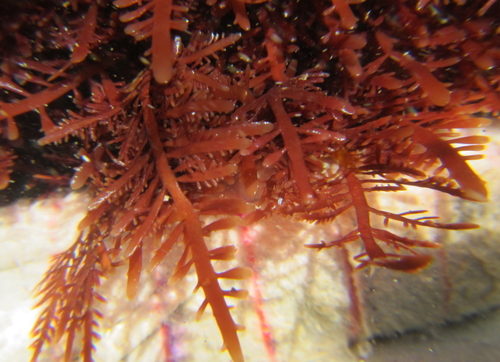
iNaturalist · cc-by-nc
(c) tangatawhenua, some rights reserved (CC BY-NC)
(c) tangatawhenua, some rights reserved (CC BY-NC)
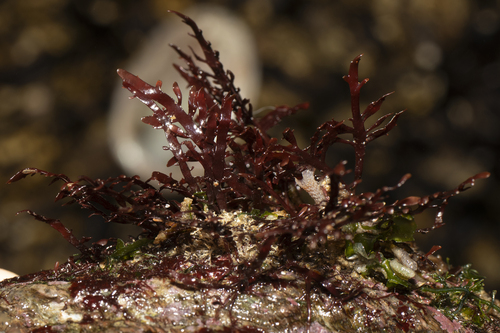
iNaturalist · cc-by-nc
(c) Kyle Eaton, some rights reserved (CC BY-NC)
(c) Kyle Eaton, some rights reserved (CC BY-NC)
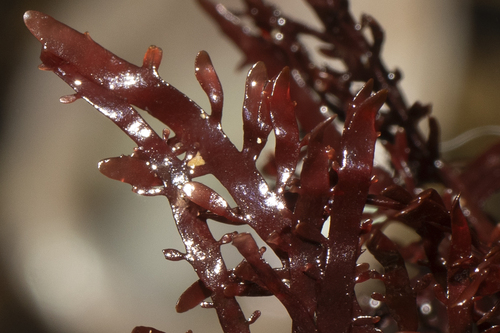
iNaturalist · cc-by-nc
(c) Kyle Eaton, some rights reserved (CC BY-NC)
(c) Kyle Eaton, some rights reserved (CC BY-NC)
What to Eat
Edible parts: Algae, Frond, Seaweed
The algae, frond, and seaweed are edible.
Where to Find It
It is a temperate plant.
Asia, Australia, Azores, China, Egypt, Europe, Korea, Mediterranean, Portugal,
Countries: Andorra, United Arab Emirates, Afghanistan, Albania, Armenia, Austria, Australia, Azerbaijan, Bosnia & Herzegovina, Bangladesh, Belgium, Bulgaria, Bahrain, Brunei, Bhutan, Belarus, Switzerland, China, Cyprus, Czechia, Germany, Denmark, Algeria, Estonia, Egypt, Spain, Finland, France, United Kingdom, Georgia, Greece, Croatia, Hungary, Indonesia, Ireland, Israel, India, Iraq, Iran, Iceland, Italy, Jordan, Japan, Kyrgyzstan, Cambodia, North Korea, South Korea, Kuwait, Kazakhstan, Laos, Lebanon, Liechtenstein, Sri Lanka, Lithuania, Luxembourg, Latvia, Libya, Morocco, Monaco, Moldova, Montenegro, North Macedonia, Myanmar, Mongolia, Malta, Maldives, Malaysia, Netherlands, Norway, Nepal, Oman, Philippines, Pakistan, Poland, Portugal, Qatar, Romania, Serbia, Russia, Saudi Arabia, Sweden, Singapore, Slovenia, Slovakia, San Marino, Syria, Thailand, Tajikistan, Timor-Leste, Turkmenistan, Tunisia, Turkey, Taiwan, Ukraine, Uzbekistan, Vietnam, Yemen
How to Identify
A red seaweed in the Pterocladiaceae family found in temperate marine environments. There are 5 Pterocladia species.
Notes
There are 5 Pterocladia species.
References (5)
- Cherry, P., et al, 2019, Risks and benefits of consuming edible seaweeds. Nutrition ReviewsVR Vol. 77(5):307–329
- Cribb, A.B. & J.W., 1976, Wild Food in Australia, Fontana. p 195
- http://www.seavegetables.com
- Xia, B., and Abbott, I.A., 1987, Edible seaweeds of China and their place in the Chinese diet. Economic Botany 41:341-53
- Zemke-White, W. L. & Ohno, M., 1999, World seaweed utilisation: An end-of-century summary. Journal of Applied Phycology 11: 369-376