Pterostylis nutans
R.Br.
Nodding greenhood, Parrot Beak Orchid

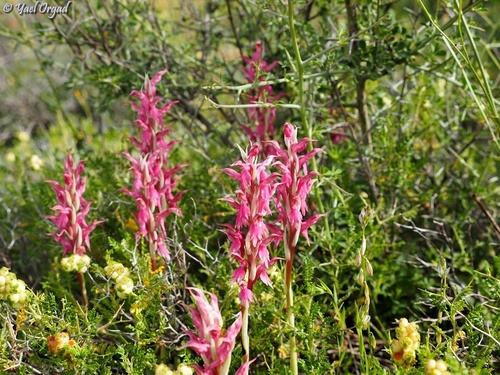
(c) cskk, some rights reserved (CC BY-NC-ND)

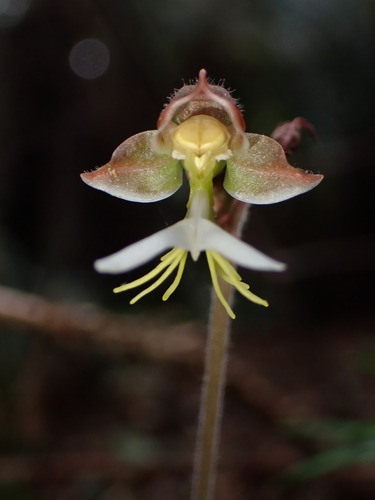
(c) Toby Eccles, some rights reserved (CC BY-NC), uploaded by Toby Eccles

(c) Attilio Demicheli, some rights reserved (CC BY-NC-SA), uploaded by Attilio Demicheli
What to Eat
Edible parts: Tuber, Root
The tubers are edible, though harvesting them kills the plant.
Where to Find It
It is a temperate plant. It grows naturally in coastal ranges. It grows in moist situations. It is mostly in shady sites amongst bracken and shrubs.
Australia*, New Zealand, Tasmania*,
How to Identify
A slender orchid. It forms a colony of plants and has tubers. At the base it has a ring of wavy edged leaves. These are oval and 4 cm long by 1.5 cm wide. There are 3-6 leaves. The flower is green and white. They occur singly on flowering stems 30 cm long. The hood is bent over. The tip is curved backwards. The flower is about 2.5 cm across.
Nutrition Score: 32/100
| Part | Moisture | kJ | kcal | Protein | Vit A | Vit C | Iron | Zinc |
|---|---|---|---|---|---|---|---|---|
| Tuber | 84.8 | 232 | 56 | 2.2 | — | — | 2.5 | 0.4 |
Wikipedia
Source ↗Pterostylis nutans, commonly known as the nodding greenhood or the parrot's beak orchid, is a species of orchid endemic to eastern Australia. Nodding greenhoods have flowers which "nod" or lean forwards strongly, have a deeply notched sinus and a curved, hairy labellum.
Production
It is easy to grow.
Notes
There are about 150 Pterostylis species. They are mostly in the Australia and Pacific area.