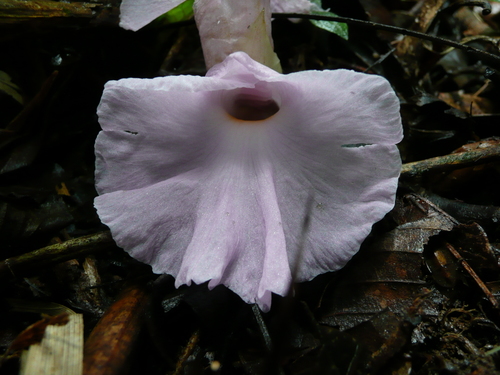
Renealmia aromatica
(Aubl.) Griseb.
Maawei
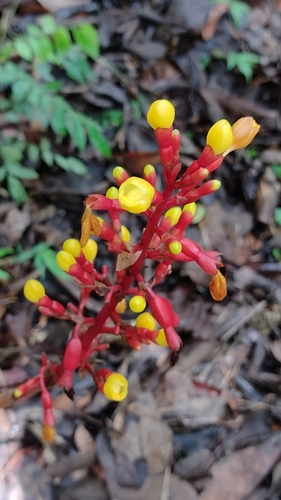
(c) Diego Manzano Méndez, some rights reserved (CC BY-NC), uploaded by Diego Manzano Méndez
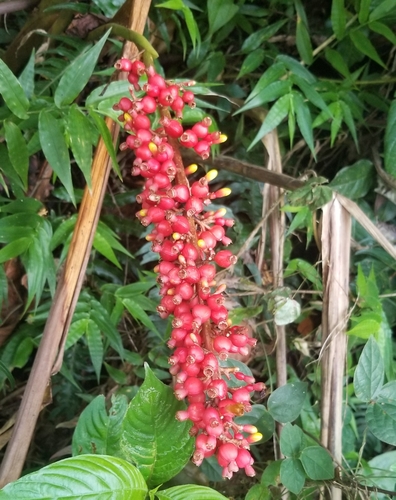
(c) gena of Jesus, some rights reserved (CC BY-NC), uploaded by gena of Jesus

(c) Omar Monzon Carmona, some rights reserved (CC BY-NC), uploaded by Omar Monzon Carmona
What to Eat
Edible parts: Fruit
The fruit is used as flavouring, typically cooked with corn.
Where to Find It
A tropical plant. It grows in moist forests.
Antilles, Belize, Bolivia, Brazil, Caribbean, Central America, Colombia, Costa Rica, Cuba, Dominican Republic, Ecuador, Guatemala, Guyana, Haiti, Honduras, Jamaica, Leeward Is., Mexico, Nicaragua, Panama, Peru, Puerto Rico, South America, Trinidad-Tobago, Venezuela, West Indies, Winward Is.,
How to Identify
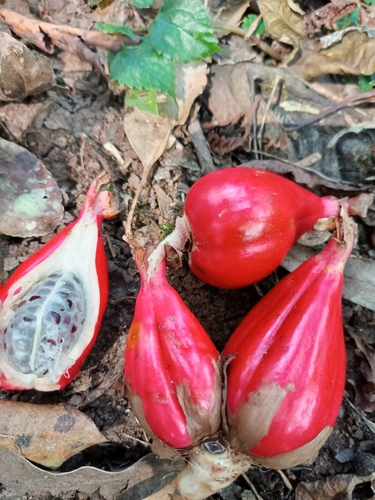
A ginger family herb. It grows 2 m tall. The flowers are at the base. The fruit are red.
Medicinal Uses
The rhizome is carminative, tonic and stomachic. It is used in the treatment of syphilis. An infusion of the rhizome is used as a wash for cleaning ulcers. The seeds are abortifacient, aromatic and emmenagogue. They are used in the treatment of flatulence accompanied by colic. The juice of the plant has been used in the treatment of haemorrhoids. The leaves are covered with fat and then applied to fractures, sprains, and surface inflammations in order to reduce them.
Names & Synonyms
Maa
References (5)
- Garcia-Serrano, C. R., & Del Monte, J. P., 2004, The Use of Tropical Forest (Agroecosystems and wild Plant harvesting) as a Source of Food in the Bribri and Cabecar Cultures in the Caribbean Coast of Costa Rica. Economic Botany 58(1) pp 58-71
- Hazlett, D. L., 1986, Ethnobotanical Observations from Cabecar and Guaymi Settlements in Central America. Economic Botany 40(3): 339-352
- Kew Plants of the World Online
- Roa, J. A. G. & Boada, D. S. G., 2018, Fundación para el Fortalecimiento de la Fruticultura y Plantas Alimenticias no Convencionales en Colombia.
- Yuncker, T.G., 1940, Flora of the Aguan Valley and the coastal regions near La Ceiba, Honduras. Botany Series, Field Museum of Natural History (9) 4