Garcinia aristata
(Griseb.) Borhidi
Cuban mangosteen
ClusiaceaeFruit
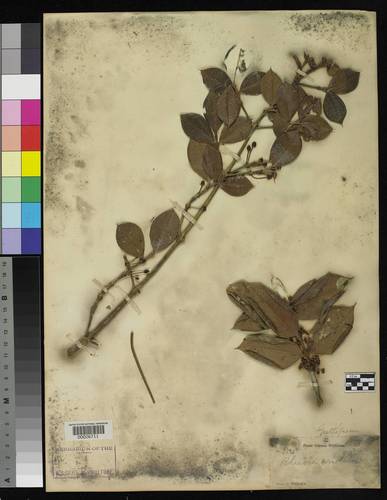
iNaturalist · cc-by-nc-sa
(c) Smithsonian Institution, National Museum of Natural History, Department of Botany, some rights reserved (CC BY-NC-SA)
(c) Smithsonian Institution, National Museum of Natural History, Department of Botany, some rights reserved (CC BY-NC-SA)

wikimedia · cc-by-sa
Wikimedia Commons - Christian Pirkl
Wikimedia Commons - Christian Pirkl

wikimedia · cc-by-sa
Wikimedia Commons - TopTropicals.com
Wikimedia Commons - TopTropicals.com
What to Eat
Edible parts: Fruit
The fruit is eaten fresh.
Where to Find It
A tropical plant. It is cold hardy down to 0°C. It can tolerate salty conditions. It suits lime soils.
Central America, Cuba, Dominican Republic, Haiti, West Indies,
Countries: Antigua & Barbuda, Barbados, Bahamas, Belize, Costa Rica, Cuba, Dominica, Dominican Republic, Grenada, Guatemala, Honduras, Haiti, Jamaica, St Kitts & Nevis, St Lucia, Nicaragua, Panama, Puerto Rico, El Salvador, Trinidad & Tobago, St Vincent
How to Identify
A small tree. The leaves are dark and glossy with a hard spiny tip. The fruit are small and yellow. They have a white slightly sweet pulp. There are 1 or 2 large seeds.
How to Grow
Plants can be grown from seeds.
Wikipedia
Source ↗Garcinia aristata is a species of flowering plant in the family Clusiaceae. It is native to Cuba, and possibly Hispaniola and Puerto Rico. It is threatened by habitat loss.
Production
It is slow growing.
Notes
Many Reedia has an edible aril or fleshy layer around the seeds.
Names & Synonyms
Rheedia aristata Griseb.
References (4)
- Cat. pl. Cub. 38. 1866
- Huxley, A., ed. 1992. The new Royal Horticultural Society dictionary of gardening
- McLaughlin, J., Woody and Herbaceus Plants Native to Haiti. University of Florida. p 8
- www.crfg.org/fg/xref/xref-r.html#rheedia_aristata (As Rheedia aristata)


