Rheedia lateriflora
Linn.
Bolivian mangosteen, Wild Mammee
ClusiaceaeFruit
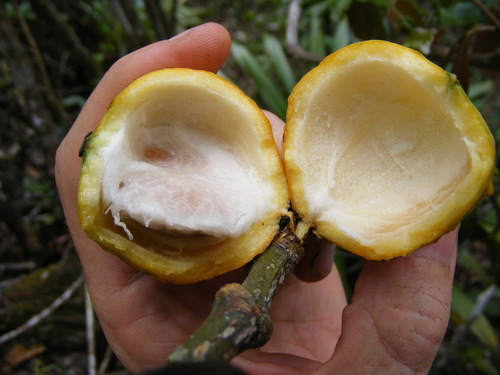
iNaturalist · cc-by-nc
(c) Alan R. Franck, some rights reserved (CC BY-NC)
(c) Alan R. Franck, some rights reserved (CC BY-NC)
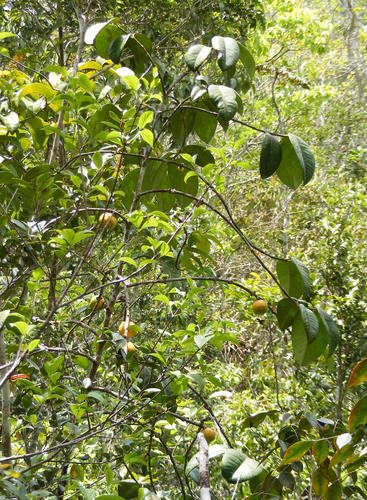
iNaturalist · cc-by-nc
(c) Alan R. Franck, some rights reserved (CC BY-NC)
(c) Alan R. Franck, some rights reserved (CC BY-NC)
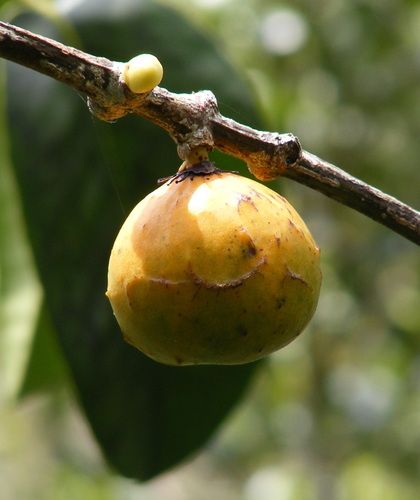
iNaturalist · cc-by-nc
(c) Alan R. Franck, some rights reserved (CC BY-NC)
(c) Alan R. Franck, some rights reserved (CC BY-NC)
What to Eat
Edible parts: Fruit
The fruit is eaten fresh.
Where to Find It
A tropical plant. It grows in tropical America.
Antilles, Asia, Bolivia, Central America, Dominican Republic, Haiti, Panama, South America, Sri Lanka, West Indies,
Countries: United Arab Emirates, Afghanistan, Antigua & Barbuda, Armenia, Argentina, Azerbaijan, Barbados, Bangladesh, Bahrain, Brunei, Bolivia, Brazil, Bahamas, Bhutan, Belize, Chile, China, Colombia, Costa Rica, Cuba, Dominica, Dominican Republic, Ecuador, Grenada, Georgia, French Guiana, Guatemala, Guyana, Honduras, Haiti, Indonesia, Israel, India, Iraq, Iran, Jamaica, Jordan, Japan, Kyrgyzstan, Cambodia, St Kitts & Nevis, North Korea, South Korea, Kuwait, Kazakhstan, Laos, Lebanon, St Lucia, Sri Lanka, Myanmar, Mongolia, Maldives, Malaysia, Nicaragua, Nepal, Oman, Panama, Peru, Philippines, Pakistan, Puerto Rico, Paraguay, Qatar, Saudi Arabia, Singapore, Suriname, El Salvador, Syria, Thailand, Tajikistan, Timor-Leste, Turkmenistan, Turkey, Trinidad & Tobago, Taiwan, Uruguay, Uzbekistan, St Vincent, Venezuela, Vietnam, Yemen
How to Identify
A small tree. The fruit is medium sized with a firm yellow rind. It is from 3-12 cm long. It has a soft white sub-acid pulp. There are 1-2 seeds.
Other Information
The fruit are eaten especially by children.
Names & Synonyms
Mammea humilis VahlMammea humilis var. plumieri Griseb.Mammea humilis var. vahlii Griseb.Rheedia sessiliflora Planch. ex VesqueRheedia sieberi Choisy
References (6)
- Altschul, S.V.R., 1973, Drugs and Foods from Little-known Plants. Notes in Harvard University Herbaria. Harvard Univ. Press. Massachusetts. no. 2866
- Hedrick, U.P., 1919, (Ed.), Sturtevant's edible plants of the world. p 556
- Kermath, B. M., et al, 2014, Food Plants in the Americas: A survey of the domesticated, cultivated and wild plants used for Human food in North, Central and South America and the Caribbean. On line draft. p 741
- Macmillan, H.F. (Revised Barlow, H.S., et al) 1991, Tropical Planting and Gardening. Sixth edition. Malayan Nature Society. Kuala Lumpur. p 307
- Martin, F. W., et al, 1987, Perennial Edible Fruits of the Tropics. USDA Handbook 642 p 96
- Sp. pl. 2:1193. 1753 - non Garcinia lateriflora Blume (1825)


