Ribes rubrum
L. pro parte sense Jancz.
Red currant

(c) Grzegorz Grzejszczak, some rights reserved (CC BY-SA), uploaded by Grzegorz Grzejszczak

amama

(c) Dan Mullen, some rights reserved (CC BY-NC-ND)
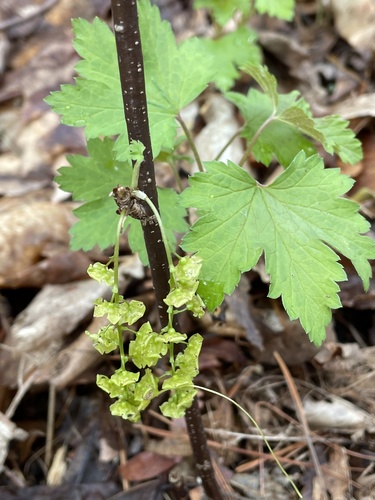
(c) Joe MacIndewar, some rights reserved (CC BY-NC)

(c) Joe MacIndewar, some rights reserved (CC BY-NC)

(c) Joe MacIndewar, some rights reserved (CC BY-NC)
What to Eat
Edible parts: Fruit, Leaves - tea, Twigs - flavouring
The fruit can be eaten raw or cooked. It has a pleasant acid flavour and can be eaten straight from the bush, though it is more often used cooked in pies and jams. There are rather a lot of seeds in each berry.
Known Hazards
Where to Find It
It is a temperate plant. It needs light well-drained soil. It requires full sunlight and shelter from wind. It suits hardiness zones 3-9. In Hobart Botanical gardens as Ribes sativum.
Andorra, Argentina, Asia, Australia, Belgium, Britain, Canada, Caucasus, Central America, Central Asia, China, Denmark, Europe, Falklands, Finland, France, Georgia, Germany, Haiti, Hungary, India, Ireland, Italy, Latvia, Lithuania, Luxembourg, Mediterranean, Mexico, Mongolia, Netherlands, North America, Norway, Russia, Scandinavia, Serbia, Siberia, Slovakia, Spain, Sweden, Switzerland, Tajikistan, Tasmania, Turkey, Türkiye, Ukraine, USA, West Indies,
How to Identify
A small bushy shrub. It grows 1.5 m tall. It spreads 1.5-2 m wide. It loses its leaves during the year. The stems are smooth. The leaves have 3-5 lobes. They are 10 cm across. They can be downy underneath. The flowers are green with some red colouring. They can be upright or hang down. The fruit allow light through.
Nutrition Score: 31/100
| Part | Moisture | kJ | kcal | Protein | Vit A | Vit C | Iron | Zinc |
|---|---|---|---|---|---|---|---|---|
| Fruit raw | 82.8 | 89 | 21 | 1.1 | 70 | 40 | 1.2 | 0.2 |
| Fruit stewed | 85.3 | 76 | 18 | 0.9 | 60 | 31 | 1.2 | — |
How to Grow
Easily grown in a moisture retentive but well-drained loamy soil of at least moderate quality. Plants are quite tolerant of shade, even succeeding on a north-facing wall, though they do not fruit so well in such a position. Prefers a pH in the range 5.5 to 6. Hardy to about -20°c. Red currants are often cultivated in temperate zones for their edible fruit, there are some named varieties, including forms with white fruits. Most cultivars are self-fertile and set a good crop on their own. The fruit is produced at the base of one-year old and older wood, plants start to fruit at 3 - 4 years from seed. This is an aggregate species comprising R. spicatum and R. rubrum. There is some confusion in nomenclature with some botanists only recognising 2 species, R. silvestre. (syn R. sativum) and R. spicatum (syn R. rubrum). Plants can harbour a stage of white pine blister rust, so should not be grown in the vicinity of pine trees. Plants in this genus are notably susceptible to honey fungus.
Propagation: Seed is best sown as soon as it is ripe in autumn in a cold frame. Stored seed requires 3 months of cold stratification at between 0 and 5°c and should be sown as early in the year as possible. Under normal storage conditions seed can remain viable for 17 years or more. Prick out seedlings into individual pots when large enough to handle and grow on in a cold frame for their first winter, planting out in late spring the following year. Take cuttings of half-ripe wood, 10–15cm with a heel, in July or August in a frame. Cuttings of mature wood of the current year's growth, preferably with a heel of the previous year's growth, can be taken November to February in a cold frame or sheltered bed outdoors.
Medicinal Uses
The fruit is antiscorbutic, aperient, depurative, digestive, diuretic, laxative, refrigerant, and sialagogue. The leaves contain the toxin hydrogen cyanide. A concoction of the leaves is used externally to relieve rheumatic symptoms, and they are also applied in poultices to relieve sprains or reduce the pain of dislocations.
Other Uses
A yellow dye is obtained from the leaves. A black dye is obtained from the fruit. The fruit is used cosmetically in face-masks for firming up tired and lifeless skin.
Wikipedia
Source ↗Deciduous shrub reaching 1.2 m tall. Flowers April to May with seeds ripening July to August. Self-fertile, bee-pollinated hermaphrodite. Grows in light sandy, medium loamy, or heavy clay soils with good drainage; tolerates mildly acid to basic pH. Thrives in moist soil and adapts to semi-shade or full sun.
Production
Fruit are produced after about 2 years.
Other Information
It is widely cultivated.
Notes
Fruit are rich in Vitamin C. There are about 150 Ribes species.
Names & Synonyms
Aalbes, Aka fusa suguri, Corinto, Dak, Firenk uzumu, Groseilla rouge, Grosella roja, Kastilez, Kinkolia, Kvasnice, Large fruited cherry currants, Nordic currant, Phulanch, Piros ribizli, Ribes rosso, Rips, Ru hong cu li, Vad ribizli, White currant
References (50)
- Ambasta S.P. (Ed.), 2000, The Useful Plants of India. CSIR India. p 526
- Beckstrom-Sternberg, Stephen M., and James A. Duke. "The Foodplant Database." http://probe.nalusda.gov:8300/cgi-bin/browse/foodplantdb.(ACEDB version 4.0 - data version July 1994) (As Ribes sativum)
- Bianchini, F., Corbetta, F., and Pistoia, M., 1975, Fruits of the Earth. Cassell. p 156
- Bodkin, F., 1991, Encyclopedia Botanica. Cornstalk publishing, p 883
- Bussman, R. W., et al, 2021, Unity in diversity—food plants and fungi of Sakartvelo (Republic of Georgia), Caucasus. Journal of Ethnobiology and Ethnomedicine (2021) 17:72 p 9
- Chamorro, M. F., & Ladio, A., 2020, Native and exotic plants with edible fleshy fruits utilized in Patagonia and their role as sources of local functional foods. BMC Complementary Medicine and Therapies. 20:155
- Cheifetz, A., (ed), 1999, 500 popular vegetables, herbs, fruits and nuts for Australian Gardeners. Random House p 241 (As Ribes silvestre)
- Crate, S. A., 2008, "Eating Hay": The Ecology, Economy and Culture of Viliui Sakha Smallholders of Northeastern Siberia. Human Ecology 36:161-174
- Cundall, P., (ed.), 2004, Gardening Australia: flora: the gardener's bible. ABC Books. p 1207
- Denes, A., et al, 2012, Wild plants used for food by Hungarian ethnic groups living in the Carpathian Basin. Acta Societatis Botanicorum Poloniae 81 (4): 381-396
- Ertug, F, Yenen Bitkiler. Resimli Türkiye Florası -I- Flora of Turkey - Ethnobotany supplement
- Facciola, S., 1998, Cornucopia 2: a Source Book of Edible Plants. Kampong Publications, p 121 (As Ribes sativum)
- Flora of China @ efloras.org Volume 8
- Flowerdew, B., 2000, Complete Fruit Book. Kyle Cathie Ltd., London. p 70 (As Ribes sativum)
- Flowerdew, B., 2000, Complete Fruit Book. Kyle Cathie Ltd., London. p 70
- Girard, N. J., 2020, Sustainable Foraging of Wild Edible Plants in Norway. A Biocultural Approach. M. Sc. thesis Norwegian University. p 131
- Glowinski, L., 1999, The Complete Book of Fruit Growing in Australia. Lothian. p 171
- Glowinski, L., 1999, The Complete Book of Fruit Growing in Australia. Lothian. p 171 (As Ribes sativum)
- Gouldstone, S., 1983, Growing your own Food-bearing Plants in Australia. Macmillan p 94
- Hedrick, U.P., 1919, (Ed.), Sturtevant's edible plants of the world. p 565
- Heywood, V. H. & Zohary, D.,1995, A Catalogue of the Wild Relatives of Cultivated Plants Native to Europe. Flora Mediterranea 5 - 1995, p 392
- Hibbert, M., 2002, The Aussie Plant Finder 2002, Florilegium. p 252
- Hibbert, M., 2002, The Aussie Plant Finder 2002, Florilegium. p 252 (As Ribes sativum)
- https://en.wikipedia.org/wiki/List of wild edible plants in Mongolian cuisine
- John, L., & Stevenson, V., 1979, The Complete Book of Fruit. Angus & Robertson p 251 (As Ribes sativum)
- John, L., & Stevenson, V., 1979, The Complete Book of Fruit. Angus & Robertson p 251
- Keep, E., 1979, Currants, in Simmonds N.W.,(ed), Crop Plant Evolution. Longmans. London. p 145
- Keep, E., 1979, Currants, in Simmonds N.W.,(ed), Crop Plant Evolution. Longmans. London. p 145 (As Ribes sativum)
- Kiple, K.F. & Ornelas, K.C., (eds), 2000, The Cambridge World History of Food. CUP p 1766 (As Ribes sativum)
- Kiple, K.F. & Ornelas, K.C., (eds), 2000, The Cambridge World History of Food. CUP p 1766
- Kremer, B.P., 1995, Shrubs in the Wild and in Gardens. Barrons. p 142
- Lazarides, M. & Hince, B., 1993, Handbook of Economic Plants of Australia, CSIRO. p 205
- Luczaj, L., 2012, Ethnobotanical review of wild edible plants of Slovakia. Acta Societatis Botanicorum Poloniae 81(4):245-255
- Mabey, R., 1973, Food for Free. A Guide to the edible wild plants of Britain, Collins. p 175
- Moerman, D. F., 2010, Native American Ethnobotany. Timber Press. p 480
- Plants for a Future database, The Field, Penpol, Lostwithiel, Cornwall, PL22 0NG, UK. http://www.scs.leeds.ac.uk/pfaf/
- Plants for a Future database, The Field, Penpol, Lostwithiel, Cornwall, PL22 0NG, UK. http://www.scs.leeds.ac.uk/pfaf/ (As Ribes sativum)
- Pruse, B., et al, 2021, Active Wild Food Practices among Culturally Diverse Groups in the 21st Century across Latgale, Latvia. Biology 2021, 10, 551.
- Segura, S., et al, 2018, The edible fruit species in Mexico. Genet Resour Crop Evol (2018) 65:1767–1793
- Singh, H.B., Arora R.K.,1978, Wild edible Plants of India. Indian Council of Agricultural Research, New Delhi. p 70
- Small, E., 2009, Top 100 Food Plants. The world's most important culinary crops. NRC Research Press. p 244
- Sp. pl. 1:200. 1753
- Tardio, J., et al, Ethnobotanical review of wild edible plants in Spain. Botanical J. Linnean Soc. 152 (2006), 27-71
- Upson, R., & Lewis R., 2014, Updated Vascular Plant Checklist and Atlas for the Falkland Islands. Falklands Conservation and Kew.
- USDA, ARS, National Genetic Resources Program. Germplasm Resources Information Network - (GRIN). [Online Database] National Germplasm Resources Laboratory, Beltsville, Maryland. Available: www.ars-grin.gov/cgi-bin/npgs/html/econ.pl (10 April 2000)
- van Wyk, B., 2005, Food Plants of the World. An illustrated guide. Timber press. p 322
- van Wyk, B., 2005, Food Plants of the World. An illustrated guide. Timber press. p 322 (As Ribes sativum)
- Vorstenbosch, T., et al, 2017, Famine food of vegetal origin consumed in the Netherlands during World War II. Journal of Ethnobiology and Ethnomedicine (2017) 13:63
- Wiersema, J. H. & Leon, B., 2013, World Economic Plants. A Standard Reference CRC Press. 2nd Ed. p 592
- World Checklist of Useful Plant Species 2020. Royal Botanic Gardens, Kew
More from Grossulariaceae


