Ribes valdivianum
Phil.
Skunk Currant

(c) Pablo Silva, some rights reserved (CC BY), uploaded by Pablo Silva
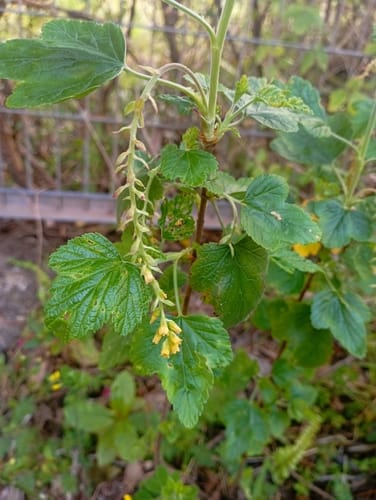
(c) Pablo Silva, some rights reserved (CC BY)
What to Eat
Edible parts: Fruit
The fruit can be eaten raw or cooked.
Where to Find It
It is a temperate plant. In Argentina it grows between sea level and 1,700 m above sea level.
Argentina, Chile, South America*,
How to Identify
A shrub. It grows 1 m tall. The leaves have 3 lobes. The fruit is 5-6 mm across. It is purple to black.
How to Grow
Easily grown in a moisture retentive but well-drained loamy soil of at least moderate quality. Plants are quite tolerant of shade though do not fruit so well in such a position. Hardy to about -20°c. Plants produce suckers Plants can harbour a stage of 'white pine blister rust', so they should not be grown in the vicinity of pine trees. Plants in this genus are notably susceptible to honey fungus. The flowers are often damaged by spring frosts and so it does not fruit well in Britain.
Propagation: Seed is best sown as soon as it is ripe in autumn in a cold frame. Stored seed requires 3 months of cold stratification at 0–5°C and should be sown as early in the year as possible. Under normal storage conditions, seed can remain viable for 17 years or more. Prick out seedlings into individual pots when large enough to handle, grow on in a cold frame through their first winter, and plant out in late spring the following year. Cuttings of half-ripe wood, 10–15cm with a heel, can be taken in July or August and rooted in a frame. Cuttings of mature wood from the current year's growth, preferably with a heel of the previous year's growth, can be taken November to February in a cold frame or sheltered bed outdoors. Suckers can also be divided during the dormant season and planted out directly into permanent positions.
Medicinal Uses
None known.
Other Uses
None known.
Wikipedia
Source ↗Deciduous shrub growing to 3.5m tall. Frost tender. Hermaphroditic flowers pollinated by insects. Adapts to light sandy, medium loamy, and heavy clay soils with good drainage. Tolerates mildly acidic to basic pH, semi-shade to full sun, and prefers moist soil.
Notes
There are about 150 Ribes species.
Names & Synonyms
Mulul, Parrilla
References (6)
- Barreau, A., et al, 2016, How Can We Teach Our Children if We Cannot Access the Forest? Generational Change in Mapuche Knowledge of Wild Edible Plants in Andean Temperate Ecosystems of Chile. Journal of Ethnobiology 36(2): 412–432
- Daly, A. B., 20014, Narrating changing foodways: wild edible plant knowledge and traditional food systems in Mapuche lands of the Andean Temperate Forests, Chile. Masters Thesis Vancouver. p 45
- Leon-Lobos, P., et al, 2022, Patterns of Traditional and Modern Uses of Wild Edible Native Plants of Chile: Challenges and Future Perspectives. Plants (Basel) v 11 (6) Table S1
- Linnaea 28:650. 1858
- Plants for a Future database, The Field, Penpol, Lostwithiel, Cornwall, PL22 0NG, UK. http://www.scs.leeds.ac.uk/pfaf/
- Velasquez, P. & Montenegro, G., 2017, Chilean Endemic/Native Plant Resources as Functional and Superfoods. Chp. 6 in Superfood and Functional Food - An Overview of Their Processing and Utilization
More from Grossulariaceae


