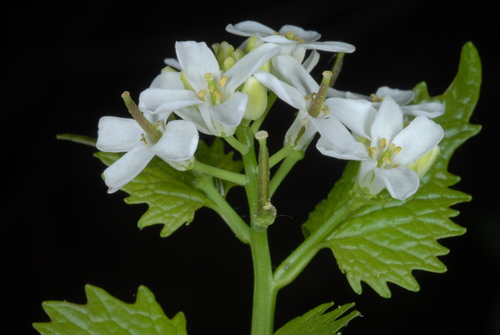
Rorippa amphibia
(L.) Besser
Great yellow cress

(c) anonymous, some rights reserved (CC BY-SA)

(c) Sebastian J. Dunkl, some rights reserved (CC BY-NC), uploaded by Sebastian J. Dunkl
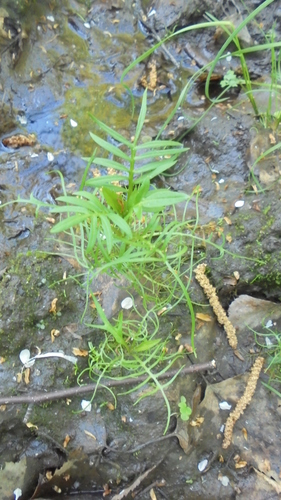
(c) Владимир, some rights reserved (CC BY-NC), uploaded by Владимир
What to Eat
Edible parts: Leaves
Young leaves and stems can be eaten raw or cooked. They have a hot, cress-like flavour that works well as a flavouring ingredient in salads.
Where to Find It
It grows in northern temperate regions.
Britain, Europe, Luxembourg,
How to Identify
A perennial herb reaching 1.2 m tall, hardy to UK zone 6. Flowers appear June to August with seeds ripening July to September. The plant is hermaphroditic and self-fertile, attracting bees and flies as pollinators. It thrives in light sandy, medium loamy, or heavy clay soils with mildly acid to basic pH, adapting to very acid or very alkaline conditions. Grows in semi-shade or full sun and prefers moist to wet soil, tolerating water-logged conditions.
How to Grow
Propagation: Sow seed in spring in a cold frame; germination should occur within 2 weeks. Prick seedlings into individual pots when large enough to handle and plant out in summer, taking care not to let the pots dry out. Divide in spring — this is very easy, but protect young divisions from slugs. Larger divisions can go directly into permanent positions; smaller divisions are better potted up and grown on in light shade in a cold frame until well established before planting out in late spring or early summer. Cuttings can be taken at almost any point during the growing season and root very readily — even a floating leaf will produce adventitious roots.
Medicinal Uses
None known
Other Uses
None known
Wikipedia
Source ↗Rorippa amphibia, also known as great yellow-cress, is a plant species in the family Brassicaceae. The flowers are visited by many types of insects, and can be characterized by a generalized pollination syndrome.
Notes
There are about 70 Rorippa species.
Names & Synonyms
References (2)
- Hedrick, U.P., 1919, (Ed.), Sturtevant's edible plants of the world. p 433 (As Nasturtium amphibium)
- Plants for a Future database, The Field, Penpol, Lostwithiel, Cornwall, PL22 0NG, UK. http://www.scs.leeds.ac.uk/pfaf/