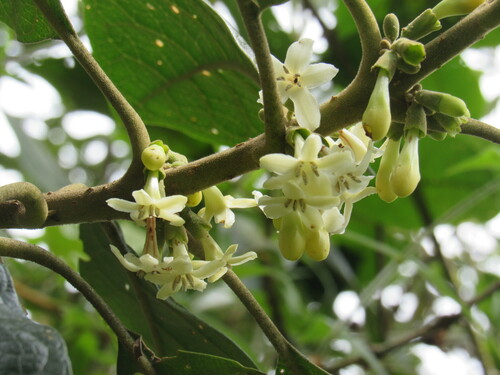
Salvia ballotiflora
Benth.
Majorano mexicano

iNaturalist · cc-by-nc
(c) Salvador, some rights reserved (CC BY-NC), uploaded by Salvador
(c) Salvador, some rights reserved (CC BY-NC), uploaded by Salvador

iNaturalist · cc-by-nc
(c) CARLOS VELAZCO, some rights reserved (CC BY-NC), uploaded by CARLOS VELAZCO
(c) CARLOS VELAZCO, some rights reserved (CC BY-NC), uploaded by CARLOS VELAZCO

iNaturalist · cc-by-nc
(c) CARLOS VELAZCO, some rights reserved (CC BY-NC), uploaded by CARLOS VELAZCO
(c) CARLOS VELAZCO, some rights reserved (CC BY-NC), uploaded by CARLOS VELAZCO
What to Eat
Edible parts: Flowers - tea
The leaves of shrubby blue sage are used for flavoring foods. It is cultivated as an ornamental for its colorful blooms.
Where to Find It
It is a warm temperate plant.
Mexico, North America, USA,
Countries: Antigua & Barbuda, Barbados, Bahamas, Belize, Canada, Costa Rica, Cuba, Dominica, Dominican Republic, Grenada, Guatemala, Honduras, Haiti, Jamaica, St Kitts & Nevis, St Lucia, Mexico, Nicaragua, Panama, Puerto Rico, El Salvador, Trinidad & Tobago, United States, St Vincent
How to Identify
A herb.
Wikipedia
Source ↗Salvia ballotiflora is a species of flowering plant in the mint family, Lamiaceae, that is native to Texas in the United States as well as northeastern and central Mexico. Common names include shrubby blue sage and mejorana.
Notes
There are about 900 Salvia species.
Names & Synonyms
Mirto, Moste, Muste
Salvia ballotaeflora
References (4)
- Beckstrom-Sternberg, Stephen M., and James A. Duke. "The Foodplant Database." http://probe.nalusda.gov:8300/cgi-bin/browse/foodplantdb.(ACEDB version 4.0 - data version July 1994)
- Facciola, S., 1998, Cornucopia 2: a Source Book of Edible Plants. Kampong Publications, p 134
- Kermath, B. M., et al, 2014, Food Plants in the Americas: A survey of the domesticated, cultivated and wild plants used for Human food in North, Central and South America and the Caribbean. On line draft. p 777
- Piedra-Malagón, E. M., et al, 2022, Edible native plants of the Gulf of Mexico Province. Biodiversity Data Journal 10: e80565 p 20