Salvia viridis
L.
Clary, Annual clary, Bluebeard
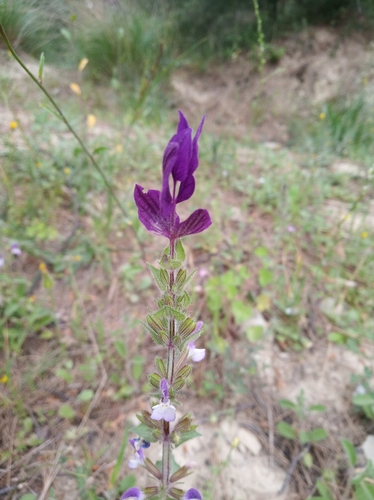
(c) Papageorgiou Nikolaos, some rights reserved (CC BY-NC), uploaded by Papageorgiou Nikolaos
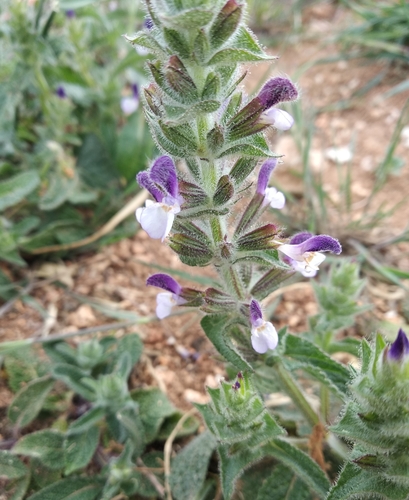
(c) Виталий, some rights reserved (CC BY-NC), uploaded by Виталий

(c) Nicolas Zwahlen, some rights reserved (CC BY-NC-SA), uploaded by Nicolas Zwahlen
What to Eat
Edible parts: Leaves, Seeds, Leaves - tea
The leaves can be eaten raw or cooked — they are highly aromatic and work well in salads, soups, and cooked greens, as well as a general flavouring. The seeds can be cooked or used as a flavouring. Both leaves and seeds, when added to fermenting liquors, greatly increase the potency of the brew. An essential oil extracted from the plant is used to flavour certain beers and wines.
Where to Find It
It suits warm temperate places. It is frost hardy. It grows in dry habitats and grassy places. It suits hardiness zones 8-10.
Australia, Britain, Europe, France, Greece, Iran, Italy, Mediterranean, Portugal, Spain, Turkey, Türkiye, Ukraine,
How to Identify
An annual herb. It grows 45-50 cm high and 20-25 cm wide. The leaves are pale green and oval or oblong. They have a rounded or heart-shaped base. They have long stalks and fine teeth. The flowers are surrounded by bracts 4 cm long that are pink, purple or white with darker veins.
How to Grow
Requires a very well-drained light sandy soil in a sunny position. Prefers a rich soil. Plants can be killed by excessive winter wet. The plant is strongly aromatic. The flowers can be air-dried and used as everlasting flowers. A good bee plant. Members of this genus are rarely if ever troubled by browsing deer.
Propagation: Sow seed in March or April in a greenhouse. Once large enough to handle, prick seedlings into individual pots and plant out in early summer.
Medicinal Uses
The leaves and flowering stems are aromatic and antiseptic, and make an effective gargle for sore gums.
Other Uses
None known
Wikipedia
Source ↗Salvia viridis (annual clary, orval) is an annual plant native to an area extending from the Mediterranean to the Crimea and into Iran.
Other Information
It is cultivated.
Notes
There are about 900 Salvia species.
Names & Synonyms
Joseph sage, Painted sage, Red-topped sage, Hormium clary, Zarif salba
References (13)
- Blamey, M and Grey-Wilson, C., 2005, Wild flowers of the Mediterranean. A & C Black London. p 403
- Cundall, P., (ed.), 2004, Gardening Australia: flora: the gardener's bible. ABC Books. p 1307
- Ertug, F, Yenen Bitkiler. Resimli Türkiye Florası -I- Flora of Turkey - Ethnobotany supplement
- Esperanca, M. J., 1988. Surviving in the wild. A glance at the wild plants and their uses. Vol. 2. p 192
- Facciola, S., 1998, Cornucopia 2: a Source Book of Edible Plants. Kampong Publications, p 136
- Hedrick, U.P., 1919, (Ed.), Sturtevant's edible plants of the world. p 590 (As Salvia horminum)
- Hibbert, M., 2002, The Aussie Plant Finder 2002, Florilegium. p 286
- Joyce, D., 1998, The Garden Plant Selector. Ryland, Peters and Small. p 323
- Kargioglu, M. et al, 2010, Traditional Uses of Wild Plants in the Middle Aegean Region. Human Ecology 38:429-450
- Ozbucak, T. B. et al, 2006, The Contribution of Wild Edible Plants to Human Nutrition in the Black Sea Region of Turkey. Ethnobotanical Leaflets 10: 98-103
- Plants for a Future database, The Field, Penpol, Lostwithiel, Cornwall, PL22 0NG, UK. http://www.scs.leeds.ac.uk/pfaf/
- Sp. pl. 1:24. 1753
- Zeven, A. C. & de West, J. M. J., 1982, Dictionary of cultivated plants and their regions of diversity. Wageningen. p 113