Sanicula rubriflora
F. Schmidt
Purple-flowered sanicle
(c) V.S. Volkotrub, some rights reserved (CC BY-NC), uploaded by V.S. Volkotrub

(c) Valery Kambalin, some rights reserved (CC BY-NC)

(c) Valery Kambalin, some rights reserved (CC BY-NC)
What to Eat
Edible parts: Leaves
Young leaves can be eaten cooked. Some caution is advised regarding toxicity.
Known Hazards
Where to Find It
It is a cold temperate plant. It grows in rich forest soils and wet meadows. In north China it grows in shady wet places between 200-500 m above sea level.
Asia, China, Japan, Korea, Manchuria, Mongolia, Russia, Siberia,
How to Identify
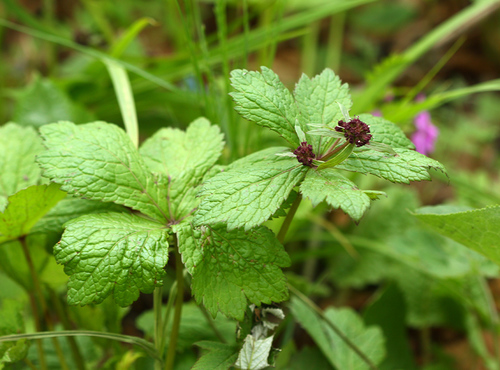
A herb. It keeps growing from year to year. It grows 20-50 cm high. The rootstocks are oblique. There is one bud at the end and this produces 5-6 leaves and a flowering stem. The leaves are at the base. The outer leaves are smaller and on leaf stalks 4-7 cm long. The inner 3-4 are much larger and on longer leaf stalks. The leaves are divided into finger like segments. They have lobes and teeth. The flowers are purple-red.
How to Grow
We have very little information on this species and do not know if it will be hardy in Britain, though judging by its native range it should succeed outdoors in most parts of the country. The following notes are based on the general needs of the genus. Succeeds in any moderately fertile well-drained soil in sun or semi-shade. Strongly dislikes poor thin soils. Prefers a loamy or calcareous soil.
Propagation: No specific information is available for this species; the following notes apply to the related S. europaea. Stratification improves germination. Sow seed in autumn if possible; sow stored seed as early in the year as possible. The best results come from sowing in situ in woodland soil under trees. If seed is limited, sow in pots of woodland soil in a shady cold frame. Once seedlings are large enough to handle, prick out into individual pots and grow on in a shaded greenhouse position through their first winter, then plant out in late spring or early summer after the last frosts. Divide in spring — larger divisions can go straight into permanent positions, while smaller ones do best potted up and grown on in a lightly shaded cold frame until well established before planting out in summer.
Medicinal Uses
None known
Other Uses
None known
Wikipedia
A 0.5 m tall perennial with hermaphrodite, self-fertile flowers pollinated by insects. Blooms July to September with seeds ripening July to September. Grows in light sandy, medium loamy, and heavy clay soils with good drainage. Tolerates mildly acidic to mildly alkaline pH. Suitable for semi-shade to full sun with preference for moist soil.
References (2)
- Hu, Shiu-ying, 2005, Food Plants of China. The Chinese University Press. p 605
- Plants for a Future database, The Field, Penpol, Lostwithiel, Cornwall, PL22 0NG, UK. http://www.scs.leeds.ac.uk/pfaf/