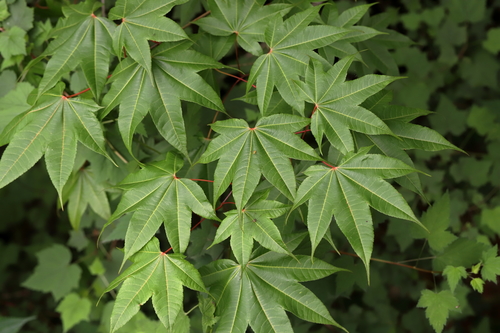
Sapindus marginatus
Willd.
Wingleaf Soapberry
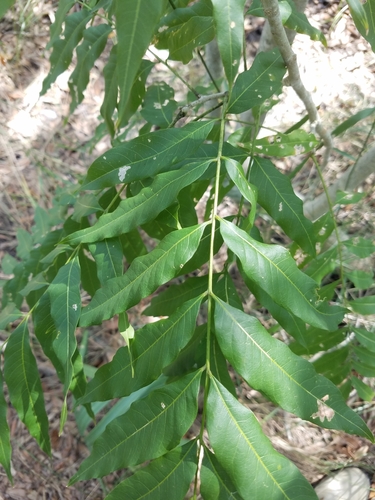
(c) Andrew Heaton, some rights reserved (CC BY-NC), uploaded by Andrew Heaton
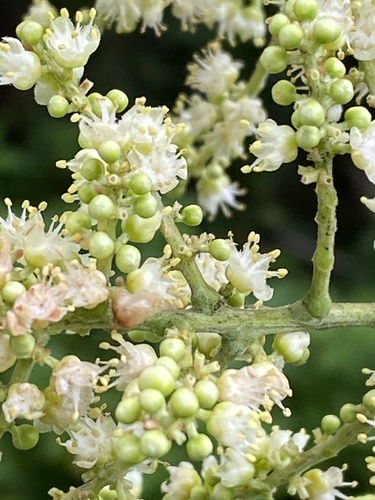
(c) Alan R. Franck, some rights reserved (CC BY-NC), uploaded by Alan R. Franck

(c) bradleysmith, some rights reserved (CC BY-NC)
What to Eat
Edible parts: Fruit
The fruit is eaten by native North American Indians, though most white people find it repulsive.
Known Hazards
Where to Find It
A tropical plant.
Asia, Central America, North America, SE Asia, Singapore, USA, West Indies,
How to Identify
Deciduous tree reaching 15 m at a slow rate, hardy to UK zone 8 and frost tender. Leafy April to October, flowering May to June, seeds ripening in November. Monoecious species with both sexes present on individual plants. Grows in light sandy, medium loamy, and heavy clay soils, preferring well-drained conditions and tolerating nutritionally poor soil. Suitable pH ranges from mildly acid to basic. Requires full sun, accepts both dry and moist soil, and tolerates drought.
How to Grow
We have very little information on this species and do not know if it will be hardy outdoors in Britain, though judging by its native range it could succeed outdoors at least in the mildest areas of the country. The following notes are based on the general needs of the genus. Succeeds in any well-drained soil in full sun. This species tolerates a wide range of soils, including those that are dry, stony and nutrient deficient. Trees are relatively slow-growing in the wild.
Propagation: Seed requires some cold stratification. Pre-soak seed for 24 hours in warm water and sow in a cold frame in mid-winter, then move to a greenhouse in early spring. Seed should germinate in late spring. Prick out seedlings into individual pots when large enough to handle and grow on in the greenhouse for at least their first winter, then plant out in early summer. Cuttings of almost ripe wood, 5–8cm with a heel, taken in July/August in a frame, give a fairly good percentage.
Medicinal Uses
None known
Other Uses
A soap can be made by rubbing the fruit in water; this method is used in Mexico for washing clothes. The fruit can be dried and stored for later use. The wood is heavy, strong, and close-grained. It splits easily into thin strips and is often used in basket making.
Wikipedia
Source ↗Sapindus marginatus, the Florida soapberry, is native to Georgia, Florida and South Carolina. It grows as a small to medium-sized small tree that usually grows to 30 feet (9.1 m) tall. It has pale gray or brown, ridged bark. The leaves are up to 1 foot (0.30 m) foot long with 6 to 13 leaflets. The leaflets are 2 to 6 inches (51 to 152 mm) long and .75 to 2.75 inches (19 to 70 mm) wide, and have pointed tips with no teeth on the edges. The leaflets may be opposite or alternate. The leaves fall in the early spring. Florida soapberry is similar to tropical soapberry (Sapindus saponaria). Some botanists consider Florida soapberry to be the same species as tropical soapberry.
Names & Synonyms
Soapberry
References (5)
- Burkill, I.H., 1966, A Dictionary of the Economic Products of the Malay Peninsula. Ministry of Agriculture and Cooperatives, Kuala Lumpur, Malaysia. Vol 2 (I-Z) p 1992
- Enum. hort. berol. 432. 1809
- Hedrick, U.P., 1919, (Ed.), Sturtevant's edible plants of the world. p 594
- Kiple, K.F. & Ornelas, K.C., (eds), 2000, The Cambridge World History of Food. CUP p 1853
- Plants for a Future database, The Field, Penpol, Lostwithiel, Cornwall, PL22 0NG, UK. http://www.scs.leeds.ac.uk/pfaf/