Sasa senanensis
(Franch. & Sav.) Rehder
Nemagari take
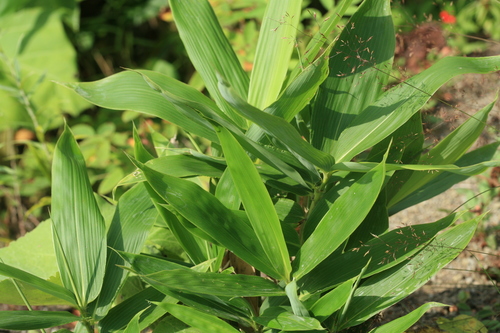
(c) Svetlana Nesterova,保留部分权利(CC BY-NC), 由 Svetlana Nesterova 上传

(c) Svetlana Nesterova, some rights reserved (CC BY-NC)

(c) Svetlana Nesterova, some rights reserved (CC BY-NC)
What to Eat
Edible parts: Seeds, Stem, Cereal
Young shoots are cooked. The seed is also cooked and used as a cereal grain. Because the seed is not produced in most years, it is considered a famine food — valued for availability rather than taste.
Where to Find It
It is a temperate plant.
Asia, China, Japan,
How to Identify
Sasa senanensis is an evergreen bamboo reaching 1.8 m (6 ft) in height. It maintains foliage year-round and is wind-pollinated with hermaphroditic flowers. The plant thrives in light sandy, medium loamy, and heavy clay soils with mildly acidic to basic pH. It tolerates semi-shade in light woodland settings and prefers consistently moist soil.
How to Grow
Propagation: Surface sow seed as soon as it is ripe in a greenhouse at about 20°C, or sow stored seed as soon as it is received. Keep the compost moist. Germination is usually fairly quick in good-quality seed, though it may take 3–6 months. Prick seedlings into individual pots when large enough and grow on in light shade in the greenhouse until big enough to plant out, which may take several years. Seed is rarely available as plants only flower at intervals of several years. For division, work in late spring as new growth begins. Take large divisions with minimal root disturbance to the main clump and grow on in light shade in a greenhouse in pots of high-fertility sandy medium. Mist the foliage regularly until established, then plant out once a good root system has formed, which can take a year or more. Divisions of fewer than 5–6 culms rarely succeed.
Medicinal Uses
None known.
Other Uses
None known.
Wikipedia
Sasa senanensis is an evergreen bamboo reaching 1.8 m (6 ft) in height. It maintains foliage year-round and is wind-pollinated with hermaphroditic flowers. The plant thrives in light sandy, medium loamy, and heavy clay soils with mildly acidic to basic pH. It tolerates semi-shade in light woodland settings and prefers consistently moist soil.
References (3)
- http://www.plantnames.unimelb.edu.au/sorting/Bamboos_Edible.html
- J. Arnold Arbor. 1:58. 1919
- Plants for a Future database, The Field, Penpol, Lostwithiel, Cornwall, PL22 0NG, UK. http://www.scs.leeds.ac.uk/pfaf/


