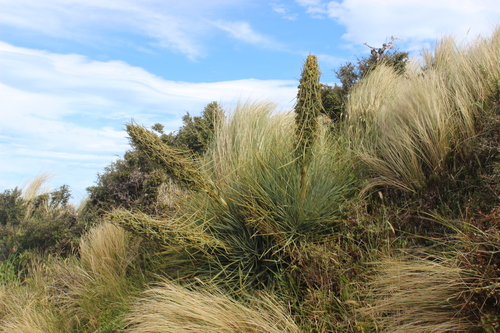
Scandix grandiflora
L.
ApiaceaeLeaves

iNaturalist · cc-by-nc
(c) Наталья Гамова, some rights reserved (CC BY-NC)
(c) Наталья Гамова, some rights reserved (CC BY-NC)
What to Eat
Edible parts: Leaves
Leaves are eaten raw and are highly esteemed.
Where to Find It
It is a temperate plant.
Europe, Mediterranean, Turkey, Türkiye,
Countries: Andorra, Albania, Austria, Bosnia & Herzegovina, Belgium, Bulgaria, Belarus, Switzerland, Cyprus, Czechia, Germany, Denmark, Algeria, Estonia, Egypt, Spain, Finland, France, United Kingdom, Greece, Croatia, Hungary, Ireland, Israel, Iceland, Italy, Lebanon, Liechtenstein, Lithuania, Luxembourg, Latvia, Libya, Morocco, Monaco, Moldova, Montenegro, North Macedonia, Malta, Netherlands, Norway, Poland, Portugal, Romania, Serbia, Russia, Sweden, Slovenia, Slovakia, San Marino, Syria, Tunisia, Turkey, Ukraine
How to Identify
A perennial herb. Hermaphrodite. Grows in light sandy, medium loamy, and heavy clay soils across mildly acidic to mildly alkaline pH ranges. Can grow in semi-shade or full sun. Prefers moist soil.
How to Grow
Closely related to S. australe, and considered to be no more than a sub-species by some authorities.
Propagation: Sow seed.
Medicinal Uses
None known
Other Uses
None known
Wikipedia
A perennial herb. Hermaphrodite. Grows in light sandy, medium loamy, and heavy clay soils across mildly acidic to mildly alkaline pH ranges. Can grow in semi-shade or full sun. Prefers moist soil.
References (2)
- Hedrick, U.P., 1919, (Ed.), Sturtevant's edible plants of the world. p 596
- Plants for a Future database, The Field, Penpol, Lostwithiel, Cornwall, PL22 0NG, UK. http://www.scs.leeds.ac.uk/pfaf/