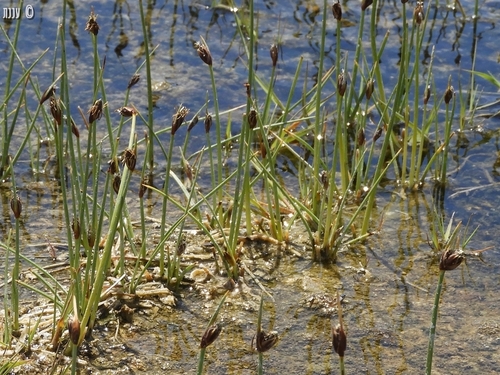
Scirpus microcarpus
C. Presl.
Panicled bulrush

(c) Donna Pomeroy, some rights reserved (CC BY-NC), uploaded by Donna Pomeroy
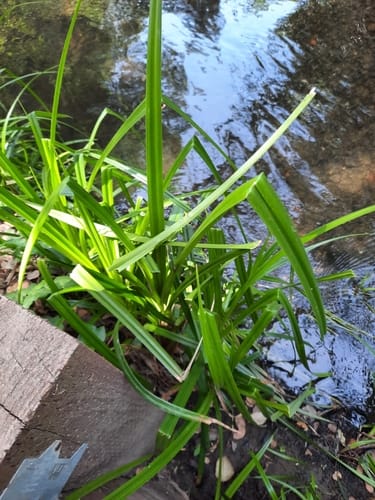
(c) timlangenberg, some rights reserved (CC BY-NC)

(c) Ryan Sorrells, some rights reserved (CC BY)
What to Eat
Edible parts: Pollen, Root, Seeds, Stem
The roots can be eaten raw or cooked and are rich in starch. The stems can be peeled and eaten raw or cooked, and the stem base is also edible raw or cooked. Pollen is rich in protein and can be added to flour for use in breads, cakes, and similar baked goods. The seeds have a nutty flavour but are rather small and fiddly to harvest and use.
Where to Find It
It is a temperate plant.
Alaska, North America, USA,
How to Identify
A perennial sedge reaching 150 cm tall with seeds ripening from June to July. Hermaphroditic flowers are wind-pollinated. Establishes in light sandy, medium loamy, and heavy clay soils across mildly acidic to basic pH ranges. Grows in semi-shaded woodland or full sun in consistently moist or wet soil and shallow water.
How to Grow
We have very little information on this species and do not know if it will be hardy in Britain, though judging by its native range it should succeed outdoors in most parts of this country. The following notes are based on the general needs of the genus. Succeeds in any wet to moisture retentive ground, pond margins and shallow water in full sun or shade.
Propagation: Seed: sow in a cold frame as soon as ripe in a pot standing in 3cm of water, barely covering the seed. Germination is usually fairly quick. Prick out seedlings when large enough to handle and plant into permanent positions in early summer. Division in spring is very easy. Larger divisions can go directly into permanent positions; smaller ones are best potted up and grown on in a lightly shaded cold frame, then planted out once well established in summer.
Medicinal Uses
A poultice of pounded roots has been used to treat abscesses. An infusion of the plant combined with blue flag (Iris spp.) has been used as a gargle for sore throats.
Other Uses
The leaves have been used in the bottom portion of baskets.
Wikipedia
Source ↗Scirpus microcarpus is a species of flowering plant in the sedge family known by the common names panicled bulrush, smallfruit bulrush, and barberpole bulrush. It is native to North America, where it can be found throughout the northern and western regions, from Alaska across Canada to the northeastern United States, in most of the central and western states, and in Baja California. It grows in many types of moist and wet habitat. It is a perennial herb growing from a long rhizome system. The erect, three-angled stems often exceed one meter tall. Sheathing leaves occur at the stem bases as well as higher up the stems. The inflorescence is a panicle of many clusters of spikelets and leaflike bracts on long, thin branches. The fruit is a pale, smooth achene less than 2 millimeters long.
Names & Synonyms
References (3)
- Bowser, M., 2017, Handout on Edible Plants of the Kenai Peninsula. USFWS Kenai National Wildlife Refuge p 12
- Lim, T. K., 2015, Edible Medicinal and Non Medicinal Plants. Volume 9, Modified Stems, Roots, Bulbs. Springer p 75
- Plants for a Future database, The Field, Penpol, Lostwithiel, Cornwall, PL22 0NG, UK. http://www.scs.leeds.ac.uk/pfaf/
More from Cyperaceae