Scleria pergracilis
(Nees) Kunth

gbif · cc-by
Royal Botanic Gardens, Kew
Royal Botanic Gardens, Kew

gbif · cc-by
Royal Botanic Gardens, Kew
Royal Botanic Gardens, Kew

gbif · cc-by
Royal Botanic Gardens, Kew
Royal Botanic Gardens, Kew
What to Eat
Edible parts: Fruit, Leaves
The strongly lemon-scented leaves are eaten with salt. The fruit is also edible.
Where to Find It
A tropical plant. It occurs from sea level to 1500 m. It is normally on open slopes and near the edges of swamps. It grows in wet grass savannah.
Africa, Asia, Burkina Faso, Guinea, Guinée, Guinea-Bissau, India, Indochina, Indonesia, Korea, Laos, Myanmar, Pacific, Papua New Guinea, PNG, SE Asia, Sierra Leone, West Africa,
Countries: United Arab Emirates, Afghanistan, Armenia, Angola, Australia, Azerbaijan, Bangladesh, Burkina Faso, Bahrain, Burundi, Benin, Brunei, Bhutan, Botswana, Congo (DRC), Central African Republic, Congo (Republic), Cote d'Ivoire, Cameroon, China, Cape Verde, Djibouti, Algeria, Egypt, Eritrea, Ethiopia, Fiji, Micronesia, Gabon, Georgia, Ghana, Gambia, Guinea, Equatorial Guinea, Guinea-Bissau, Indonesia, Israel, India, Iraq, Iran, Jordan, Japan, Kenya, Kyrgyzstan, Cambodia, Kiribati, Comoros, North Korea, South Korea, Kuwait, Kazakhstan, Laos, Lebanon, Sri Lanka, Liberia, Lesotho, Libya, Morocco, Madagascar, Marshall Islands, Mali, Myanmar, Mongolia, Mauritania, Mauritius, Maldives, Malawi, Malaysia, Mozambique, Namibia, Niger, Nigeria, Nepal, Nauru, New Zealand, Oman, Papua New Guinea, Philippines, Pakistan, Palau, Qatar, Rwanda, Saudi Arabia, Solomon Islands, Seychelles, Sudan, Singapore, Sierra Leone, Senegal, Somalia, South Sudan, Sao Tome & Principe, Syria, Eswatini, Chad, Togo, Thailand, Tajikistan, Timor-Leste, Turkmenistan, Tunisia, Tonga, Turkey, Tuvalu, Taiwan, Tanzania, Uganda, Uzbekistan, Vietnam, Vanuatu, Samoa, Yemen, South Africa, Zambia, Zimbabwe
How to Identify
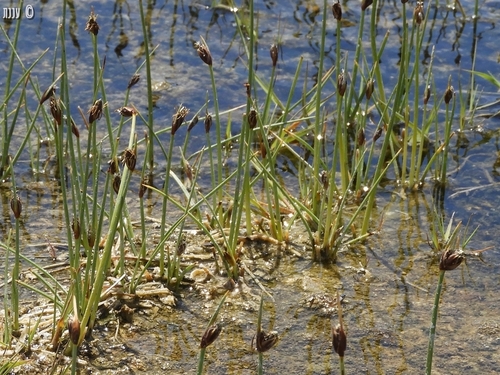
An annual sedge. It has slender tufted erect stems 50 cm long with rigid flat leaves. A small 3 sided nut is produced on the flower at the top.
How to Grow
It grows wild.
Names & Synonyms
Hypoporum pergracile Nees
References (5)
- Ambasta S.P. (Ed.), 2000, The Useful Plants of India. CSIR India. p 560
- French, B.R., 1986, Food Plants of Papua New Guinea, A Compendium. Asia Pacific Science Foundation p 384
- Powell, J.M., Ethnobotany. In Paijmans, K., 1976, New Guinea Vegetation. Australian National University Press. p 111
- Simpson, D. A. & Inglis, C. A., 2001, Cyperaceae of Economic, Ethnobotanical and Horticultural Importance: A checklist. Kew Bulletin Vol. 56, No. 2 (2001), p. 342
- World Checklist of Useful Plant Species 2020. Royal Botanic Gardens, Kew
More from Cyperaceae

Actinoscirpus grossus
Giant bulrush, Greater club-rush

Actinoscirpus grossus var. kysoor
Amphiscirpus nevadensis
Nevada bulrush, Great basin bulrush

Bolboschoenus caldwellii
Sea club rush, Marsh club rush, Seaside bulrush

Bolboschoenus fluviatilis
Marsh club rush, River bulrush, Kukuraho, Purua grass

Bolboschoenus glaucus