Scolopia luzonensis
(Presl.) Warb.
Aninguai

Botanical Research Institute of Texas

Royal Botanic Gardens, Kew

Royal Botanic Gardens, Kew
What to Eat
Edible parts: Fruit
The fruit are eaten raw.
Where to Find It
A tropical plant. They are found in dry deep wooded valleys of Luzon in the Philippines. They are little known in Mindanao. It grows up to 700 m above sea level. It can be along sandy beaches.
Asia, Indonesia, Malaysia, Pacific, Philippines, SE Asia,
How to Identify
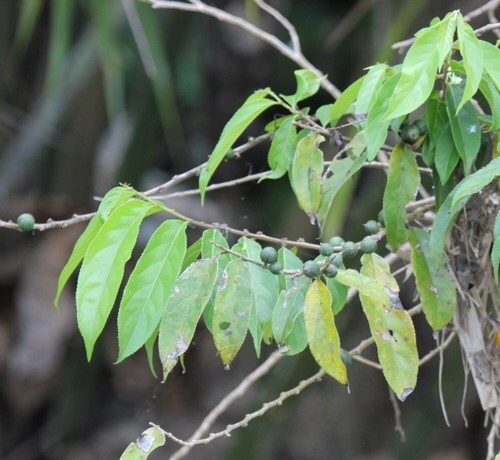
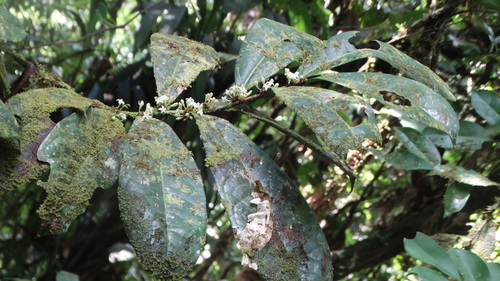
An erect or small stocky tree. The branchlets are many and round. They are slender and become hairy with age. There are many leaves and they are alternate, not hairy and light green beneath. They are oval and 6-12 cm long by 2-5 cm wide. The flowers are pale or yellowish white and on the ends of branches. They are in leaf axils. They are in groups of 10-14 flowers. The fruit are not hairy and end with a slender point. It is 6 mm across. It is red and has 3-8 seeds.
Notes
Also put in the Flacourtiaceae family.
Names & Synonyms
Babaliuain, Palutan
References (2)
- Monsalud, M.R., Tongacan, A.L., Lopez, F.R., & Lagrimas, M.Q., 1966, Edible Wild Plants in Philippine Forests. Philippine Journal of Science. p 470
- PROSEA No. 2