Secale montanum
Guss.
Secale, Mountain rye
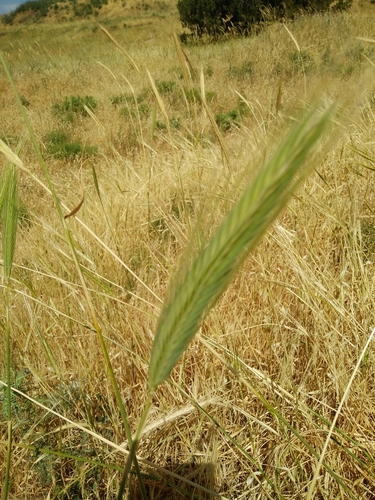
(c) דבורה שיצר, some rights reserved (CC BY-NC), uploaded by דבורה שיצר
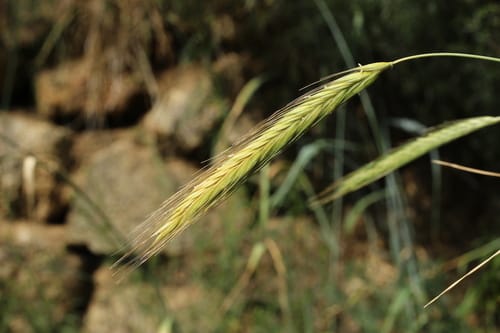
(c) jltasset, some rights reserved (CC BY-NC)
What to Eat
Edible parts: Seeds, Cereal
The grain is eaten as a cereal and is also used to make flour for bread and other baked goods.
Where to Find It
It is a temperate plant.
Africa, Armenia, Asia, Australia, Caucasus, Europe, Greece, Iran, Iraq, Italy, Lebanon, Mediterranean, Morocco, North Africa, Pakistan, Spain, Turkey, Türkiye, Yugoslavia,
How to Identify
A grass. It keeps growing from year to year. It forms tufts and is greyish-green. It grows 100 cm high. The leaf blades can be flat or rolled. They are 15 cm long by 2-8 mm wide. The flower spike is 4-8 cm long. The spikelets have 2 flowers.
How to Grow
It is grown from seed.
Wikipedia
Source ↗Secale montanum, wild perennial rye, is a species in the rye genus Secale native to the Mediterranean, the Middle East, the Caucasus region, and eastwards through Iran to Pakistan. It is a short-lived, self-fertile perennial. It is thought to be the ultimate parent of domesticated rye (Secale cereale), and crosses with S. cereale have had some success in creating fodder cultivars. Some authorities consider the synonym Secale strictum C.Presl. to have priority.
Other Information
It is cultivated.
Names & Synonyms
References (11)
- Crawford, M., 2012, How to grow Perennial Vegetables. Green Books. p 145
- Davies, C. L., Waugh, D. L. & Lefroy, E. C., 2005, Perenial Grain Crops for High Water Use. The case of Microlaena stipoides. RIRDC Publication No. 05/024
- Evans, G.M., 1979, Rye, in Simmonds N.W.,(ed), Crop Plant Evolution. Longmans. London. p 108
- Facciola, S., 1998, Cornucopia 2: a Source Book of Edible Plants. Kampong Publications, p 179
- Flora of Pakistan. www.eFloras.org
- Fl. sicul. prodr. 1:145. 1827
- Gabrielian, E. & Zohary, D.: Wild relatives of food crops native to Armenia and Nakhichevan. — Fl. Medit. 14: 5-80. 2004. — ISSN 1120-4052.
- Lamp, C.A., Forbes, S.J. and Cade, J.W., 1990, Grasses of Temperate Australia. Inkata Press. p 256
- Lazarides, M. & Hince, B., 1993, Handbook of Economic Plants of Australia, CSIRO. p 215
- Tanaka,
- Zeven, A. C. & de West, J. M. J., 1982, Dictionary of cultivated plants and their regions of diversity. Wageningen. p 93


