Seseli libanotis

(L.) W. D. J. Koch

Hsieh Hao, Moon-carrot, Meadow saxifrage
ApiaceaeLeavesRoots
Seseli libanotis
iNaturalist · cc0
no rights reserved
Seseli libanotis
iNaturalist · cc0
no rights reserved
Seseli libanotis
iNaturalist · cc0
no rights reserved

What to Eat

Edible parts: Leaves, Root

Young plants and leaves can be cooked and eaten. The root is also edible, though no further preparation details are recorded.

Where to Find It

It is a temperate plant.

Africa, Asia, Britain, China, Europe, Japan, Luxembourg, North Africa, North America, Scandinavia, Siberia, Slovenia, Turkey, Türkiye, USA,

Countries: Andorra, United Arab Emirates, Afghanistan, Antigua & Barbuda, Albania, Armenia, Angola, Austria, Azerbaijan, Bosnia & Herzegovina, Barbados, Bangladesh, Belgium, Burkina Faso, Bulgaria, Bahrain, Burundi, Benin, Brunei, Bahamas, Bhutan, Botswana, Belarus, Belize, Canada, Congo (DRC), Central African Republic, Congo (Republic), Switzerland, Cote d'Ivoire, Cameroon, China, Costa Rica, Cuba, Cape Verde, Cyprus, Czechia, Germany, Djibouti, Denmark, Dominica, Dominican Republic, Algeria, Estonia, Egypt, Eritrea, Spain, Ethiopia, Finland, France, Gabon, United Kingdom, Grenada, Georgia, Ghana, Gambia, Guinea, Equatorial Guinea, Greece, Guatemala, Guinea-Bissau, Honduras, Croatia, Haiti, Hungary, Indonesia, Ireland, Israel, India, Iraq, Iran, Iceland, Italy, Jamaica, Jordan, Japan, Kenya, Kyrgyzstan, Cambodia, Comoros, St Kitts & Nevis, North Korea, South Korea, Kuwait, Kazakhstan, Laos, Lebanon, St Lucia, Liechtenstein, Sri Lanka, Liberia, Lesotho, Lithuania, Luxembourg, Latvia, Libya, Morocco, Monaco, Moldova, Montenegro, Madagascar, North Macedonia, Mali, Myanmar, Mongolia, Mauritania, Malta, Mauritius, Maldives, Malawi, Mexico, Malaysia, Mozambique, Namibia, Niger, Nigeria, Nicaragua, Netherlands, Norway, Nepal, Oman, Panama, Philippines, Pakistan, Poland, Puerto Rico, Portugal, Qatar, Romania, Serbia, Russia, Rwanda, Saudi Arabia, Seychelles, Sudan, Sweden, Singapore, Slovenia, Slovakia, Sierra Leone, San Marino, Senegal, Somalia, South Sudan, Sao Tome & Principe, El Salvador, Syria, Eswatini, Chad, Togo, Thailand, Tajikistan, Timor-Leste, Turkmenistan, Tunisia, Turkey, Trinidad & Tobago, Taiwan, Tanzania, Ukraine, Uganda, United States, Uzbekistan, St Vincent, Vietnam, Yemen, South Africa, Zambia, Zimbabwe

How to Identify

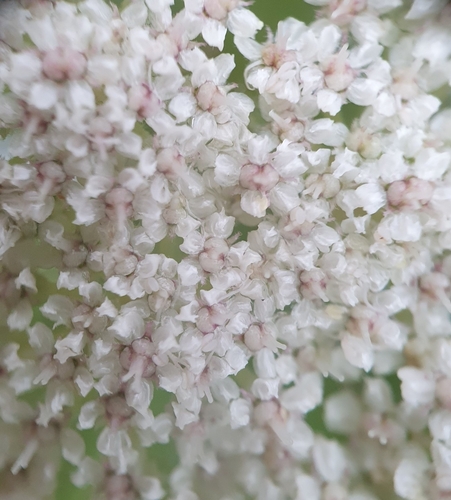
A herb. It grows 40-120 cm tall. The stems are erect and branching. The leaves are alternate and lower leaves have stalks while the upper leaves do not have stalks. The leaflets are bluish green underneath. The flowers are white and 5 mm wide.

How to Grow

Propagation: Sow seed in spring in a cold frame. Prick seedlings out into individual pots when large enough to handle and plant out in summer.

Medicinal Uses

The plant is carminative.

Other Uses

None known Special Uses

Wikipedia

Source ↗

Seseli libanotis, also known by the common names moon carrot, mountain stone-parsley, or säfferot, is a species of herb in the genus Seseli of the carrot family, Apiaceae. It is native to Eurasia, throughout which it is widespread.

Names & Synonyms

Kelemenkesir, Zdravilka

References (7)
  • Dogan, A., et al, 2014, A review of edible plants on the Turkish Apiaceae species. J. Fac. Pharm. Istanbul, 44(2) pp 251-262
  • Ertug, F, Yenen Bitkiler. Resimli Türkiye Florası -I- Flora of Turkey - Ethnobotany supplement
  • http://www.botanic-gardens-ljubljana.com/en/plants
  • Nova Acta Phys.-Med. Acad. Caes. Leop.-Carol. Nat. Cur. 12(1):111. 1824
  • Plants for a Future database, The Field, Penpol, Lostwithiel, Cornwall, PL22 0NG, UK. http://www.scs.leeds.ac.uk/pfaf/
  • READ
  • Wikipedia

More from Apiaceae