Setaria sphacelata
(Schumach.) Stapf et C. E. Hubb. ex M. B. Moss
Golden Timothy Grass

(c) Suvarna Parbhoo Mohan, some rights reserved (CC BY-NC), uploaded by Suvarna Parbhoo Mohan
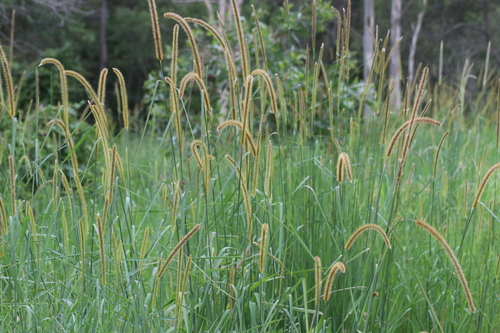
(c) jameslambo, some rights reserved (CC BY-NC), uploaded by jameslambo
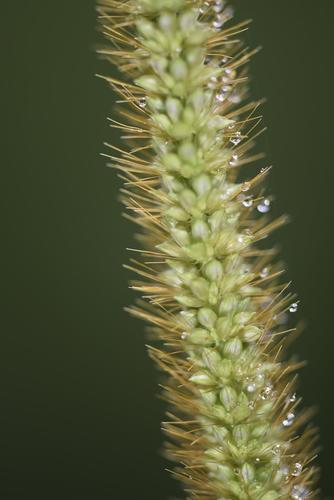
(c) Rob Palmer, some rights reserved (CC BY-NC-SA), uploaded by Rob Palmer
What to Eat
Edible parts: Seeds, Cereal, Caution
The seeds are boiled and ground into a meal, used in kreb, a grain mixture eaten in Chad.
Known Hazards
Where to Find It
A tropical plant. It can grow in warm temperate and tropical regions. It grows in hot arid places. It grows in areas with an annual rainfall above 500 mm. It grows on a range of soils and they can be poorly waterlogged. It grows in wet grass savannah. It can grow in arid places.
Africa, Angola, Asia, Australia, Botswana, Burkina Faso, Cameroon, Central Africa, Chad, China, Congo, Côte d'Ivoire, East Africa, Easter Island, Eswatini, Fiji, Ghana, Guinea, Guinée, Guinea-Bissau, India, Israel, Ivory Coast, Kenya, Lesotho, Madagascar, Malawi, Mali, Marquesas, Mediterranean, Middle East, Morocco, Mozambique, Myanmar, Namibia, Nigeria, North Africa, Pacific, Papua New Guinea, PNG, Philippines, SE Asia, Senegal, Sierra Leone, South Africa, Southern Africa, St Helena, Sudan, Swaziland, Taiwan, Tanzania, Togo, Uganda, USA, West Africa, Yemen, Zambia, Zimbabwe,
How to Identify
A grass which keeps growing from year to year. It is 0.5-2 m tall. It normally forms compact tufts. Some kinds have long creeping stolons and form tillers. The stems are erect and simple. The leaves can be smooth or hairy. They are narrow and taper to a short tip. The flower is a slender spike-like head 7.5-25 cm long. It is often golden in colour.
Nutrition Score: 61/100
| Part | Moisture | kJ | kcal | Protein | Vit A | Vit C | Iron | Zinc |
|---|---|---|---|---|---|---|---|---|
| Seeds | 5 | 960 | 230 | 11.1 | — | — | 6.5 | 2.9 |
How to Grow
Plants can be grown from seed.
Wikipedia
Source ↗Setaria sphacelata is a tall African grass, also known as South African pigeon grass and African bristlegrass. It is native to tropical and subtropical Africa, and is extensively cultivated globally as a pasture grass and for cut fodder. This is a rhizomatous perennial grass producing flattened, hairless, blue-green stems up to 2 m tall. The inflorescence is a dense, narrow panicle of bristly, orange-tinged spikelets up to 25 cm long. In Africa, Setaria sphacelata seed heads are an important food source for several bird species, including the long-tailed widowbird. Commercial cultivars have been developed for various climates and soil conditions. All cultivars are high in oxalate, making them generally unsuitable for horses. Recognised pests in cultivation include the buffel grass seed caterpillar (Mampava rhodoneura) and the fungus Pyricularia trisa. Setaria sphacelata is a good quality forage for ruminants such as cattle, sheep and goats. It can be fed fresh and ensiled. Setaria sphacelata has become naturalised in many countries and is a significant environmental weed in three Australian states.
Other Information
It is a famine food.
Notes
It is normally grown as a pasture for animals. There are about 130 Setaria species. They are mainly in the tropics and subtropics.
Names & Synonyms
Cununo, Dikiyta-kot, Ikununu, Kazungula grass, Likonge, Quisumbe, Rhodesian timothy, South African Pideon grass, Umpuhlo
References (24)
- Ambasta, S.P. (Ed.), 2000, The Useful Plants of India. CSIR India. p 571
- Burkill, H. M., 1985, The useful plants of west tropical Africa, Vol. 2. Kew.
- Chapman, J. D. & Chapman, H. M., 2001, The Forest Flora of Taraba and Andamawa States, Nigeria. WWF & University of Canterbury. p 212
- Fowler, D. G., 2007, Zambian Plants: Their Vernacular Names and Uses. Kew. p 72
- Fox, F. W. & Young, M. E. N., 1982, Food from the Veld. Delta Books. p 297
- Henty, E.E., 1980, Harmful Plants in Papua New Guinea. Botany Bulletin No 12. Division Botany, Lae, Papua New Guinea. p 66, Pl. 24
- Hussey, B.M.J., Keighery, G.J., Cousens, R.D., Dodd, J., Lloyd, S.G., 1997, Western Weeds. A guide to the weeds of Western Australia. Plant Protection Society of Western Australia. p 69
- Jardin, C., 1970, List of Foods Used In Africa, FAO Nutrition Information Document Series No 2.p 7
- Lazarides, M. & Hince, B., 1993, Handbook of Economic Plants of Australia, CSIRO. p 218
- Long, C., 2005, Swaziland's Flora - siSwati names and Uses http://www.sntc.org.sz/flora/
- National Research Council, 1996, Lost crops of Africa. Volume 1 grains, p 272
- Paczkowska, G. & Chapman, A.R., 2000, The Western Australian Flora. A Descriptive Catalogue. Western Australian Herbarium. p 116
- D. Prain, Fl. trop. Afr. 9:795. 1930 (ex M. B. Moss, Bull. Misc. Inform. Kew 1929:195. 1929, nom. nud.)
- Purseglove, J.W., 1972, Tropical Crops. Monocotyledons. Longmans p 256
- Royal Botanic Gardens, Kew (1999). Survey of Economic Plants for Arid and Semi-Arid Lands (SEPASAL) database. Published on the Internet; http://www.rbgkew.org.uk/ceb/sepasal/internet [Accessed 4th June 2011]
- Ruiters-Welcome, A. K., 2019, Food plants of southern Africa. Ph.D. thesis. Univ. of Johannesburg p 89
- Sillitoe, P. 1995, An Ethnobotanical Account of the Plant Resources of the Wola Region, Southern Highlands Province, Papua New Guinea. J. Ethnobiol. 15(2): 201-235
- Swaziland's Flora Database http://www.sntc.org.sz/flora
- van Oudtshoorn, F and van Wyck, E., 2004, Guide to Grasses of Southern Africa. Briza. p 89, 91
- van Wyk, B., 2005, Food Plants of the World. An illustrated guide. Timber press. p 345
- van Wyk, Be, & Gericke, N., 2007, People's plants. A Guide to Useful Plants of Southern Africa. Briza. p 12
- Wehmeyer, A. S, 1986, Edible Wild Plants of Southern Africa. Data on the Nutrient Contents of over 300 species
- Welcome, A. K. & Van Wyk, B.-E., 2019, An inventory and analysis of the food plants of southern Africa. South African Journal of Botany 122 (2019) 136–179
- World Checklist of Useful Plant Species 2020. Royal Botanic Gardens, Kew


