Silaum silaus
(L.) Schinz. & Thel.
Pepper saxifrage, Meadow saxifrage

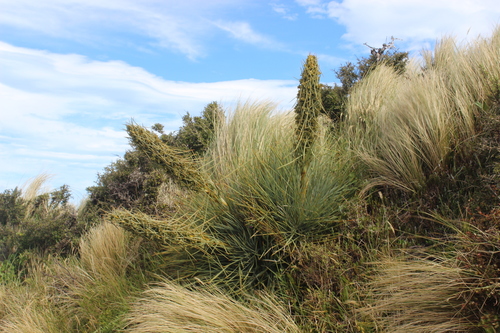
(c) Jc (et parfois Ginie), some rights reserved (CC BY-NC-ND)

(c) Sebastian J. Dunkl, some rights reserved (CC BY-NC), uploaded by Sebastian J. Dunkl
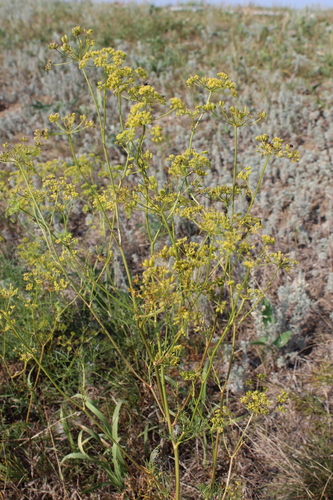
(c) Magazova Lubov, some rights reserved (CC BY-NC), uploaded by Magazova Lubov
What to Eat
Edible parts: Leaves
The leaves can be cooked and are sometimes used as an acid-tasting potherb.
Where to Find It
It is a temperate or Mediterranean climate plant. It grows in wet meadows between 100-300 m above sea level in China.
Asia, China, Britain, Europe, Luxembourg, Mediterranean, Slovenia,
How to Identify
A herb. It grows 40-100 cm tall. The leaves are oval or triangle shaped. They are 7-20 cm long by 6-10 cm wide. THe leaflets have lobes. The flowers are in groups 3-4 cm across.
How to Grow
Propagation: Sow seed in spring in a cold frame. When large enough to handle, prick seedlings out into individual pots and plant out in early summer. With sufficient seed, an outdoor sowing in situ in spring should also succeed.
Medicinal Uses
None known
Other Uses
None known
Wikipedia
Source ↗Silaum silaus, commonly known as pepper-saxifrage, is a perennial plant in the family Apiaceae (Umbelliferae) (the carrot family) found across south-eastern, central, and western Europe, including the British Isles. It grows in damp grasslands on neutral soils.
Names & Synonyms
Travniška blestivka
References (4)
- Facciola, S., 1998, Cornucopia 2: a Source Book of Edible Plants. Kampong Publications, p 21
- Hedrick, U.P., 1919, (Ed.), Sturtevant's edible plants of the world. p 607 (? As Silaum flavescens)
- http://www.botanic-gardens-ljubljana.com/en/plants
- Plants for a Future database, The Field, Penpol, Lostwithiel, Cornwall, PL22 0NG, UK. http://www.scs.leeds.ac.uk/pfaf/