Sinapis arvensis
L.
Charlock, Field mustard
(c) bwganbrain, some rights reserved (CC BY-NC)
(c) bwganbrain, some rights reserved (CC BY-NC)
(c) bwganbrain, some rights reserved (CC BY-NC)
What to Eat
Edible parts: Leaves, Seeds, Flowers, Stems
Leaves can be eaten raw or cooked and have a somewhat hot flavour. Young leaves add a pleasant piquancy to salads, while older leaves work better as a potherb. It is best to use only young shoots and leaves in spring, as older growth becomes bitter. Flowering stems, cooked before the flowers open, have a pleasant cabbage and radish flavour and can be used as a broccoli substitute — they should be lightly steamed for no more than 5 minutes. The flowers can be cooked as a vegetable or used as a garnish. The seed can be sprouted and eaten raw with a hot flavour, suitable for salads and sandwiches, or ground into a powder and used as a hot mustard-flavoured seasoning. An edible oil is also obtained from the seed.
Known Hazards
Where to Find It
It is a temperate plant. In western China it grows between 400-1,800 m above sea level. Tasmania Herbarium.
Afghanistan, Africa, Argentina, Armenia, Asia, Australia, Bahamas, Balkans, Bosnia, Brazil, Britain, Canada, Caucasus, Central America, Central Asia, Chile, China, Croatia, Cyprus, Czech Republic, Dominican Republic, East Africa, Estonia, Europe, Georgia, Greece, Guatemala, Guyana, Haiti, Hawaii, Hungary, Iraq, Ireland, Israel, Italy, Jordan, Kazakhstan, Korea, Kyrgyzstan, Lebanon, Libya, Luxembourg, Mediterranean, Middle East, Mongolia, Morocco, New Zealand, North Africa, North America, Norway, Pacific, Pakistan, Palestine, Paraguay, Poland, Portugal, Puerto Rico, Russia, Scandinavia, Sicily, Slovenia, South America, Spain, Sweden, Syria, Tajikistan, Tasmania, Turkey, Türkiye, Turkmenistan, Uruguay, Uzbekistan, USA, West Indies, Zimbabwe,
How to Identify
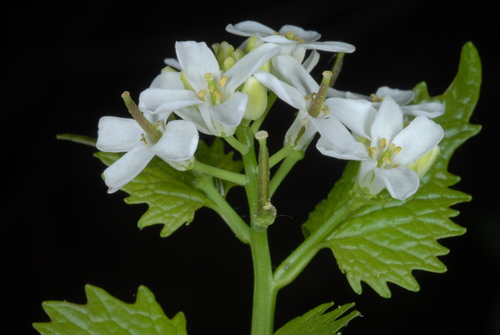
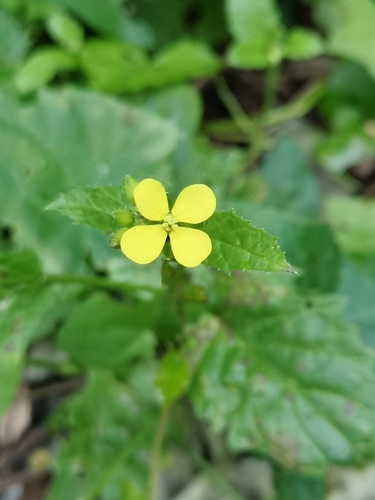
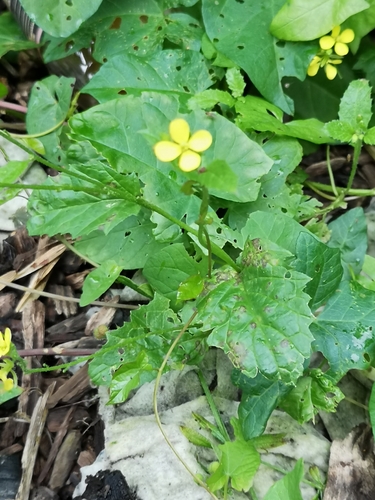
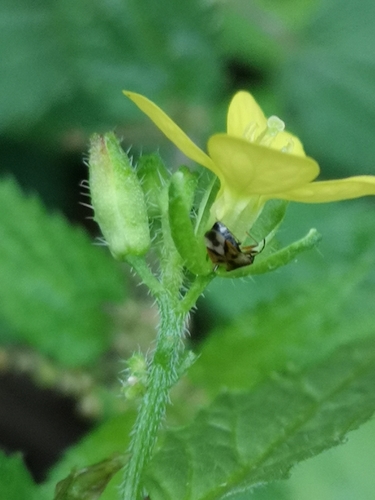
A cabbage family herb. It is an erect annual plant. The mature plant is 80 cm to 1.4 m high. The leaves are 5-15 cm long and 2-5 cm wide. They are hairy and there are teeth around the edge. There can be lobes near the base. The flowers are yellow and are clustered along the stem. The fruit is like a pod and is about 2 cm long. The valves on the fruit contain 3-5 distinct petals. The pods have more than 10 seeds.
How to Grow
Usually found on heavy alkaline soils in the wild. Succeeds on most soils. Dislikes shade. The plant harbours an eelworm that attacks other crops. It is therefore best not to grow it in a garden setting.
Propagation: Seed germinates naturally in spring and autumn and should not require much encouragement to establish.
Medicinal Uses
The plant is used in Bach flower remedies — the keywords for prescribing it are 'Black depression', 'Melancholia' and 'Gloom'.
Other Uses
An edible semi-drying oil obtained from the seed is also used in soap making and burns well enough to serve as a lighting oil.
Wikipedia
Wild mustard is a fast-growing annual reaching 0.8m tall. Hardy to UK zone 6, it flowers May to July with seeds ripening May to August. The plant has both male and female organs and is bee and fly pollinated. It suits light sandy, medium loamy, and heavy clay soils, tolerating very alkaline pH, requires full sun, prefers moist soil, and tolerates strong winds but not coastal exposure.
Names & Synonyms
Akersennep, Alassani, Elharra, Elkelkaza, Ermulata, Gorusica, Hardal, Hardalotu, Khardal barri, Liffaiteh, Mostacita, Mostarda, Mostaza salvaje, Mostaza silvestre, Njivska gorčica, Offaiteh, Ohnica, Rabcsont, Rapa, Repce, Sinapa sarvaggia, Sinape selvaggia, Slacica, Telg, Tolk, Xertele, Yenen hardal
References (73)
- Ali-Shtayeh, M. S., et al, 2008, Traditional knowledge of wild edible plants used in Palestine (Northern West Bank): A comparative study. J Ethnobiol Ethnomed. 4: 13
- Al-Qura'n, S. A., 2010, Ethnobotanical and Ecological Studies of Wild Edible Plants in Jordan. Libyan Agriculture Research Center Journal International 1(4):231-243
- Ari, S., et al, 2015, Ethnobotanical survey of plants used in Afyonkarahisar-Turkey. Journal of Ethnobiology and Ethnomedicine 11:84
- Biscotti, N. & Pieroni, A., 2015, The hidden Mediterranean diet: wild vegetables traditionally gathered and consumed in the Gargano area, Apulia, SE Italy. Acta Societatis Botanicorum Poloniae 84 (3): 327-338
- Biscotti, N. et al, 2018, The traditional food use of wild vegetables in Apulia (Italy) in the light of Italian ethnobotanical literature. Italian Botanist 5:1-24
- Blamey, M and Grey-Wilson, C., 2005, Wild flowers of the Mediterranean. A & C Black London. p 68
- Bodkin, F., 1991, Encyclopedia Botanica. Cornstalk publishing, p 930
- Bussman, R. W., et al, 2016, A comparative ethnobotany of Khevsureti, Samtskhe-Javakheti, Tusheti, Svaneti, and Racha-Lechkhumi, Republic of Georgia (Sakartvelo), Caucasus. Journal of Ethnobiology and Ethnomedicine (2016) 12:4
- Bussman, R. W., et al, 2021, Unity in diversity—food plants and fungi of Sakartvelo (Republic of Georgia), Caucasus. Journal of Ethnobiology and Ethnomedicine (2021) 17:72 p 8
- Cerne, M., 1992, Wild Plants from Slovenia used as Vegetables. Acta Horticulturae 318
- Davis, S.D., Heywood, V.H., & Hamilton, A.C. (eds), 1994, Centres of plant Diversity. WWF. Vol 2. p 340
- Curtis, W.M., 1956, The Students Flora of Tasmania Vol 1 p 40
- Dashorst, G.R.M., and Jessop, J.P., 1998, Plants of the Adelaide Plains & Hills. Botanic Gardens of Adelaide and State Herbarium. p 70
- Della, A., et al, 2006, An ethnobotanical survey of wild edible plants of Paphos and Larnaca countryside of Cyprus. J. Ethnobiol. Ethnomed. 2:34
- Denes, A., et al, 2012, Wild plants used for food by Hungarian ethnic groups living in the Carpathian Basin. Acta Societatis Botanicorum Poloniae 81 (4): 381-396
- Dogan, Y., et al, 2004, The Use of Wild Edible Plants in Western and Central Anatolia (Turkey). Economic Botany 58(4) pp. 684-690
- Dogan, Y., 2012, Traditionally used wild edible greens in the Aegean Region of Turkey. Acta Societatis Botanicorum Poloniae 81(4): 329-342
- Dogan, Y., et al, 2015, Of the importance of a leaf: the ethnobotany of sarma in Turkey and the Balkans. Journal of Ethnobiology and Ethnomedicine, 11:56
- Ertug, F., 2000, An Ethnobotanical Study in Central Anatolia (Turkey). Economic Botany Vol. 54. No. 2. pp. 155-182
- Ertug, F., 2004, Wild Edible Plants of the Bodrum Area. (Mugla, Turkey). Turk. J. Bot. 28 (2004): 161-174
- Ertug, F, Yenen Bitkiler. Resimli Türkiye Florası -I- Flora of Turkey - Ethnobotany supplement
- Esperanca, M. J., 1988. Surviving in the wild. A glance at the wild plants and their uses. Vol. 1. p 206 (As Brassica sinapistrum)
- Facciola, S., 1998, Cornucopia 2: a Source Book of Edible Plants. Kampong Publications, p 61
- Flora of Australia, Volume 8, Lecythidales to Batales, Australian Government Publishing Service, Canberra (1982) p 242
- Flora of China @ efloras.org Volume 8
- Flora of Pakistan.
- Geraci, A., et al, 2018, The wild taxa utilized as vegetables in Sicily (Italy): a traditional component of the Mediterranean diet. Journal of Ethnobiology and Ethnomedicine (2018) 14:14
- Girard, N. J., 2020, Sustainable Foraging of Wild Edible Plants in Norway. A Biocultural Approach. M. Sc. thesis Norwegian University. p 129
- Hadjichambis, A. C., et al, 2007, Wild and semi-domesticated food plant consumption in seven circum-Mediterranean areas. International Journal of Food Sciences and Nutrition. 2007, 1-32.
- Harris, S., Buchanan, A., Connolly, A., 2001, One Hundred Islands: The Flora of the Outer Furneaux. Tas Govt. p 228
- Hedrick, U.P., 1919, (Ed.), Sturtevant's edible plants of the world. p 136 (As Brassica sinapistrum)
- Hinnawi, N. S. A., 2010, An ethnobotanical study of wild edible plants in the Northern West Bank "Palestine". An-Najah National University. p 92
- Hovsepyan, R., et al, 2016, Food as a marker for economy and part of identity: traditional vegetal food of Yezidis and Kurds in Armenia. Journal of Ethnic Foods. 3:32-41
- http://www.botanic-gardens-ljubljana.com/en/plants
- Hussey, B.M.J., Keighery, G.J., Cousens, R.D., Dodd, J., Lloyd, S.G., 1997, Western Weeds. A guide to the weeds of Western Australia. Plant Protection Society of Western Australia. p 120
- Hyde-Wyatt, B.H. & Morris D.I., 1975, Tasmanian Weed Handbook. Dept of Ag Tasmania. p 44
- Irving, M., 2009, The Forager Handbook, A Guide to the Edible Plants of Britain. Ebury Press p 99
- Kalle, R. & Soukand, R., 2012, Historical ethnobotanical review of wild edible plants of Estonia (1770s-1960s) Acta Societatis Botanicorum Poloniae 81(4):271-281
- Kargioglu, M. et al, 2010, Traditional Uses of Wild Plants in the Middle Aegean Region. Human Ecology 38:429-450
- Kaya, O. M., et al, 2020, An ethnobotanical research in Sanhurfa central district and attached Villages (Turkey). Indian Journal of Traditional Knowledge. Vol. 19(1) pp 7-23
- Lamp, C & Collet F., 1989, Field Guide to Weeds in Australia. Inkata Press. p 271
- Lazarides, M. & Hince, B., 1993, Handbook of Economic Plants of Australia, CSIRO. p 220
- Lentini, F. and Venza, F., 2007, Wild food plants of popular use in Sicily. J Ethnobiol Ethnomedicine. 3: 15
- Licata, M., et al, 2016, A survey of wild plant species for food use in Sicily (Italy) – results of a 3-year study in four Regional Parks. Journal of Ethnobiology and Ethnomedicine 12:12
- Low, T., 1991, Wild Herbs of Australia and New Zealand. Angus & Robertson. p 53
- Low, T., 1992, Bush Tucker. Australia’s Wild Food Harvest. Angus & Robertson. p 146
- Luczaj, L. et al, 2014, Wild Food Plants of Dalmatia (Croatia). in A. Pieroni, C. L. Quave (eds.), Ethnobotany and Biocultural Diversities in the Balkans, p 143
- Łukasz Łuczaj and Wojciech M Szymański, 2007, Wild vascular plants gathered for consumption in the Polish countryside: a review. J Ethnobiol Ethnomedicine. 3: 17
- Mabey, R., 1973, Food for Free. A Guide to the edible wild plants of Britain, Collins. p 103
- Mahklouf, M. H., 2019, Ethnobotanical Study of Edible Wild Plants in Libya. European Journal of Ecology. 5(2): 30-40
- Malezas Comestibles del Cono Sur, INTA, 2009, Buernos Aires
- Moerman, D. F., 2010, Native American Ethnobotany. Timber Press. p 532
- Morley, B.D., & Toelken, H.R., (Eds), 1983, Flowering Plants in Australia. Rigby. p 105
- Nebel, S., Pieroni, A. & Heinrich, M., 2006, Ta cho`rta: Wild edible greens used in the Graecanic area in Calabria, Southern Italy. Appetite 47 (2006) 333–342
- Paczkowska, G. & Chapman, A.R., 2000, The Western Australian Flora. A Descriptive Catalogue. Western Australian Herbarium. p 188
- Pardo-de-Santayana, M., et al, 2007, Traditional knowledge of wild edible plants used in the northwest of the Iberian Peninsula (Spain and Portugal): a comparative study. Journal of Ethnobiology and Ethnomedicine 2007, 3:27
- Pasta, S., et al, 2020, An Updated Checklist of the Sicilian Native Edible Plants: Preserving the Traditional Ecological Knowledge of Century-Old Agro-Pastoral Landscapes. Frontiers in Plant Science. Volume 11|Article 388
- Pieroni, A., et al, 2005, Food for two seasons: Culinary uses of non-cultivated local vegetables and mushrooms in a south Italian village. International Journal of Food Sciences and Nutrition, 56(4): 245-272
- Pieroni, A., et al, 2017, The spring has arrived: traditional wild vegetables gathered by Yarsanis (Ahl-e Haqq) and Sunni Muslims in Western Hawraman, SE Kurdistan (Iraq). Acta Soc Bot Pol 86(1):3519
- Plants for a Future database, The Field, Penpol, Lostwithiel, Cornwall, PL22 0NG, UK. http://www.scs.leeds.ac.uk/pfaf/
- Plants of Haiti Smithsonian Institute http://botany.si.edu
- Polat, R., et al, 2015, Survey of wild food plants for human consumption in Elazig (Turkey). Indian Journal of Traditional Knowledge. Vol. 1(1): 69-75
- Redzic, S. J., 2006, Wild Edible Plants and their Traditional Use in the Human Nutrition in Bosnia-Herzegovina. Ecology of Food and Nutrition, 45:189-232
- Redzic, S., 2010, Use of Wild and Semi-Wild Edible Plants in Nutrition and Survival of People in 1430 Days of Siege of Sarajevo during the War in Bosnia and Herzegovina (1992–1995). Coll. Antropol 34 (2010) 2:551-570
- Sansanelli, S., et al, 2017, Ethnobotanical survey of wild food plants traditionally collected and consumed in the Middle Agri Valley (Basilicata region, southern Italy). Journal of Ethnobiology and Ethnomedicine (2017) 13:50
- SAYCE,
- Signorini, M. A., et al, 2009, Plants and traditional knowledge: An ethnobotanical investigation on Monte Ortobene (Nuoro, Sardinia). Journal or Ethnobiology and Ethnomedicine, 5:6
- Simkova, K. et al, 2014, Ethnobotanical review of wild edible plants used in the Czech Republic. Journal of Applied Botany and Food Quality 88, 49-67
- Sp. pl. 2:668. 1753
- Taskin, T. and Bitis, L., 2016, In vitro Antioxidant activity of eight wild edible plants in Bursa Province of Turkey. Farmacia 2016, Vol. 64, 5
- Tbatou, M, et al, 2016, Wild Edible Plants traditionally used in the countryside of El Jadida, Coastal Area in the Center of Morocco. Life Sciences Leaflets 75:28-48
- Urgamal, M., Oyuntsetseg, B., Nyambayar, D. & Dulamsuren, Ch. 2014. Conspectus of the vascular plants of Mongolia. (Editors: Sanchir, Ch. & Jamsran, Ts.). Ulaanbaatar, Mongolia. “Admon“ Press. 334pp. (p. 79-90).
- Zhou Taiyan, Lu Lianli, Yang Guang, Ihsan A. Al-Shehbaz, BRASSICACEAE (CRUCIFERAE), Flora of China.