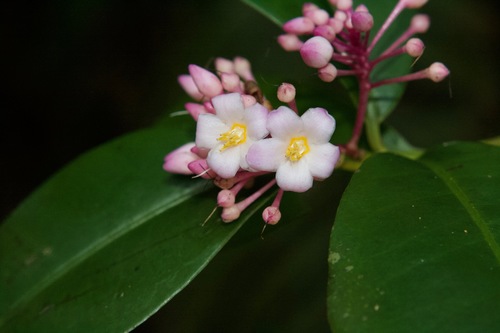
Ardisia laevigata
Blume
PrimulaceaeLeaves
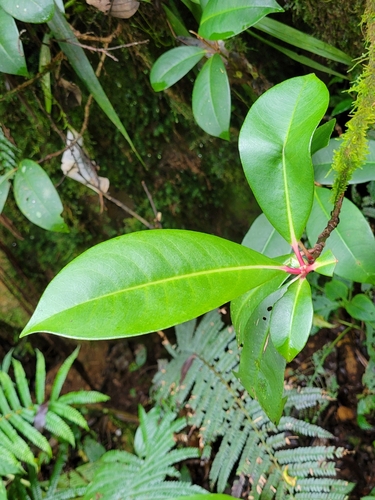
iNaturalist · cc-by-nc
(c) John P, some rights reserved (CC BY-NC), uploaded by John P
(c) John P, some rights reserved (CC BY-NC), uploaded by John P
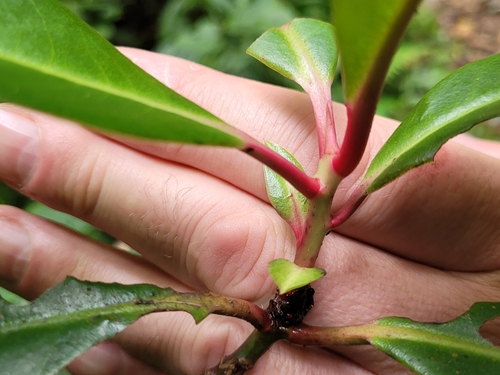
iNaturalist · cc-by-nc
(c) John P, some rights reserved (CC BY-NC), uploaded by John P
(c) John P, some rights reserved (CC BY-NC), uploaded by John P
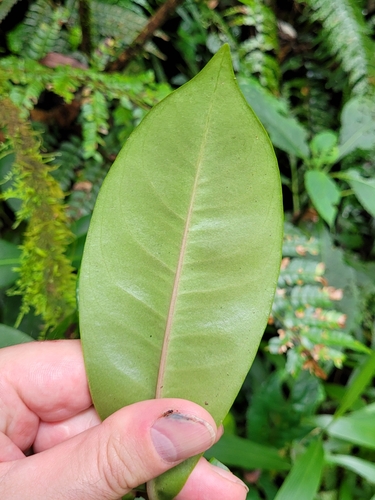
iNaturalist · cc-by-nc
(c) John P, some rights reserved (CC BY-NC), uploaded by John P
(c) John P, some rights reserved (CC BY-NC), uploaded by John P
What to Eat
Edible parts: Leaves
The leaves are eaten raw.
Where to Find It
A tropical plant. It grows in forests at 1,400-2,200 m above sea level.
Asia, Indonesia, Malaysia, SE Asia,
Countries: United Arab Emirates, Afghanistan, Armenia, Azerbaijan, Bangladesh, Bahrain, Brunei, Bhutan, China, Georgia, Indonesia, Israel, India, Iraq, Iran, Jordan, Japan, Kyrgyzstan, Cambodia, North Korea, South Korea, Kuwait, Kazakhstan, Laos, Lebanon, Sri Lanka, Myanmar, Mongolia, Maldives, Malaysia, Nepal, Oman, Philippines, Pakistan, Qatar, Saudi Arabia, Singapore, Syria, Thailand, Tajikistan, Timor-Leste, Turkmenistan, Turkey, Taiwan, Uzbekistan, Vietnam, Yemen
How to Identify
A shrub or small tree. It grows 5 m tall. The leaves are narrowly oblong and 10-23 cm long by 6-10 cm wide.
Notes
There are about 250-300 Ardisia species. They are mainly in the tropics. Also put in the family Myrsinaceae.
Names & Synonyms
Jambulan pante, Ki mangu, Lempeni, Rampasi
References (5)
- Bircher, A. G. & Bircher, W. H., 2000, Encyclopedia of Fruit Trees and Edible Flowering Plants in Egypt and the Subtropics. AUC Press. p 39
- Burkill, I.H., 1966, A Dictionary of the Economic Products of the Malay Peninsula. Ministry of Agriculture and Cooperatives, Kuala Lumpur, Malaysia. Vol 1 (A-H) p 219
- Martin, F.W. & Ruberte, R.M., 1979, Edible Leaves of the Tropics. Antillian College Press, Mayaguez, Puerto Rico. p 206
- PROSEA
- World Checklist of Useful Plant Species 2020. Royal Botanic Gardens, Kew