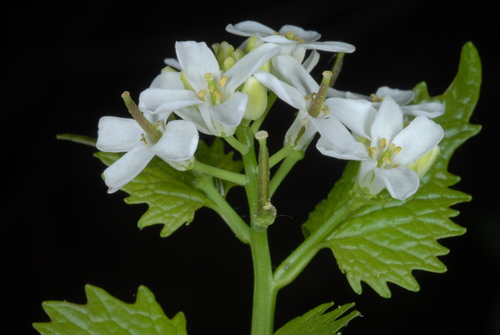
Sisymbrium matritense
P.W.Ball & Heywood

chunksta

Lynn Sweet

Lynn Sweet
What to Eat
Edible parts: Leaves
Eaten cooked. No specific plant part is recorded, though it is most likely the young leaves and possibly the young shoots and young flowering stems.
Where to Find It
It is a temperate plant.
Europe, Spain,
How to Identify
An annual or biennial plant reaching 0.9 m (3ft) tall with hermaphroditic flowers. Grows well in light sandy, medium loamy, or heavy clay soils across mildly acidic to mildly alkaline pH ranges. Tolerates semi-shade in light woodland or full sun and prefers moist soil conditions.
How to Grow
Not known
Propagation: Seed -
Medicinal Uses
None known.
Other Uses
None known Special Uses
Wikipedia
An annual or biennial plant reaching 0.9 m (3ft) tall with hermaphroditic flowers. Grows well in light sandy, medium loamy, or heavy clay soils across mildly acidic to mildly alkaline pH ranges. Tolerates semi-shade in light woodland or full sun and prefers moist soil conditions.
Notes
There are about 80 Sisymbrium species.
References (1)
- Plants for a Future database, The Field, Penpol, Lostwithiel, Cornwall, PL22 0NG, UK. http://www.scs.leeds.ac.uk/pfaf/