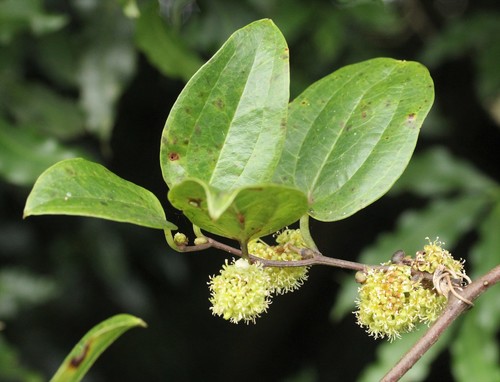
Smilax discotis
Warb.
Tuo bing ba qia
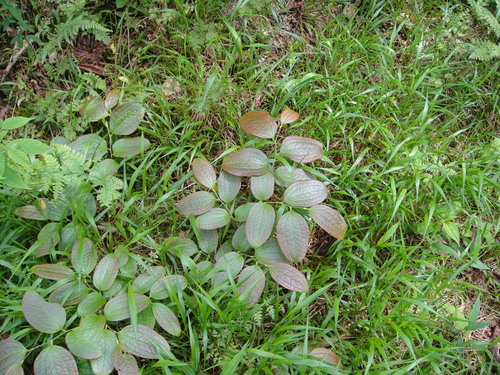
(c) 小铖/Smalltown, some rights reserved (CC BY-NC)
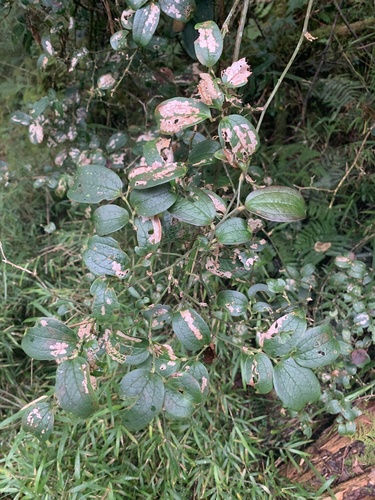
(c) 中岳瑰-徐崧瑋, some rights reserved (CC BY-NC)
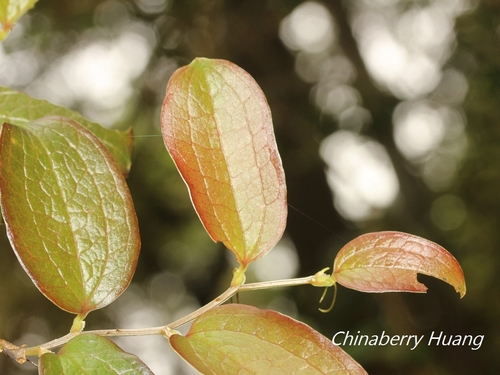
(c) Lijin Huang (紫楝), some rights reserved (CC BY-NC)
What to Eat
Edible parts: Fruit
The black fruit, up to 8mm in diameter, is edible. No further details are recorded.
Where to Find It
It is a temperate plant. In China it grows in shady places between 600-2100 m altitude. In Sichuan and Yunnan.
Africa, Asia, Britain, China, Egypt, Europe, France, Germany, India, Iran, Italy, Malaysia, Mediterranean, Middle East, Netherlands, North Africa, SE Asia, Spain,
How to Identify
A shrubby plant. The stem is branched. It is 0.5-3 m long. There can be a few prickles. The leaf stalk is 4-5 mm long and with broad wings. The leaf blade is 4-10 cm long by 2-5 cm wide. They can be larger. The flowering stalk is in the axil of a new leaf on a young branch. There are several flowers of both sexes. The flowers are yellowish-green. The fruit is a black berry 6-8 mm across,
How to Grow
Succeeds in most soils in sun or semi-shade. Not very hardy in Britain, it tolerates temperatures down to about -10°c and succeeds outdoors in milder parts of the country. Dioecious. Male and female plants must be grown if seed is required.
Propagation: Sow seed in March in a warm greenhouse — though this guidance likely applies to tropical members of the genus. Seeds from plants of cooler regions appear to need a period of cold stratification, and some species can take two or more years to germinate. For temperate species, sow in a cold frame as soon as seed is received, or ideally as soon as it is ripe. When seedlings germinate, prick out into individual pots and grow on in a greenhouse for at least the first year, though keeping them in pots for two years is preferable. Plant out into permanent positions in early summer. Divide in early spring as new growth begins; larger divisions can go straight into permanent positions, while smaller ones are best potted up and grown on in a lightly shaded cold frame until well established, then planted out in summer. Cuttings of half-ripe shoots can be taken in July in a frame.
Medicinal Uses
None known
Other Uses
None known Special Uses
Wikipedia
Deciduous climbing vine reaching 7 m tall, hardy to UK zone 8. Flowers appear May to June, with seeds maturing in October. Dioecious species requiring both male and female plants for seed production. Tolerates light sandy to heavy clay soils, mildly acid to alkaline conditions, and semi-shade to full sun. Prefers consistently moist soil.
Notes
There are about 300 Smilax species.
Names & Synonyms
References (4)
- Altschul, S.V.R., 1973, Drugs and Foods from Little-known Plants. Notes in Harvard University Herbaria. Harvard Univ. Press. Massachusetts. no. 371
- Chen Xinqi, Liang Songyun, Xu Jiemei, Tamura M.N., Liliaceae. Flora of China. p 32
- L. Diels, Bot. Jahrb. Syst. 29:256. 1900
- Plants for a Future database, The Field, Penpol, Lostwithiel, Cornwall, PL22 0NG, UK. http://www.scs.leeds.ac.uk/pfaf/