Sparaxis bulbifera
(L.) Ker-Gawl.
Harlequin flower

(c) Patrick Fraser, some rights reserved (CC BY-NC), uploaded by Patrick Fraser

(c) Tony Rebelo, some rights reserved (CC BY-SA), uploaded by Tony Rebelo
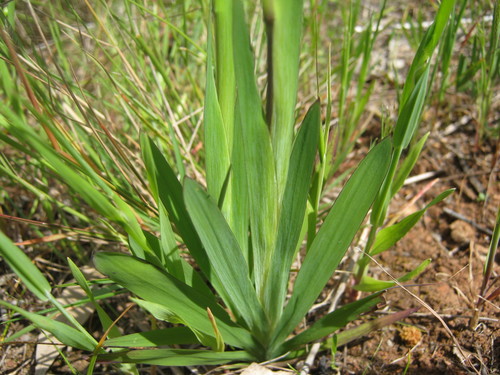
(c) Alan Dandie, some rights reserved (CC BY-NC), uploaded by Alan Dandie
What to Eat
Edible parts: Root, Tubers
The bulbous tubers are edible, though no further details on preparation are available.
Where to Find It
It is a temperate plant. It grows in wetlands. They do well in a Mediterranean climate. They will grow in most well-drained soils. They are resistant to frost and drought. In Argentina it grows below 200 m above sea level.
Africa, Argentina, Australia, Chile, South Africa, South America, Tasmania,
How to Identify
A herb that keeps growing from year to year. It grows 10-40 cm high. It forms a bulb or corm. This has small corms off the side. The stems are erect, wiry and branching. The leaves are green, narrow and 30 cm long. The flowers are an expanding tube shape. They are in clusters at the ends of branches. The flower petals are cream and purple.
How to Grow
Plants are best left for several years undisturbed before dividing the clumps. They can be planted from corms. Plants can be grown from seeds.
Propagation: Sow seed in early spring in a greenhouse in a light potting mix. Germination is usually free within 6 weeks, but seedlings are prone to damping off, so ensure good ventilation. Sow thinly to avoid the need to prick out in the first year, and apply liquid feeds during the growing season if needed. Divide small bulbs once plants go dormant at the end of the first growing season and grow on for at least another year before planting out. This species often flowers in its second year from seed. Offsets can be divided when the dormant plant is lifted in summer — larger bulbs can go straight to permanent positions, while smaller ones are best potted up and grown in a cold frame for the first year, planted out when dormant in late summer. Bulbils are freely produced on the flowering stem; pot them up as they begin to detach, keep fairly dry until November, then water lightly through winter.
Medicinal Uses
None known
Other Uses
None known
Wikipedia
Source ↗Sparaxis bulbifera, commonly known as harlequin flower, is a bulb-forming perennial plant. The species is native to Cape Province in South Africa and naturalised in the Azores and Australia. It grows to between 15 and 60 cm high and has white to cream flowers. This flower is often found growing next to Geissorhiza radians. It has branched stems and lanceolate leaves. It is one of the few species native to sandy, waterlogged soils. Sparaxis bulbifera is popular in ornamental gardening due to its attractive blooms and resilience. The plant's flowers are noted for their striking appearance and ability to thrive in a variety of soil conditions, making them a favorite among gardeners looking to add a touch of exotic beauty to their landscapes. In addition to its aesthetic appeal, Sparaxis bulbifera plays a role in local ecosystems, providing nectar for various pollinators, including bees and butterflies.
Notes
There are 6-15 Sparaxis species. They grow in South Africa. It can be invasive.
Names & Synonyms
References (8)
- Ann. Bot. (Koenig & Sims) 1:225. 1804
- Curtis, W.M., & Morris, D.I., 1994, The Student's Flora of Tasmania. Part 4B St David's Park Publishing, Tasmania, p 415
- Hedrick, U.P., 1919, (Ed.), Sturtevant's edible plants of the world. p 629
- Hussey, B.M.J., Keighery, G.J., Cousens, R.D., Dodd, J., Lloyd, S.G., 1997, Western Weeds. A guide to the weeds of Western Australia. Plant Protection Society of Western Australia. p 36
- Marinelli, J. (Ed), 2004, Plant. DK. p 254 (Other species), 468,
- Paczkowska, G. & Chapman, A.R., 2000, The Western Australian Flora. A Descriptive Catalogue. Western Australian Herbarium. p 72
- Plants for a Future database, The Field, Penpol, Lostwithiel, Cornwall, PL22 0NG, UK. http://www.scs.leeds.ac.uk/pfaf/
- Tasmanian Herbarium Vascular Plants list p 66


