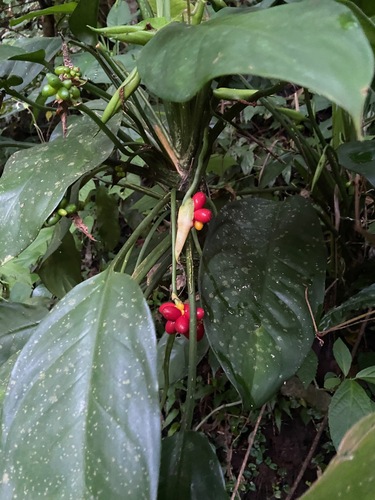
Arisaema atrorubens
(Aiton) Blume
Jack-in-the-pulpit, Dragon root, Indian turnip

(c) Candice Talbot, some rights reserved (CC BY-NC)

(c) Susan Elliott, some rights reserved (CC BY-NC)

(c) Susan Elliott, some rights reserved (CC BY-NC)
What to Eat
Edible parts: Corms, Fruit, Root
The corms, roots, and fruit are edible.
Known Hazards
Where to Find It
It is a temperate plant. It grows in rich woods, thickets and swamps.
How to Identify
A herb. It keeps growing from year to year. It grows 60-90 cm high. It has a thick root. The leaves are compound and usually have 3 leaflets. There are 2 leaves on each flower stalk. The flowers grow at the base of the club shaped flower spike. The fruit are bright red berries.
Medicinal Uses
If the plant is cooked it can be eaten as a root vegetable. The calcium oxalate crystals produce a peppery flavor. If the plant is sliced then dried it can be eaten like potato chips or ground into a flour. A preparation of the root was reported to have been used by Native Americans as a treatment for sore eyes. Preparations were also made to treat rheumatism, bronchitis, and snakebites, as well as to induce sterility. One account from the Meskwaki people states that they would chop the herb's corm and mix it with meat and leave the meat out for their enemies to find. The taste of the oxalate would not be detectable because of the flavored meat, but consuming the meat reportedly caused their enemies pain and death. They have also reportedly used it to determine the fate of the sick by dropping a seed in a cup of stirred water; If the seed went around four times clockwise, the patient would recover, if it went around less than four times they would not. It is hardy to USDA plant hardiness zone 3.
Production
There are about 150-170 Arisaema species.
Names & Synonyms
References (5)
- Esperanca, M. J., 1988. Surviving in the wild. A glance at the wild plants and their uses. Vol. 2. p 29
- Hedrick, U.P., 1919, (Ed.), Sturtevant's edible plants of the world. p 72
- Kuhnlein, H. V. and Turner, N. J., 1991, Traditional Plant Foods of Canadian Indigenous Peoples. Food and Nutrition in History and Anthropology Volume 8. Gordon and Breach. p 41
- Rumphia 1:97. 1835
- Toupal, R. S. & Hollenback, K., 2009, An Ethnobotany of Indiana Dunes National Lakeshore: Plant Uses of the Ojibwa People. Bureau of Applied research in Anthropology. University of Arizona