Strephonema pseudocola
A Chev.
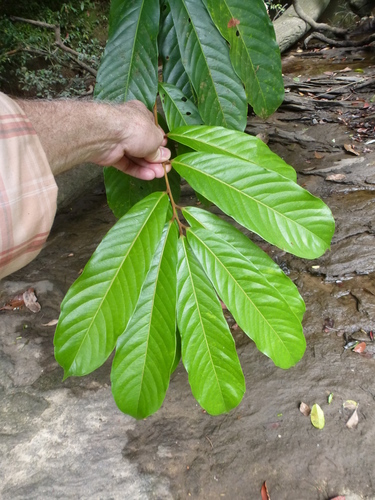
(c) Carel Jongkind, some rights reserved (CC BY-NC), uploaded by Carel Jongkind
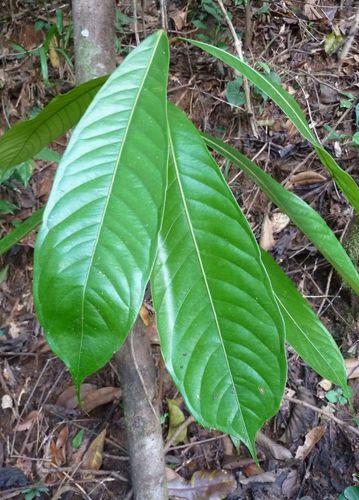
(c) Carel Jongkind, some rights reserved (CC BY-NC), uploaded by Carel Jongkind
What to Eat
Edible parts: Nuts, Seeds
The bitter seeds are used like cola nuts.
Where to Find It
A tropical plant. It grows in wet and moist evergreen forests.
Africa, Cameroon, Central Africa, Central African Republic, CAR, Côte d'Ivoire, Ghana, Ivory Coast, Liberia, Nigeria, Sierra Leone, West Africa,
How to Identify
A tree. It grows 35 m tall. The trunk is 3 m around. The leaves are alternate and simple. They are large. They are 20-35 cm long by 6-8 cm wide. The flowers are yellowish-white and have a brown covering. The fruit are large, round and fleshy with a stone inside. They are 5-6 cm across. There is one seed per stone.
Wikipedia
Source ↗Strephonema pseudocola is a species of flowering plant in the family Combretaceae. It is a tree found in the forests of tropical West Africa. It was first described from the Ivory Coast.
Names & Synonyms
Awuruku, Eyengwe, Kangmbom, Nbomu, Poto-poto
References (4)
- Jardin, C., 1970, List of Foods Used In Africa, FAO Nutrition Information Document Series No 2.p 36
- JSTOR Global Plants edible
- Oteng-Amoako, A. A. (Ed.), 2006, 100 Tropical African Timber Trees from Ghana. Forestry Research Institute of Ghana. p 234
- Vivien, J. & Faure, J.J., 1985, Abres des forets dense d'Afrique Centrale. Agence de Cooperation Culturelle et Technique. Paris. p 174


