Tabernaemontana elegans
Stapf
Lowveld toad tree

(c) Bernard DUPONT, some rights reserved (CC BY-NC-SA)
(c) Craig Peter, some rights reserved (CC BY-NC)
(c) Craig Peter, some rights reserved (CC BY-NC)
What to Eat
Edible parts: Fruit, Leaves
The bright orange fruit pulp is eaten fresh and is commonly used throughout Mozambique. The leaves are used to curdle milk.
Known Hazards
Where to Find It
A tropical plant. It is native from East Africa to South Africa. It grows at low altitudes on the ends of evergreen forests near rivers. It can be in coastal scrub forest. It is often in rocky places. In East Africa it grows from sea level to 850 m above sea level. It can grow in arid places. It suits hardiness zones 9-12.
Africa, Australia, East Africa, Eswatini, Kenya, Malawi, Mozambique, Somalia, South Africa, Southern Africa*, Swaziland, Tanzania, Zambia, Zimbabwe,
How to Identify
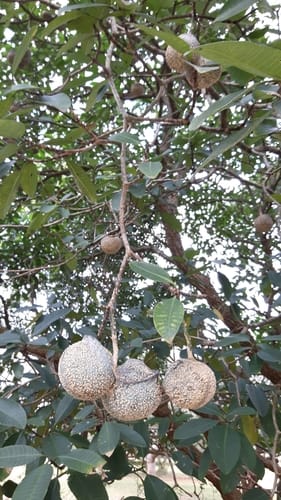
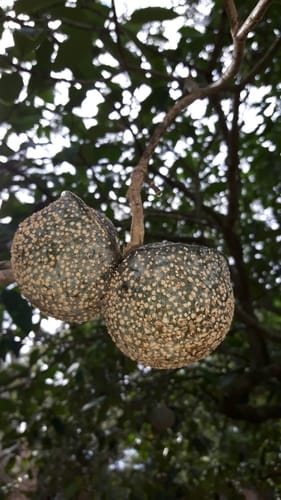
A small tree. It grows 3-5 m tall. It can reach 10 m tall. The bark is thick and pale cream. It is corky and deeply cracked. The small branches have tough stringy bark. The leaves are oblong and 9-20 cm long by 5-7 cm wide. They are thinly leathery, The are glossy dark green above and paler underneath. The flowers are white to cream and 2.5 cm across. They occur in loose heads in the axils of leaves or at the ends of branches. The fruit are paired. Each section is almost round and joined at the base. They are 6-7 cm long by 4-5 cm wide. They are ridged with the tip turned down into a beak. They are dark green dotted with pale grey warts. They split when mature to expose bright orange pulp with many brown seeds. The pulp is edible.
How to Grow
At least some forms of this tree have shown resistance to light frosts. Succeeds in full sun to half-shade. It requires a moderate amount of water. Because of its corky bark, the plant is fairly fire resistant.
Medicinal Uses
Tabernaemontana elegans has some local medicinal uses including the treatment of heart disease, cancer, tuberculosis and venereal diseases. The species is also used as an aphrodisiac. The Zulu name for this genus, iNomfi, refers to the use of their sticky, milky latex as bird-lime.
Other Uses
A latex is tapped from the plant. It is used as a glue for arrow heads and for medicinal purposes. The wood is white and easy to work. It is used for making spoons, knife and sword handles, bows and arrows, building poles and pegs for animal traps. The wood is used for fuel.
Wikipedia
Source ↗Tabernaemontana elegans, the toad tree, is a shrub or small tree in the family Apocynaceae. It is native to eastern Africa.
Production
In southern Africa plants flower September to March and fruit February to August.
Other Information
It is a commonly used fruit in Mozambique.
Notes
There are 99-110 Tabernaemontana species. They are tropical and subtropical.


