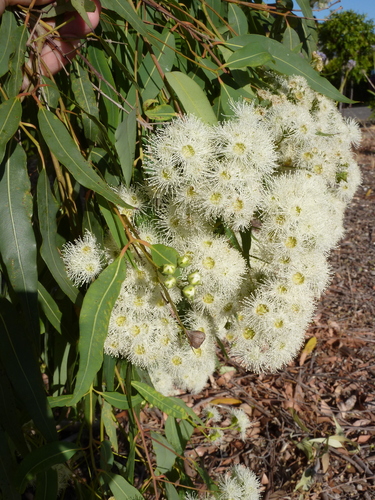
Thryptomene maisonneuvei
F. Muell.
Heath myrtle, Desert thryptomene
MyrtaceaeFlowers
iNaturalist · cc-by-nc
(c) chrissara, some rights reserved (CC BY-NC)
(c) chrissara, some rights reserved (CC BY-NC)
iNaturalist · cc-by-nc
(c) chrissara, some rights reserved (CC BY-NC)
(c) chrissara, some rights reserved (CC BY-NC)
iNaturalist · cc-by-nc
(c) chrissara, some rights reserved (CC BY-NC)
(c) chrissara, some rights reserved (CC BY-NC)
What to Eat
Edible parts: Honey, Flowers - nectar
The nectar is beaten from the flowers in early morning and consumed as a drink.
Where to Find It
It is a subtropical plant. It grows on red sand dunes and sandplains. It can grow in arid places.
Australia*,
Countries: Australia
How to Identify
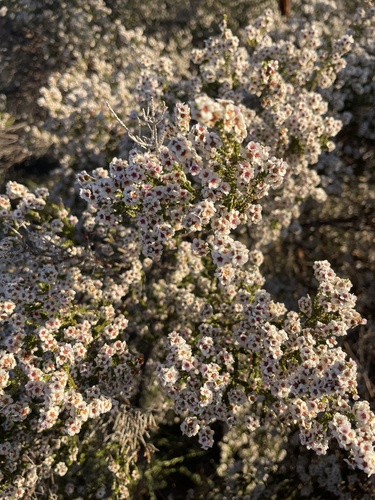
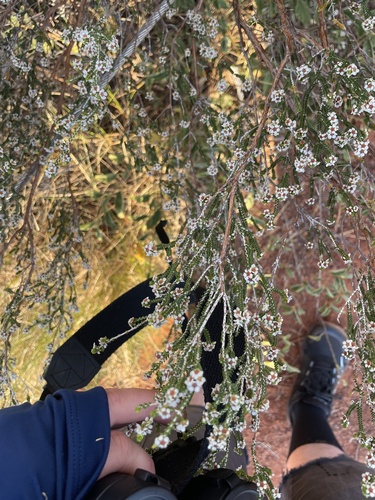
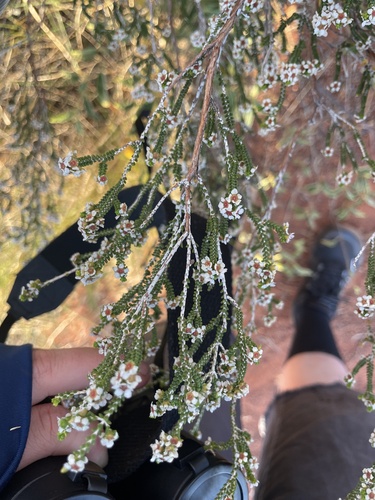
A low dense shrub. It has many branches and is round and compact. It grows 0.3-1.5 m high. The bark peels in thin red strips. The leaves are very small and crowded along the ends of the small branches. They have a sweet smell when crushed. The flowers are small and white or pinkish. The fruit are small woody capsules.
Notes
There are 40 Thryptomene species. They grow in Australia.
References (5)
- Cherikoff V. & Isaacs, J., The Bush Food Handbook. How to gather, grow, process and cook Australian Wild Foods. Ti Tree Press, Australia p 191
- Goddard, C. & Kalotas A. (Eds.), Punu, 2002, Yankunytjatjara plant use. Jukurrpa books. p 56 (As Aluta maisonneuvei)
- Latz, P.K., 1996, Bushfires and Bushtucker: Aboriginal plant use in Central Australia. IAD Press Alice Springs p 285
- Lord, E.E., & Willis, J.H., 1999, Shrubs and Trees for Australian gardens. Lothian. p 194
- Paczkowska, G . & Chapman, A.R., 2000, The Western Australian Flora. A Descriptive Calatogue. Western Australian Herbarium. p 403