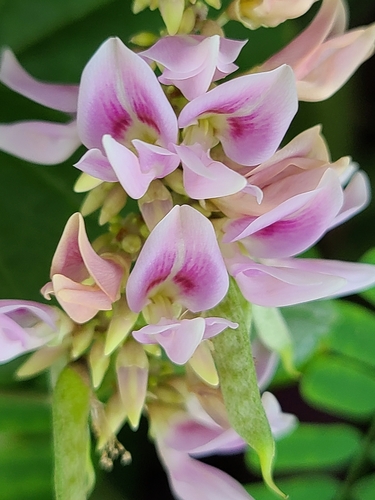
Trifolium aureum
Pollich
Large hop clover, Yellow clover
(c) sabina88, some rights reserved (CC BY-NC), uploaded by sabina88

(c) Douglas Goldman, some rights reserved (CC BY-SA)

(c) Douglas Goldman, some rights reserved (CC BY-SA)
What to Eat
Edible parts: Seeds, Leaves, Flowers
The seeds are eaten raw in salads or ground into flour. Young leaves are eaten cooked. Flowers are brewed as tea.
Where to Find It
It is a temperate plant. In Argentina it grows between 500-1,000 m above sea level.
Argentina, Asia, Caucasus, Chile, China, Europe, Falklands, Luxembourg, North America, Siberia, USA,
How to Identify
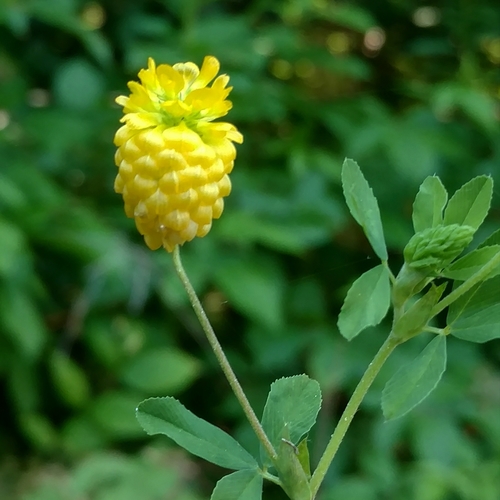
A herb. It grows each year from seed. It grows 20-50 cm tall. The leaves have 3 leaflets spread like fingers on a hand. The leaflets are 10-23 mm long by 5-8 mm wide. There are teeth along the edge. There are 25-40 flowers in a group.
Wikipedia
Source ↗Trifolium aureum, known by the various common names large hop trefoil, large trefoil, large hop clover, golden clover or hop clover, is a species of flowering plant native to much of Eurasia. Large hop trefoil is a small erect herbaceous biennial plant growing to 10–30 cm (4–12 in) tall. Like all clovers, it has leaves divided into three sessile leaflets, each leaflet 15–25 mm (0.6–1.0 in) long and 6–9 mm broad. Its yellow flowers are arranged into small, elongated round inflorescences 12–20 mm diameter, located at the end of the stem. Each individual flower is decumbent. As they age, the flowers become brown and paper-like. The fruit is a pod usually containing two seeds. The closely related Trifolium campestre (hop trefoil) is a similar, but shorter, spreading, species with smaller leaves and flowers. The middle leaflet of its leaves also has a short rachis.
Notes
There are about 240 Trifolium species. They are mostly temperate.
Names & Synonyms
Large trefoil, Trevo
References (6)
- Hist. pl. Palat. 2:344. 1777
- Kermath, B. M., et al, 2014, Food Plants in the Americas: A survey of the domesticated, cultivated and wild plants used for Human food in North, Central and South America and the Caribbean. On line draft. p 874
- Upson, R., & Lewis R., 2014, Updated Vascular Plant Checklist and Atlas for the Falkland Islands. Falklands Conservation and Kew.
- USDA, ARS, National Genetic Resources Program. Germplasm Resources Information Network - (GRIN). [Online Database] National Germplasm Resources Laboratory, Beltsville, Maryland. Available: www.ars-grin.gov/cgi-bin/npgs/html/econ.pl (10 April 2000)
- Wiersema, J. H. & Leon, B., 2013, World Economic Plants. A Standard Reference CRC Press. 2nd Ed. p 694
- World Checklist of Useful Plant Species 2020. Royal Botanic Gardens, Kew