Trigonella foenum-graecum
L.
Fenugreek
(c) Ron Frumkin, some rights reserved (CC BY-NC), uploaded by Ron Frumkin

(c) Максим Шумских, some rights reserved (CC BY)
(c) Вадим, some rights reserved (CC BY-NC)
What to Eat
Edible parts: Seeds, Leaves, Herb, Spice, Young pods, Vegetable
The seed can be cooked or sprouted and eaten raw, with a strong spicy flavour reminiscent of lovage or celery. Ground into a powder, it serves as a principal ingredient in curries and mango chutney, and is also used in pickles, spice mixes, and as a flavouring in bread. The seed is usually lightly roasted before use to reduce bitterness. Each seed is about 3mm long, with 10–20 seeds per pod. Nutritionally, the seed contains roughly 6% moisture, 23% protein, 10% carbohydrate, 8% fat, 10% fibre, and 4.3% ash, and is a good source of iron, phosphorus, and sulphur. Ground seeds can impart a maple syrup flavour to foods and may also serve as a maple syrup substitute. To sprout, soak seeds for 12 hours in warm water, then allow to sprout for 3–5 days; the resulting shoots have a spicy flavour and can be added to salads or cooked. An essential oil from the seed is used to flavour imitation maple syrup, vanilla compositions, liquorice, and pickles, and also has medicinal applications. Leaves can be used raw or cooked — very aromatic, they work well in small quantities added to salads, or used as a potherb, a flavouring for root vegetables, or an ingredient in curries. Seedpods are edible when cooked. The roasted seed makes a coffee substitute, and a soothing tea can be brewed from the leaves and seed.
Known Hazards
Where to Find It
It suits dry temperate and subtropical regions. It needs a well-drained soil. It needs a sunny position. In Nepal they grow up to 2500 m altitude. It can tolerate frost. It can grow in acid, neutral and alkaline soils. It can grow in salty soils. It grows in areas with an annual rainfall between 380-1,530 mm. It can grow in arid places. It suits hardiness zones 9-11. Hobart Botanical Gardens. In Sichuan.
Afghanistan, Africa, Albania, Algeria, Arabia, Argentina, Armenia, Asia, Australia, Austria, Azerbaijan, Balkans, Bangladesh, Belgium, Britain, Bulgaria, Caucasus, Central Asia, Chile, China, Cuba, Cyprus, Czech Republic, East Africa, Egypt, Estonia, Ethiopia, Europe*, Fiji, France, Georgia, Germany, Greece, Himalayas, Hungary, India, Indochina, Indonesia, Iran, Iraq, Israel, Italy, Japan, Jordan, Kenya, Kuwait, Kyrgyzstan, Latvia, Lebanon, Libya, Lithuania, Luxembourg, Macedonia, Malawi, Malaysia, Mali, Mediterranean, Middle East, Moldova, Mongolia, Morocco, Mozambique, Myanmar, Nepal, North Africa, North America, Northeastern India, Pacific, Pakistan, Palestine, Portugal, Romania, Russia, Saudi Arabia, SE Asia, Serbia, Sikkim, Slovakia, Slovenia, Somalia, Southern Africa, South America, Spain, Sri Lanka, Sudan, Switzerland, Syria, Tajikistan, Tanzania, Tasmania, Tibet, Tunisia, Turkey, Türkiye, Turkmenistan, Ukraine, USA, Uzbekistan, Vietnam, West Africa, West Indies, Yemen, Yugoslavia, Zimbabwe,
How to Identify
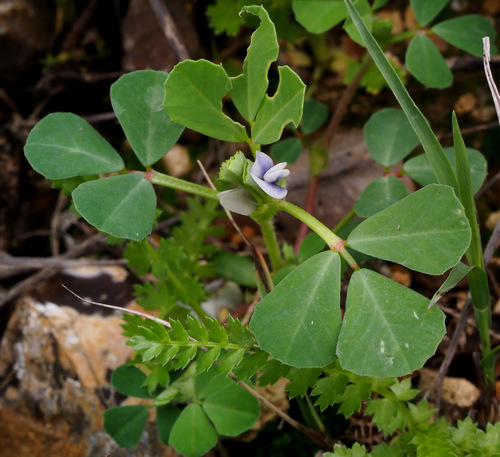
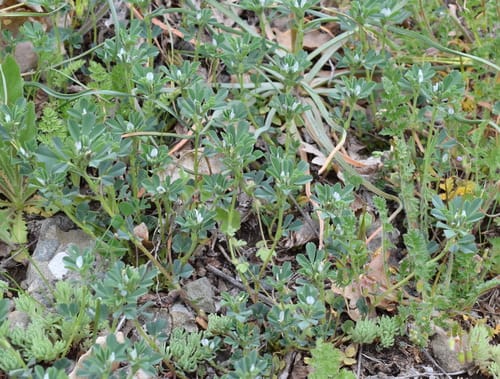
A small herb. It grows up to 30-60 cm tall. It spreads 20-30 cm wide. It grows each year from seed. The leaves have 3 leaflets like clover. The leaflets are oval and do not have stalks. They are 1.3-2.7 cm long by 0.5-1.7 cm wide. They are spoon shaped with teeth and a rounded tip. They narrow towards the base. The leaves are light green. The flowers are small and pea like. They are yellow. The fruit is a long narrow pod. It has a pronounced beak. The seeds are like small golden brown pieces of gravel.
Nutrition Score: 61/100
| Part | Moisture | kJ | kcal | Protein | Vit A | Vit C | Iron | Zinc |
|---|---|---|---|---|---|---|---|---|
| Seed | 8.8 | 1352 | 323 | 6.4 | 6 | 3 | 33.5 | 2.5 |
| Leaves | 87.6 | 146 | 35 | 4.6 | 92 | — | 8.8 | — |
| Seed Sprouts | 90.4 | 125 | 30 | 2.8 | — | — | — | — |
How to Grow
Succeeds in ordinary garden soil, preferring a well-drained loamy soil in full sun. Requires a warm, sheltered position in Britain. Plants are hardy to about -15°c. Fenugreek is widely cultivated for its edible seed in warm temperate and tropical regions, there are some named varieties. Seed production is more problematic in Britain due to the cooler and moister summers. The seed is ripened intermittently over a period of some weeks making harvesting more complicated. Plants take about 16 weeks to mature in warmer climes, probably about 4 weeks longer in Britain. This species has a symbiotic relationship with certain soil bacteria, these bacteria form nodules on the roots and fix atmospheric nitrogen. Some of this nitrogen is utilized by the growing plant but some can also be used by other plants growing nearby. When removing plant remains at the end of the growing season, it is best to only remove the aerial parts of the plant, leaving the roots in the ground to decay and release their nitrogen.
Propagation: Pre-soak seed for 12 hours in warm water, then sow in spring directly in situ.
Medicinal Uses
Fenugreek is widely used in herbal medicine, particularly across North Africa, the Middle East, and India. The seeds are very nourishing and are given to convalescents and to support weight gain, including in cases of anorexia nervosa. The seeds should not be prescribed medicinally to pregnant women, as they can induce uterine contractions. Research has shown the seeds can inhibit liver cancer, lower blood cholesterol, and exert an antidiabetic effect. The seed and leaves are anticholesterolemic, anti-inflammatory, antitumour, carminative, demulcent, deobstruent, emollient, expectorant, febrifuge, galactogogue, hypoglycaemic, laxative, parasiticide, restorative, and act as a uterine tonic. The seed yields a strong mucilage, making it useful for treating inflammation and ulcers of the stomach and intestines. A decoction of the ground seeds, taken internally, serves to drain the sweat ducts. The seed is considered one of the most effective tonics for physical debility caused by anaemia or infectious disease, particularly where a nervous factor is involved. It is also used for late-onset diabetes, poor digestion during convalescence, insufficient lactation, painful menstruation, and labour pains. The seeds are said to freshen bad breath and restore a dulled sense of taste. Externally, ground seeds can be applied as a poultice for abscesses, boils, ulcers, and burns, or used as a douche for excessive vaginal discharge. Leaves are harvested during the growing season and used fresh or dried; seeds are harvested when fully ripe and dried for later use. Compounds from the plant have demonstrated cardiotonic, hypoglycaemic, diuretic, antiphlogistic, and hypotensive activity. An alkaloid called trigonelline has shown potential in cancer therapy. The seed contains the saponin diosgenin, important in the synthesis of oral contraceptives and sex hormones, and other saponins are extracted for use in pharmaceutical products. The German Commission E has approved Trigonella foenum-graecum for loss of appetite and inflammation of the skin.
Other Uses
An essential oil obtained from the seed is used as a food flavouring and medicinally. The dried plant has a strong hay-like aroma. Crushed seed mixed with oil and massaged into the scalp is recommended for promoting glossy hair. An infusion of the seed used as a skin lotion is said to benefit the complexion. The plant makes an excellent green manure crop — it is fast-growing and vigorous, produces substantial bulk, and fixes a large quantity of atmospheric nitrogen. A yellow dye is obtained from the seed.
Wikipedia
Source ↗Annual herb growing to 0.6m (2ft) tall with 0.4m (1ft 4in) spread, reaching mature size quickly. Flowers June to August with seeds ripening August to September. Hardy to UK zone 6. Hermaphrodite flowers pollinated by insects. Grows in light sandy, medium loamy, and heavy clay soils with mildly acidic to basic pH. Requires full sun and adapts to dry or moist soil. Fixes nitrogen from the atmosphere.
Production
Plants mature in 3-5 months. The seeds are harvested when ripe. Often the whole plant is pulled up and dried and the seed threshed out. They are dried in a warm dry spot. They are normally dried to 10% moisture.
Other Information
It is a commercially cultivated vegetable.
Notes
The seeds contain hormone precursors which increase breast milk. The are also used to cure diabetes.
Names & Synonyms
Alba, Alholva, Asumodhagam, Bhaji, Bird's foot, Bockshornklee, Cemenotu, Chandrika, Cow's horn, Fenogreco, Fenugrec, Fieno greco, Goat's horn, Greek hay seed, Helbeh, Hilbah, Hilbeh, Ho-lo-ba, Hoemgreeb, Houjeh, Ku tou, Manthya, Menk-palle, Mente, Mentesoppu, Mentikoora, Mentulu, Methi ka saag, Methi sak, Methi-shak, Methi, Methika, Methini, Methuka, Mnogosemenski triplat, Muthi, Pe-natha, Uluhaal, Uluva, Vandeyam, Venthiam
References (67)
- Ali-Shtayeh, M. S., et al, 2008, Traditional knowledge of wild edible plants used in Palestine (Northern West Bank): A comparative study. J Ethnobiol Ethnomed. 4: 13
- Al-Qura'n, S. A., 2010, Ethnobotanical and Ecological Studies of Wild Edible Plants in Jordan. Libyan Agriculture Research Center Journal International 1(4):231-243
- Ambasta, S.P. (Ed.), 2000, The Useful Plants of India. CSIR India. p 651
- Arora, R. K., 2014, Diversity in Underutilized Plant Species - An Asia-Pacific Perspective. Bioversity International. p 46, 110
- Blamey, M and Grey-Wilson, C., 2005, Wild flowers of the Mediterranean. A & C Black London. p 96
- Bodkin, F., 1991, Encyclopedia Botanica. Cornstalk publishing, p 993
- Bremness, L., 1994, Herbs. Collins Eyewitness Handbooks. Harper Collins. p 273
- Burkill, H. M., 1985, The useful plants of west tropical Africa, Vol. 1. Kew.
- Burkill, I.H., 1966, A Dictionary of the Economic Products of the Malay Peninsula. Ministry of Agriculture and Cooperatives, Kuala Lumpur, Malaysia. Vol 2 (I-Z) p 2221
- Cheifetz, A., (ed), 1999, 500 popular vegetables, herbs, fruits and nuts for Australian Gardeners. Random House p 161
- Cundall, P., (ed.), 2004, Gardening Australia: flora: the gardener's bible. ABC Books. p 1429
- Duguma, H. T., 2020, Wild Edible Plant Nutritional Contribution and Consumer Perception in Ethiopia. Hindawi International Journal of Food Science Volume 2020, Article ID 2958623, 16 pages
- Ertug, F, Yenen Bitkiler. Resimli Türkiye Florası -I- Flora of Turkey - Ethnobotany supplement
- Esperanca, M. J., 1988. Surviving in the wild. A glance at the wild plants and their uses. Vol. 1. p 350
- Facciola, S., 1998, Cornucopia 2: a Source Book of Edible Plants. Kampong Publications, p 112
- FAO, 1988, Traditional Food Plants, FAO Food and Nutrition Paper 42. FAO Rome p 493
- Flora Somalia. http://plants.jstor.org
- Flora of Pakistan. www.eFloras.org
- Grubben, G. J. H. and Denton, O. A. (eds), 2004, Plant Resources of Tropical Africa 2. Vegetables. PROTA, Wageningen, Netherlands. p 565
- Hedrick, U.P., 1919, (Ed.), Sturtevant's edible plants of the world. p 655
- Hemphill, I, 2002, Spice Notes Macmillan. p 179
- Hermandez Bermejo, J.E., and Leon, J. (Eds.), 1994, Neglected Crops. 1492 from a different perspective. FAO Plant Production and Protection Series No 26. FAO, Rome. p 264, 281
- Hibbert, M., 2002, The Aussie Plant Finder 2002, Florilegium. p 301
- Hinnawi, N. S. A., 2010, An ethnobotanical study of wild edible plants in the Northern West Bank "Palestine". An-Najah National University. p 94
- http://www.botanic-gardens-ljubljana.com/en/plants
- Hutton, W., 1997, Tropical Herbs and Spices of Indonesia. Periplus. p 31
- Hu, Shiu-ying, 2005, Food Plants of China. The Chinese University Press. p 485
- ILDIS Legumes of the World http:www:ildis.org/Legume/Web
- Jadhav, V. D., Mahadkar, S. D. & Valvi. S. R., 2011, Documentation and ethnobotanical survey of wild edible plants from Kolhapur district. Recent Research in Science and Technology 3(12): 58-63
- Jardin, C., 1970, List of Foods Used In Africa, FAO Nutrition Information Document Series No 2.p 30, 107
- Jha, P. K., et al, 1996, Plant genetic resources of Nepal: A guide for plant breeders of agricultural, horticultural and forestry crops. Euphytica 87:189-210
- JSTOR Global Plants edible
- Kays, S. J., and Dias, J. C. S., 1995, Common Names of Commercially Cultivated Vegetables of the World in 15 languages. Economic Botany, Vol. 49, No. 2, pp. 115-152
- Kiple, K.F. & Ornelas, K.C., (eds), 2000, The Cambridge World History of Food. CUP p 433, 1773
- Kumar, A., et al, 2012, Ethnobotanical Edible Plant Biodiversity of Lepcha Tribes. Indian Forester, 138 (9):798-803
- Kybal, J., 1980, Herbs and Spices, A Hamlyn Colour Guide, Hamlyn Sydney p 196
- Lazarides, M. & Hince, B., 1993, Handbook of Economic Plants of Australia, CSIRO. p 241
- Manandhar, N.P., 2002, Plants and People of Nepal. Timber Press. Portland, Oregon. p 466
- Martin, F.W. & Ruberte, R.M., 1979, Edible Leaves of the Tropics. Antillian College Press, Mayaguez, Puerto Rico. p 201
- Medhi, P. & Borthakur, S. K., 2012, Phytoresources from North Cachur Hills of Assam -3: Edible plants sold at Hflong market. Indian Journal of Natural Products and Resources. 3(1) pp 84-109
- Menninger, E.A., 1977, Edible Nuts of the World. Horticultural Books. Florida p 100
- Miguel, E., et al, 1989, A checklist of the cultivated plants of Cuba. Kulturpflanze 37. 1989, 211-357
- Molla, A., Ethiopian Plant Names. http://www.ethiopic.com/aplants.htm
- Mulherin, J., 1994, Spices and natural flavourings. Tiger Books, London. p 49
- Oomen, H.A.P.C., & Grubben, G.J.H., 1978, Tropical Leaf Vegetables in Human Nutrition, Communication 69, Department of Agricultural research, RTI Amsterdam, p 91
- Oran, S. A. S., 2015, Selected Wild Aromatic Plants in Jordan. International Journal of Medicinal Plants. Photon 108 (2015) 686-699
- Pham-Hoang Ho, 1999, An Illustrated Flora of Vietnam. Nha Xuat Ban Tre. p 980
- Plants for a Future database, The Field, Penpol, Lostwithiel, Cornwall, PL22 0NG, UK. http://www.scs.leeds.ac.uk/pfaf/
- Rashid, H. E., 1977, Geography of Bangladesh. Westview. p 281
- Royal Botanic Gardens, Kew (1999). Survey of Economic Plants for Arid and Semi-Arid Lands (SEPASAL) database. Published on the Internet; http://www.rbgkew.org.uk/ceb/sepasal/internet [Accessed 29th April 2011]
- Schneider, E., 2001, Vegetables from Amaranth to Zucchini: The essential reference. HarperCollins. p 284
- Shah, G.L., 1984, Some economically important plant of Salsette Island near Bombay. J. Econ. Tax. Bot. Vol. 5 No. 4 pp 753-765
- Shah, S. K., 2014, Dietary contribution of underutilized minor crops and indigenous plants collected from uncultivated lands and forests in Nepal. in Promotion of Underutilized Indigenous Food Resources for Food Security and Nutrition in Asia and Pacific. FAO. Bangkok p 64
- Sharma, B.B., 2005, Growing fruits and vegetables. Publications Division. Ministry of Information and broadcasting. India. p 193
- Sher, H. et al, 2011, Ethnobotanical and Economic Observations of Some Plant Resources from the Northern Parts of Pakistan. Ethnobotany research & Applications 9:027-041
- Solomon, C., 2001, Encyclopedia of Asian Food. New Holland. p 143
- Sp. pl. 2:777. 1753
- Sukenti, K., et al, 2016, Ethnobotanical study on local cuisine of the Sasak tribe in Lombok Island, Indonesia. Journal of Ethnic Foods. 3 (2016) 189-200 p 198
- Terra, G.J.A., 1973, Tropical Vegetables. Communication 54e Royal Tropical Institute, Amsterdam, p 80
- Tyagi, R. K., et al, 2004, Conservation of Spices Germplasm in India. Indian J. Plant Genet. Resour. 17(3): 163-174
- USDA, ARS, National Genetic Resources Program. Germplasm Resources Information Network - (GRIN). [Online Database] National Germplasm Resources Laboratory, Beltsville, Maryland. Available: www.ars-grin.gov/cgi-bin/npgs/html/econ.pl (10 April 2000)
- van Wyk, B., 2005, Food Plants of the World. An illustrated guide. Timber press. p 367
- Wiersema, J. H. & Leon, B., 2013, World Economic Plants. A Standard Reference CRC Press. 2nd Ed. p 697
- Williamson, J., 2005, Useful Plants of Malawi. 3rd. Edition. Mdadzi Book Trust. p 250
- Woodward, P., 2000, Asian Herbs and Vegetables. Hyland House. p 128
- World Checklist of Useful Plant Species 2020. Royal Botanic Gardens, Kew
- Zeven, A. C. & de West, J. M. J., 1982, Dictionary of cultivated plants and their regions of diversity. Wageningen. p 96




