Trigonotis procumbens
(Warb.) I. M. Johnst.
Waterleaf
BoraginaceaeLeaves

gbif · cc0
President and Fellows of Harvard College
President and Fellows of Harvard College

gbif · cc0
President and Fellows of Harvard College
President and Fellows of Harvard College

gbif · cc0
President and Fellows of Harvard College
President and Fellows of Harvard College
What to Eat
Edible parts: Leaves
The leaves are eaten.
Where to Find It
A tropical plant. It occurs at high altitudes between 1,600-3,700 m above sea level. It is endemic to New Guinea.
Asia, Indonesia, Pacific, Papua, Papua New Guinea, PNG, SE Asia,
Countries: United Arab Emirates, Afghanistan, Armenia, Australia, Azerbaijan, Bangladesh, Bahrain, Brunei, Bhutan, China, Fiji, Micronesia, Georgia, Indonesia, Israel, India, Iraq, Iran, Jordan, Japan, Kyrgyzstan, Cambodia, Kiribati, North Korea, South Korea, Kuwait, Kazakhstan, Laos, Lebanon, Sri Lanka, Marshall Islands, Myanmar, Mongolia, Maldives, Malaysia, Nepal, Nauru, New Zealand, Oman, Papua New Guinea, Philippines, Pakistan, Palau, Qatar, Saudi Arabia, Solomon Islands, Singapore, Syria, Thailand, Tajikistan, Timor-Leste, Turkmenistan, Tonga, Turkey, Tuvalu, Taiwan, Uzbekistan, Vietnam, Vanuatu, Samoa, Yemen
How to Identify
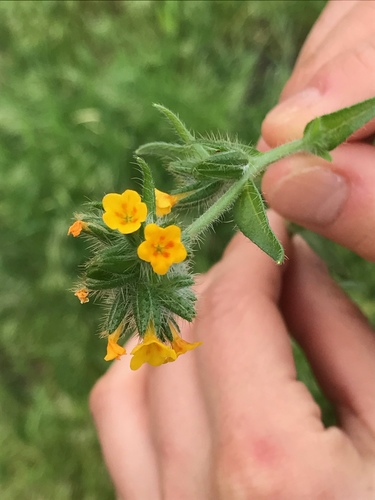
A herb. It is a creeping plant. It can grow in clumps. The leaves are narrowly oval and 1-5 cm long by 1-3 cm wide. The base is wedge shaped. The flowers occur singly in the axils of leaves.
Names & Synonyms
Zoelleria procumbens Warb.
References (2)
- Powell, J.M., Ethnobotany. In Paijmans, K., 1976, New Guinea Vegetation. Australian National University Press. p 112
- World Checklist of Useful Plant Species 2020. Royal Botanic Gardens, Kew