Vallaris solanacea
(Roth) Kuntze
Bread flower vine

(c) Devendra Bhardwaj, some rights reserved (CC BY-NC), uploaded by Devendra Bhardwaj
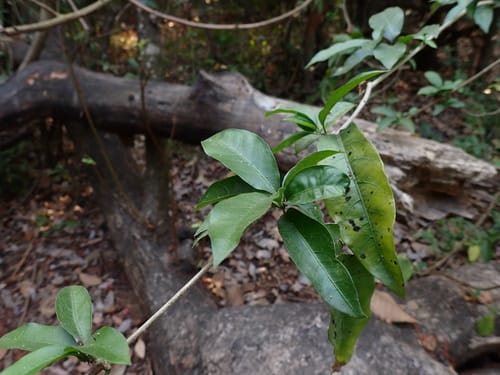
(c) Radha Veach, some rights reserved (CC BY-NC)
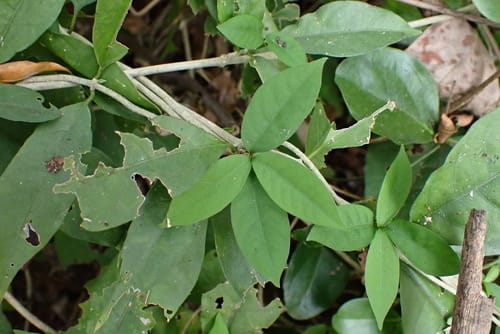
(c) Radha Veach, some rights reserved (CC BY-NC)
What to Eat
Edible parts: Leaves, Flowers, Fruit, Seeds
The flowers, fruit, leaves, and seeds are all edible.
Known Hazards
Where to Find It
A tropical plant. In southern China it grows in forest thickets and along streams from sea level to 2,700 m above sea level.
Asia, Cambodia, China, Himalayas, India, Indochina, Indonesia, Laos, Malaysia, Myanmar, Nepal, Pakistan, SE Asia, Sri Lanka, Thailand, Vietnam,
How to Identify
A large twining shrub or tree. It grows 10 m long. The bark is smooth and it has a yellowish-white covering. The stems have milky sap. The leaves are 5-12 cm long by 2.5 cm wide. They are sword shaped. The groups of flowers are in the axils of leaves. The flowers are white and have a scent. The fruit is 10-15 cm long by 3-5 cm wide.
How to Grow
Plants can be grown from seeds.
Notes
There are 5 or 6 Vallaris species.
Names & Synonyms
Bhadramunja, Bhadravalli, Bonokonerinoi, Bugadi, Chama nat, Chamari-ki-vel, Dudhe lahara, Dudhi bel, Dudhi, Gohingia, Haparmali, Hopormoli, Jokhuni-lew, Jookamallechettu, Karilew, Kerak nasi, Kesidang, Khinbok, Madhumaalati, Mai-soh-sangia, Nabu-nwe, Nityamalle, Pallamalletivva, Puttupodarayayala, Ramsar, Safed bel, Vishalayakrit
References (11)
- Ambasta, S.P. (Ed.), 2000, The Useful Plants of India. CSIR India. p 667
- Arora, R. K., 2014, Diversity in Underutilized Plant Species - An Asia-Pacific Perspective. Bioversity International. p 47
- Burkill, I.H., 1966, A Dictionary of the Economic Products of the Malay Peninsula. Ministry of Agriculture and Cooperatives, Kuala Lumpur, Malaysia. Vol 2 (I-Z) p 2258 (As Vallaris heynii)
- [(Annathuvarei, Arurong, Attarasu, Attupuvarasu, Aulekapasi, Bhel-kol, Bhillaura, Bol-diktak, Bolnokhap, Dieng-soh-lyndot, Eeruponaku, Gadalopong, Gamari, Gamhar, Garum, Jongheia, Kaadukanji, Kanji, Kattukunil, Kaykumbala, Kenlo, Kurong, Malankumil, Monda, Pambarakkumbil, Panigambhar, Panijambhar, Panipitho, Petari, Pindara, Pitali, Pithakuma-kendlow, Pithaliya, Ramritha, Raypbunul, Thing-chingel, Thungplam, Tumri, Vellar,) wrong location ]
- Flora of China. 16:177, 1995,
- Martin, F.W. & Ruberte, R.M., 1979, Edible Leaves of the Tropics. Antillian College Press, Mayaguez, Puerto Rico. p 175 (As Vallaris heynii)
- Milow, P., et al, 2013, Malaysian species of plants with edible fruits or seeds and their evaluation. International Journal of Fruit Science. 14:1, 1-2
- Revis. gen. pl. 2:417. 1891
- Sukarya, D. G., (Ed.) 2013, 3,500 Plant Species of the Botanic Gardens of Indonesia. LIPI p 986
- Wild edible plants of Himachal Pradesh
- World Checklist of Useful Plant Species 2020. Royal Botanic Gardens, Kew


