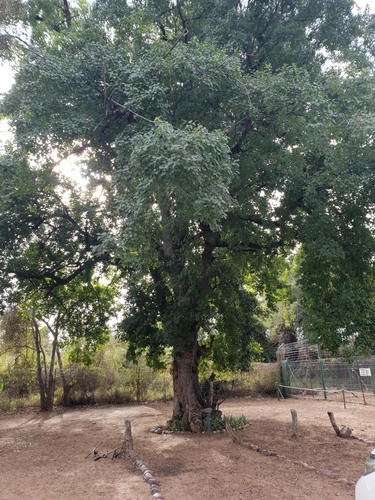
Ventilago maderaspatana
Gaertn.
Red ventilago creeper
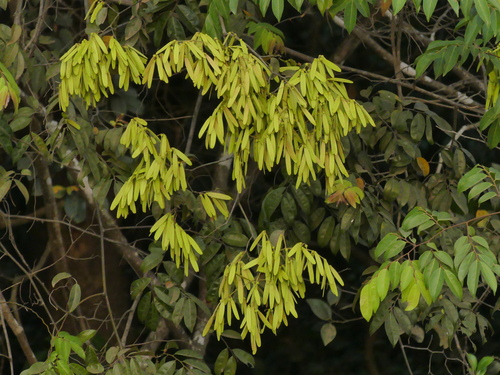
(c) Radha Veach, some rights reserved (CC BY-NC)
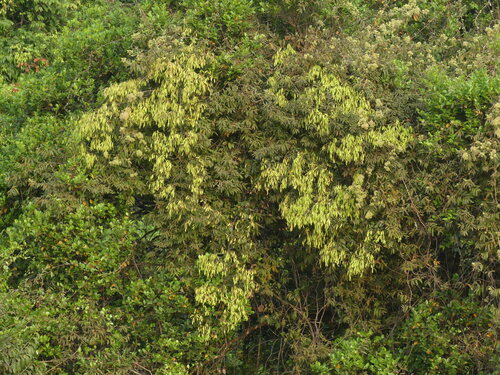
(c) Radha Veach, some rights reserved (CC BY-NC)
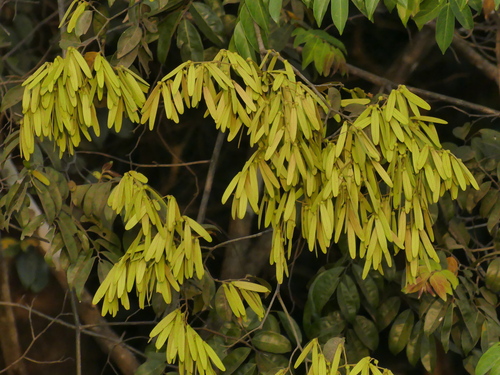
(c) Radha Veach, some rights reserved (CC BY-NC)
What to Eat
Edible parts: Seeds, Roots
The seeds are eaten after cooking and yield an edible fatty oil. The roots are also edible.
Where to Find It
A tropical plant. In Yunnan. It occurs in the Western Ghats in India.
Asia, China, India, Indonesia, Myanmar, SE Asia, Sri Lanka,
How to Identify
A woody climber or shrub. The branches are brown and hairy. The leaves are pale green underneath. They are narrowly and 6-15 cm long by 3-5 cm wide. The flowers are in groups near the ends of branches. The fruit is 5-6 cm across. It is hairy. The stone has one seed. It is 3 mm across.
How to Grow
Plants can be grown from seeds.
Names & Synonyms
Ettashirattalativva, Ettasurugudu, Kanvel, Lokhandi, Papilli, Papudi, Pitti, Pupli, Rahatarohado, Raktapita, Raktavalli, Roktopitta, Ruktupita, Sajumalo, Suralatige, Surali, Suratichekka, Surgugudu, Surulbattaikhodi, Ta-yaw-nyo, Thwedet, Toridi, Vembadam, Ventilago merah, Wasonwe
References (7)
- Ambasta, S.P. (Ed.), 2000, The Useful Plants of India. CSIR India. p 670
- Burkill, I.H., 1966, A Dictionary of the Economic Products of the Malay Peninsula. Ministry of Agriculture and Cooperatives, Kuala Lumpur, Malaysia. Vol 2 (I-Z) p 2265
- Fruct. sem. pl. 1:223, t. 49, fig. 2. 1788
- Kumar, R. & Saikia, P., 2020, Wild edible plants of Jharkhand and their utilitarian perspectives. Indian Journal of Traditional Knowledge Vol 19 (2), April 2020, pp 237-250
- Menninger, E.A., 1977, Edible Nuts of the World. Horticultural Books. Florida p 122
- Singh, H.B., Arora R.K.,1978, Wild edible Plants of India. Indian Council of Agricultural Research, New Delhi. p 83
- Sukarya, D. G., (Ed.) 2013, 3,500 Plant Species of the Botanic Gardens of Indonesia. LIPI p 988