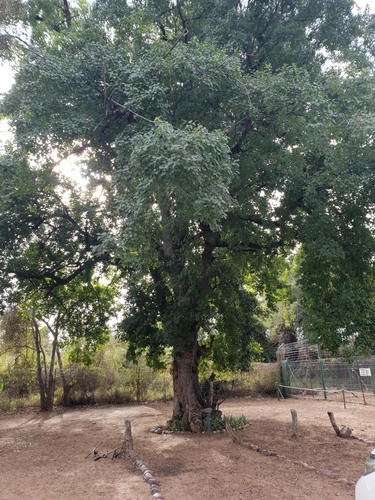
Ventilago viminalis
Hooker
Supplejack, Suplejack, Medicine bark, Vine tree
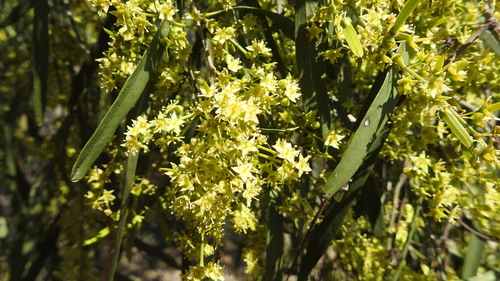
(c) Bruce McLennan, some rights reserved (CC BY-NC), uploaded by Bruce McLennan
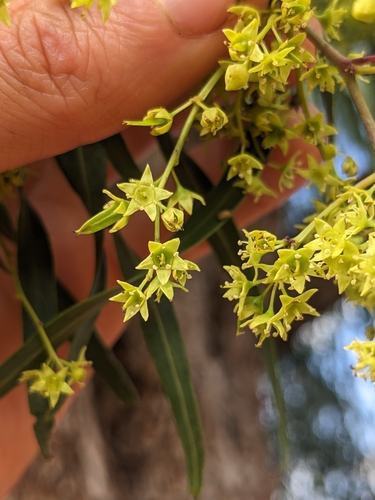
(c) Luke R. Hardy, some rights reserved (CC BY-NC), uploaded by Luke R. Hardy
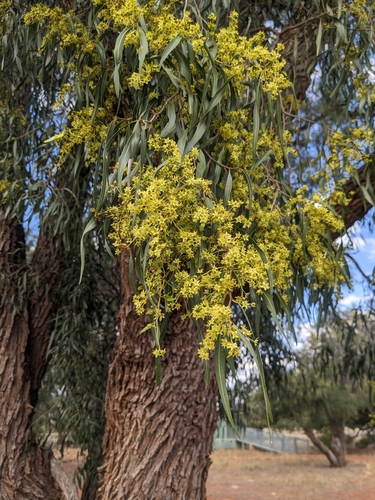
(c) Luke R. Hardy, some rights reserved (CC BY-NC), uploaded by Luke R. Hardy
What to Eat
The gum is eaten.
Where to Find It
Australia - New South Wales, Queensland, Northern Territory, Western Australia.
Australia*,
How to Identify
Ventilago viminalis is a vine tree in the Rhamnaceae family. It is found in tropical regions and is notable for producing numerous suckers from damaged roots.
How to Grow
Damaged roots easily produce suckers.
Medicinal Uses
The tree has medicinal properties.
Other Uses
The dark-brown wood is hard, heavy, close-grained, and takes a good polish. The wood can be used as fuel. It is one of the woods used by the Australian Aborigines to produce fire by friction[156[, The tree can provide shade,.
Wikipedia
Source ↗Ventilago viminalis, commonly known as supplejack, vine tree or whip vine, is a tree native to Northern and Central Australia from coastal regions of Queensland to the Northern Territory and Western Australia (with occurrences in New South Wales and South Australia).
References (19)
- Bindon, P., 1996, Useful Bush Plants. Western Australian Museum. p 261
- Bodkin, F., 1991, Encyclopedia Botanica. Cornstalk publishing, p 1007
- Cleland, J.B., 1957, Mankind. 5(4):149-62
- Cooper, W. and Cooper, W., 2004, Fruits of the Australian Tropical Rainforest. Nokomis Editions, Victoria, Australia. p 426
- Doran, J.C., & Turnbull, J.W. (Eds), 1997, Australian Trees and Shrubs: species for land rehabilitation and farm plantings in the tropics. ACIAR Monograph No 24. p 358
- Ferns, Tropical Food Plants
- Hall, N. et al, 1972, The Use of Trees and Shrubs in the Dry Country of Australia, AGPS, Canberra. p 390
- Hunter, J.T., 2017, Is there a relationship between contemporary high Aboriginal plant resource locations and mapped vegetation communities? Cunninghamia 17:27-34. The Royal Botanic Garden Sydney. ISSN 2200 - 405X
- Latz, P.K., 1996, Bushfires and Bushtucker: Aboriginal plant use in Central Australia. IAD Press Alice Springs p 295
- Kenneally, K.E., Edinger, D. C., and Willing T., 1996, Broome and Beyond, Plants and People of the Dampier Peninsula, Kimberley, Western Australia. Department of Conservation and Land Management. p 171
- Lazarides, M. & Hince, B., 1993, Handbook of Economic Plants of Australia, CSIRO. p 244
- Meggitt, M.J., 1962, Desert People. Angus & Robertson, Sydney. p
- Milson. J., 2000, Trees and Shrubs of north-west Queensland. DPI p 270
- T. L. Mitchell, J. exped. trop. Australia 369. 1848
- Morley, B.D., & Toelken, H.R., (Eds), 1983, Flowering Plants in Australia. Rigby. p 226
- Paczkowska, G . & Chapman, A.R., 2000, The Western Australian Flora. A Descriptive Calatogue. Western Australian Herbarium. p 507
- Petheram, R.J. and Kok, B., 2003, Plants of the Kimberley Region of Western Australia. UWA Press p 537
- Townsend, K., 1999, Field Guide to Plants of the Dry Tropics. Society for Growing Australian Plants, Townsville Branch Inc. p 87
- Williams, K.A.W., 1999, Native Plants of Queensland Volume 4. Keith A.W. Williams North Ipswich, Australia. p 378