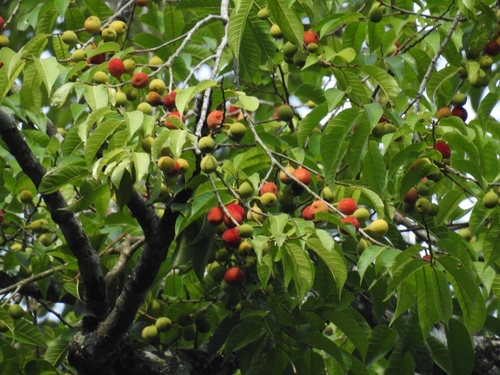
Artocarpus scortechinii
Hook.f.
Terap hitam, Nangka pipit

(c) Steven Chong, some rights reserved (CC BY-NC)
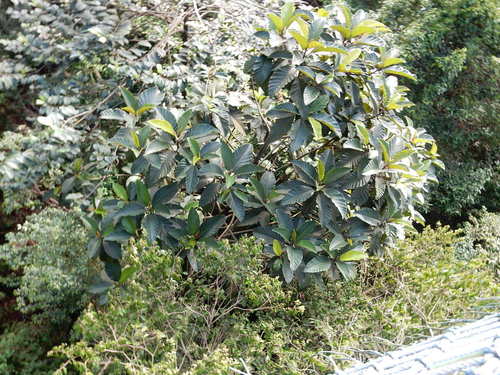
(c) Steven Chong, some rights reserved (CC BY-NC)

(c) mapoflife_rapidassessments, some rights reserved (CC BY-NC)
What to Eat
Edible parts: Fruit
The fruit are edible.
Where to Find It
A tropical plant.
Asia, Malaysia, SE Asia, Singapore,
How to Identify
A tree in the Moraceae family found in the tropics and subtropics of Asia and the Pacific.
Other Uses
The fibrous bark has been used to make twine. A latex is obtained from the bole and stems. It has been used to adulterate the latex from Willughbeia species. The wood is a source of the timber 'terap'. We have no specific information for this species, but the general description of terap timber is as follows:- The heartwood is yellow to pale brown; it is usually not differentiated from the sapwood. The texture is moderately coarse to coarse and even; the grain is interlocked. The wood is non-durable under tropical conditions. It seasons fairly slowly, with high shrinkage and slight bowing, cupping and checking. It is generally easy to work; saws well; planes easily but leaves a rough finish on radial surfaces; bores and turns easily, but leaves a rough finish;nailing property is good; can be peeled satisfactorily and is suitable for plywood production. Locally, the wood is used for light construction, for making boxes, crates, wooden pallets and veneer. The wood is sometimes nicely figured and therefore is suitable for decorative purposes like furniture, joinery and panelling.
Wikipedia
Source ↗Artocarpus scortechinii is a species of flowering plant in the family Moraceae. It is native to Peninsular Malaysia and Sumatra.
Notes
There are about 50 Artocarpus species. They are in the tropics and subtropics of Asia and the Pacific.
References (2)
- Burkill, I.H., 1966, A Dictionary of the Economic Products of the Malay Peninsula. Ministry of Agriculture and Cooperatives, Kuala Lumpur, Malaysia. Vol 1 (A-H) p 260
- Saw, L.G., LaFrankie, J. V. Kochummen, K. M., Yap S. K., 1991, Fruit Trees in a Malaysian Rain Forest. Economic Botany, Vol. 45, No. 1, pp. 120-136