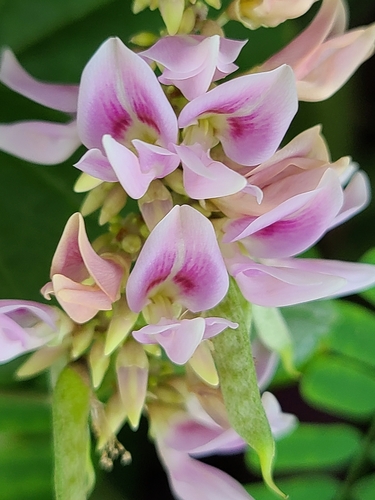
Vicia venosa
(Willd. ex Link) Maxim.
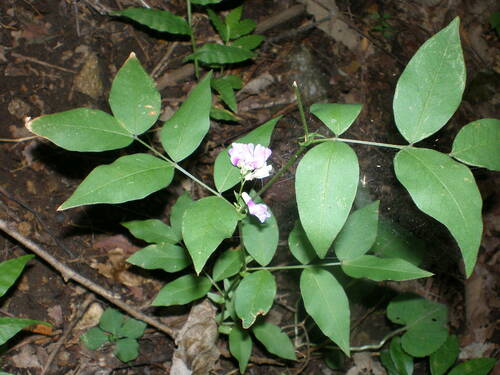
(c) onidiras-iNaturalist, some rights reserved (CC BY-NC)
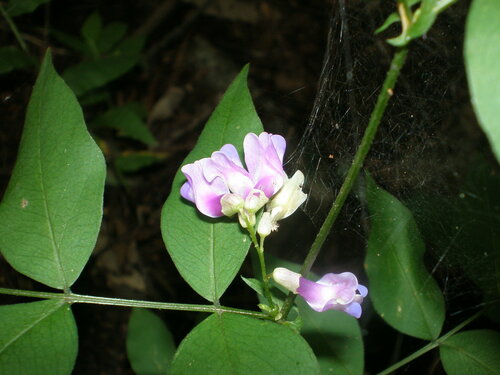
(c) onidiras-iNaturalist, some rights reserved (CC BY-NC)
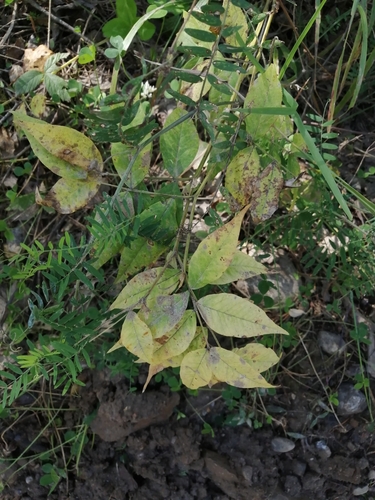
(c) Roman A. Lagazyuk (Роман А. Лагазюк), some rights reserved (CC BY)
What to Eat
Edible parts: Leaves
Leaves and young stems are eaten cooked.
Where to Find It
It is a temperate plant. In north China it grows between 600-1,800 m above sea level.
Asia, China, Japan, Korea, Mongolia, Siberia,
How to Identify
A herb. It keeps growing from year to year. The stems are erect and it grows 40-80 cm tall. The leaves have leaflets in pairs along the stalk. There are 2-6 pairs of leaflets. These are narrowly sword shaped and 40-65 mm long by 3-13 mm wide. There are 4-9 flowers in a group. They are red, purple or blue. The pod is oblong and flat and 25-33 mm long. There are 3-6 seeds.
How to Grow
Propagation: Pre-soak seed for 24 hours in warm water, then sow in situ in spring or autumn.
Medicinal Uses
None known.
Other Uses
Fixes atmospheric nitrogen.
Wikipedia
A perennial vetch growing to 0.8 m (2ft 7in) tall, flowering July to September with seeds maturing August to September. The self-fertile, hermaphroditic plant fixes nitrogen in light, medium, or heavy soils with good drainage across mildly acidic to alkaline conditions. It grows in semi-shade or full sun and prefers moist soil.
Notes
There are about 140 Vicia species. They are mostly temperate.
Names & Synonyms
Yolligalk'wi
References (4)
- Melanges Biol. Bull. Phys.-Math. Acad. Imp. Sci. Saint-Peersbourg 9:236. 1874
- Pemberton, R. W. & Lee, N. S., 1996, Wild Food Plants in South Korea: Market Presence, New Crops, and Exports to the United States. Economic Botany, Vol. 50, No. 1, pp. 57-70
- Plants for a Future database, The Field, Penpol, Lostwithiel, Cornwall, PL22 0NG, UK. http://www.scs.leeds.ac.uk/pfaf/
- Urgamal, M., Oyuntsetseg, B., Nyambayar, D. & Dulamsuren, Ch. 2014. Conspectus of the vascular plants of Mongolia. (Editors: Sanchir, Ch. & Jamsran, Ts.). Ulaanbaatar, Mongolia. “Admon“ Press. 334pp. (p. 121-143).