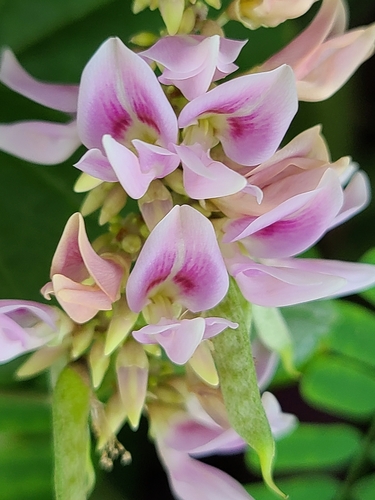
Vigna angularis
(Willd.) Ohwi & Ohashi
Adzuki bean, Haricot adzuki
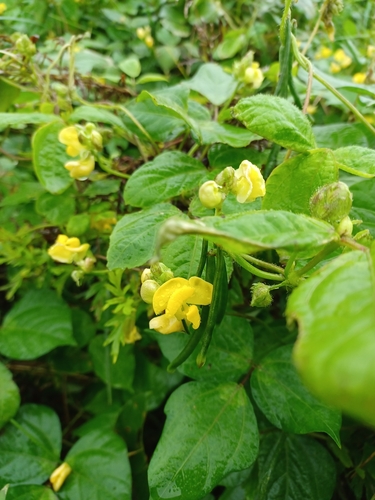
(c) hakkahamushi, some rights reserved (CC BY-NC), uploaded by hakkahamushi
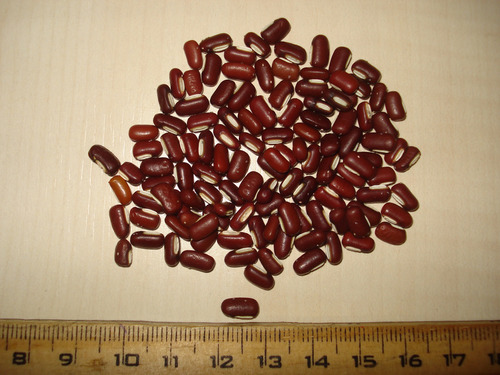
(c) Daniel dos Santos Gomes, some rights reserved (CC BY-SA)
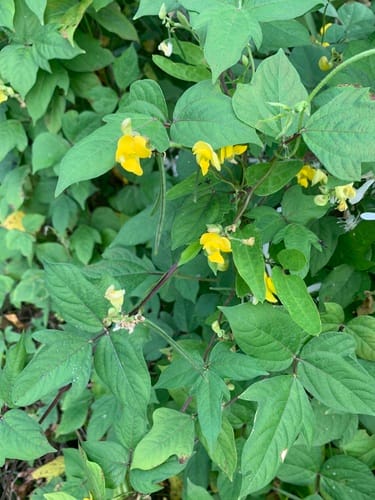
(c) 岸本年郎, some rights reserved (CC BY)
What to Eat
Edible parts: Pods, Seeds, Vegetable
The mature dried seeds are boiled and used in a wide variety of dishes. They can also be popped much like popcorn, or ground into a meal for use in soups, cakes, and confections. Seeds are frequently sprouted and eaten raw or cooked. The cylindrical pods measure 6–12cm long and contain 6–14 seeds; tender young pods are cooked as a vegetable, with pods reaching up to 10cm in length. The roasted seed can also serve as a coffee substitute.
Where to Find It
A tropical plant. They cannot stand frost but can tolerate some cold. They are short day plants forming flowers and pods when daylengths or hours of sunlight are getting shorter.
Africa, Argentina, Asia, Australia, Canada, Central Africa, Chile, China, Congo DR, Cuba, East Africa, Georgia, Himalayas, India, Indochina, Japan, Kenya, Korea, Madagascar, Malaysia, Manchuria, Nepal, New Zealand, North America, Pacific, Philippines, SE Asia, Serbia, Seychelles, Solomon Islands, Taiwan, Tasmania, Timor-Leste, USA, Vietnam, West Indies,
How to Identify
An erect bushy bean plant. They are plants which re-grow from seed each year. Plants grow up to 60 cm tall. The flowers occur as clusters of bright yellow flowers. The fruit are pods 6-12 cm long. These contain up to 12 small oblong seeds. These can vary between red, brown and black. They are 0.5 cm long. There are several named cultivated varieties.
Nutrition Score: 62/100
| Part | Moisture | kJ | kcal | Protein | Vit A | Vit C | Iron | Zinc |
|---|---|---|---|---|---|---|---|---|
| Seeds dry | 10.8 | 1780 | 426 | 19.9 | — | — | 9.8 | — |
| Whole bean | 69.6 | 396 | 95 | 6.6 | — | 0 | 2.5 | 1 |
How to Grow
Seed can be pre-germinated on wet paper to get it growing more quickly. The soil temperature needs to be above 15°C. A spacing of 15 cm is suitable.
Propagation: Pre-soak seed for 12 hours in warm water and sow in situ. Soil temperatures above 16°C are required for germination.
Medicinal Uses
The beans are used to treat kidney trouble, constipation, abscesses, certain tumours, threatened miscarriage, retained placenta, and non-secretion of milk. Seed sprouts are used to treat threatened abortion caused by injury. The leaves are said to lower fevers.
Other Uses
The plant can be grown as a green manure and to help prevent soil erosion. A flour made from the beans is used in the production of shampoos and facial creams.
Wikipedia
A fast-growing annual legume reaching 0.8 m (2ft 7in) tall and 0.2 m (0ft 8in) wide, hardy to UK zone 10. Bee-pollinated and nitrogen-fixing, it grows in light, medium, or heavy soils with good drainage. Tolerant of mildly acidic, neutral, and very acidic soils, it thrives in semi-shade or full sun and adapts to both dry and moist conditions, resisting drought.
Production
For green pods, these should be picked regularly. For dry beans, plants can be allowed to go to maturity, then pulled up and dried.
Other Information
It is a commercially cultivated vegetable. Important in Japan and China.
Notes
Seeds are about 25% protein. There are about 150 Vigna species. They are mostly in the tropics.
Names & Synonyms
Adzukibohne, Azuki, Chi dou, Chinese red bean, Fagiolo adzuki, Feijao adzuki, Frijol adzuki, Guruns, Haricot anguleux, Hong xiao dou, Pat, Sak'adrisa
References (33)
- Ambasta, S.P. (Ed.), 2000, The Useful Plants of India. CSIR India. p 676
- Burkill, I.H., 1966, A Dictionary of the Economic Products of the Malay Peninsula. Ministry of Agriculture and Cooperatives, Kuala Lumpur, Malaysia. Vol 2 (I-Z) p 1735 (As Phaseolus angularis)
- Bussman, R. W., et al, 2021, Unity in diversity—food plants and fungi of Sakartvelo (Republic of Georgia), Caucasus. Journal of Ethnobiology and Ethnomedicine (2021) 17:72 p 9
- Cobley, L.S. (rev. Steele, W.M.) 2nd Ed., 1976, An Introduction to the Botany of Tropical Crops. Longmans. p 91
- Creasy, R., 2000, The Edible Asian Garden. Periplus p 24
- Facciola, S., 1998, Cornucopia 2: a Source Book of Edible Plants. Kampong Publications, p 112
- French, B.R., 2010, Food Plants of Solomon Islands. A Compendium. Food Plants International Inc. p 59
- Hu, Shiu-ying, 2005, Food Plants of China. The Chinese University Press. p 466 (As Azukia angularis)
- Hwang, H., et al, 2013, A Study on the Flora of 15 Islands in the Western Sea of Jeollanamdo Province, Korea. Journal of Asia-Pacific Biodiversity Vol. 6, No. 2 281-310
- Hwang, HS, et al, 2014, Distribution characteristics of plant in the Ungseokbong Mountain, Gyeongsangnam-do, Korea. Journal of Asia-Pacific Biodiversity. 7(2014) e164-e178
- ILDIS Legumes of the World http:www:ildis.org/Legume/Web
- INFOODSUpdatedFGU-list.xls (As Phaseolus angularis)
- Jansen, P.C.M., 2006. Vigna angularis (Willd.) Ohwi & H.Ohashi. [Internet] Record from Protabase. Brink, M. & Belay, G. (Editors). PROTA (Plant Resources of Tropical Africa), Wageningen, Netherlands. < http://database.prota.org/search.htm>. Accessed 23 October 2009
- Jardin, C., 1970, List of Foods Used In Africa, FAO Nutrition Information Document Series No 2.p 27
- J. Jap. Bot. 44:29. 1969
- Jha, P. K., et al, 1996, Plant genetic resources of Nepal: A guide for plant breeders of agricultural, horticultural and forestry crops. Euphytica 87:189-210
- Kays, S. J., and Dias, J. C. S., 1995, Common Names of Commercially Cultivated Vegetables of the World in 15 languages. Economic Botany, Vol. 49, No. 2, pp. 115-152
- Kermath, B. M., et al, 2014, Food Plants in the Americas: A survey of the domesticated, cultivated and wild plants used for Human food in North, Central and South America and the Caribbean. On line draft. p 909
- Kiple, K.F. & Ornelas, K.C., (eds), 2000, The Cambridge World History of Food. CUP p 1725 (As Phaseolus angularis)
- Larkcom, J., 1991, Oriental Vegetables, John Murray, London, p 58
- Lazarides, M. & Hince, B., 1993, Handbook of Economic Plants of Australia, CSIRO. p 246
- Pham-Hoang Ho, 1999, An Illustrated Flora of Vietnam. Nha Xuat Ban Tre. p 959
- Self, M., 1999, Phoenix Seeds Catalogue p 3
- Small, E., 2009, Top 100 Food Plants. The world's most important culinary crops. NRC Research Press. p 61
- Smith, K., 1998. Growing Uncommon Fruits and Vegetables. New Holland. p 65
- Solomon, C., 2001, Encyclopedia of Asian Food. New Holland. p 207
- Song, M., et al, 2013, Traditional knowledge of wild edible plants in Jeju Island, Korea. Indian Journal of Traditional Knowledge. 12(2) pp 177-194
- USDA, ARS, National Genetic Resources Program. Germplasm Resources Information Network - (GRIN). [Online Database] National Germplasm Resources Laboratory, Beltsville, Maryland. Available: www.ars-grin.gov/cgi-bin/npgs/html/econ.pl (10 April 2000)
- van Wyk, B., 2005, Food Plants of the World. An illustrated guide. Timber press. p 380
- Wiersema, J. H. & Leon, B., 2013, World Economic Plants. A Standard Reference CRC Press. 2nd Ed. p 719
- Woodward, P., 2000, Asian Herbs and Vegetables. Hyland House. p 129
- World Checklist of Useful Plant Species 2020. Royal Botanic Gardens, Kew
- Zeven, A. C. & de West, J. M. J., 1982, Dictionary of cultivated plants and their regions of diversity. Wageningen. p 40 (As Phaseolus angularis)