Vigna radiata
(L.) Wilczek
Green gram bean, (Mung bean)
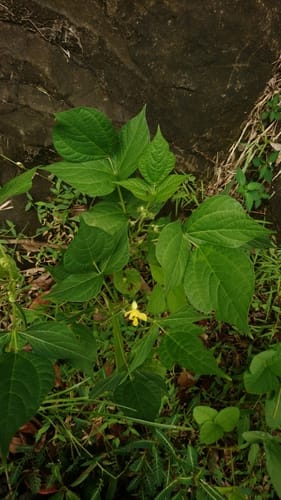
(c) 陳柏璋, some rights reserved (CC BY-NC)

no rights reserved, uploaded by S.MORE
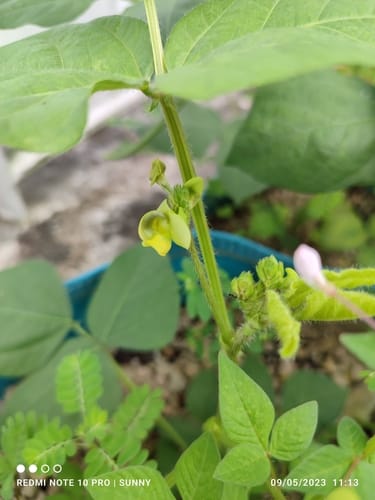
(c) SunGW, some rights reserved (CC BY-NC)
What to Eat
Edible parts: Root, Seeds, Pods, Leaves, Vegetable
The dried mature seeds are boiled and used in a wide range of ways — eaten as a vegetable, added to soups and stews, or fermented into Indian dishes such as idli. Seeds are frequently sprouted for use in salads or lightly cooked. They can be split, fried, and eaten as a snack, or ground into a powder for making starch noodles, biscuits, and bread. The seeds are globose to ellipsoid or cube-like, commonly green but variable in colour, measuring 25–40mm long and up to 3mm wide. Young seedpods, 6–10cm long and 4–6mm wide, are cooked as a vegetable. Leaves are also cooked and eaten.
Where to Find It
A tropical and subtropical plant. The plant will grow from sea level up to probably 1,600 m in the tropics. It is drought resistant but can't stand water-logging. Plants are damaged by frost. They cannot stand salinity. Rainfall at flowering is detrimental. It requires a deep soil. Both short day and long day kinds occur. It can grow where annual temperatures are from 8°C to 28°C. It can also grow at high temperatures of 30-36°C. It can tolerate a pH from 4.3-8.1. In Nepal it grows up to 1000 m altitude. It suits a drier climate. It can grow in arid places. It suits hardiness zones 10-11. In Yunnan.
Afghanistan, Africa, Angola, Argentina, Asia, Australia, Bangladesh, Botswana, Burkina Faso, Burundi, Cambodia, Cameroon, Caribbean, Central Africa, Central America, Central Asia, Chile, China, Congo, Cuba, East Africa, East Timor, Egypt, Ethiopia, Fiji, Gambia, Ghana, Guam, Guianas, Guinea, Guinée, Guyana, Himalayas, India, Indonesia, Indochina, Iran, Iraq, Japan, Kazakhstan, Kenya, Korea, Laos, Lesotho, Madagascar, Malawi, Malaysia, Mali, Marianas, Mauritius, Mexico, Middle East, Mozambique, Myanmar, Nepal, Niger, Nigeria, North Africa, North America, Northeastern India, Oman, Pacific, Pakistan, Papua New Guinea, PNG, Peru, Philippines, Rwanda, SE Asia, Senegal, Serbia, Seychelles, Sierra Leone, Sikkim, Somalia, Solomon Islands, Somalia, South Africa, Southern Africa, South America, South Sudan, Sri Lanka, Sudan, Suriname, Taiwan, Tajikistan, Tanzania, Thailand, Timor-Leste, Togo, Tonga, Uganda, USA, Vanuatu, Vietnam, West Africa, West Indies, West Timor, Yemen, Zambia, Zimbabwe,
How to Identify
A herb. It is an upright hairy bean plant which can be 1 m tall. It has many branches. The leaves have 3 leaflets and are dark green. The leaves are on long leaf stalks. There are oval stipules at the base of the leaf. Flowers are pale yellow and small. They occur in bunches of 10-20 on the ends of long hairy flower stalks. Pods are black and straight. They do not have a beak. Pods contain 10-20 seeds which are usually green or golden yellow. They are smaller than black gram. The beans can be black. They have a flat white hilum. There are 2,000 varieties.
Nutrition Score: 60/100
| Part | Moisture | kJ | kcal | Protein | Vit A | Vit C | Iron | Zinc |
|---|---|---|---|---|---|---|---|---|
| Seeds | 11 | 1432 | 343 | 22.9 | 55 | 4 | 7.1 | — |
| Seed cooked | 439 | 105 | 7 | 2.4 | 1 | 1.4 | — | — |
| Seed sprouted raw | 90.4 | 126 | 30 | 3 | 2 | 13.2 | 0.9 | 0.4 |
How to Grow
Plants are grown from seed. In some areas these are broadcast while for small plots often 2-3 seeds are sown in holes 50-60 cm apart. Seeding rates of 6 to 22 kg per ha are used in different locations. It normally requires phosphorus fertiliser for adequate growth. Seeds germinate in 3-5 days.
Propagation: Soak seed for 12 hours in warm water and sow in situ. Germination occurs at temperatures above 12°C, with 25°C being optimal, at which point seed can sprout within 3–7 days. The seed will germinate even in fairly dry soil.
Medicinal Uses
The seeds are traditionally regarded as a remedy for paralysis, rheumatism, coughs, fevers, and liver ailments.
Other Uses
The plant can be grown as a green manure or cover crop, enriching soil with nitrogen fixed on its roots. The seed flour is rich in saponins and works as a soap substitute, leaving skin smooth and soft.
Wikipedia
Source ↗Vigna radiata is a fast-growing annual reaching 0.8 m tall and 0.2 m wide. Insect-pollinated and self-fertile, it fixes nitrogen. Hardy to UK zone 10. Adapts to light sandy, medium loamy, and heavy clay soils with well-drained conditions preferred. Tolerates mildly acidic to basic pH, very acidic, very alkaline, and saline soils. Grows in semi-shade to full sun and prefers dry or moist soil.
Production
Green pods are ready after about 2 months and ripe pods may take another 1-2 months. For ripe beans the whole plant is harvested and dried before threshing. Yields of 450-560 kg/ha of seeds are common.
Other Information
It is a commercially cultivated vegetable. Not widely grown in Papua New Guinea.
Notes
They contain 19-25 % protein and are high in lysine. There are about 150 Vigna species. They are mostly in the tropics.
Names & Synonyms
Bechin, Borao, Cherupayaru, Dau-tam, Dau-xanh, Fore-mungu, Hesaru, Imposo, Kakhoma, Look dow, Mag, Mbweso, Ming bean, Moog, Mphodza, Mposo, Mudga, Mug, Mun, Mun-eta, Mung, Namurovo, Ndengu, Pasi-payaru, Passara, Passippayaru, Patchapesalu, Pe-di, Pe-di-sein, Pe-di-wa, Pe-nauk, Putcha-payaru, Sbaiha, Suna, To-pi-si, Uthulu
References (84)
- Ali, A. M. S., 2005, Homegardens in Smallholder Farming Systems: Examples from Bangladesh. Human Ecology, Vol. 33, No. 2 pp. 245-270 (As Phaseolus)
- Altschul, S.V.R., 1973, Drugs and Foods from Little-known Plants. Notes in Harvard University Herbaria. Harvard Univ. Press. Massachusetts. no. 1841 (As Phaseolus aureus)
- Ambasta, S.P. (Ed.), 2000, The Useful Plants of India. CSIR India. p 677
- Anderson, E. F., 1993, Plants and people of the Golden Triangle. Dioscorides Press. p 224
- Bodkin, F., 1991, Encyclopedia Botanica. Cornstalk publishing, p 1017
- Bodner, C. C. and Gereau, R. E., 1988, A . Tropical Press. p 29
- Cobley, L.S. (rev. Steele, W.M.) 2nd Ed., 1976, An Introduction to the Botany of Tropical Crops. Longmans. p 95
- Creasy, R., 2000, The Edible Asian Garden. Periplus p 24
- Cribb, A.B. & J.W., 1976, Wild Food in Australia, Fontana. p 144
- Cundall, P., (ed.), 2004, Gardening Australia: flora: the gardener's bible. ABC Books. p 1471
- Dunlop, C.R., Leach, G.J. & Cowie, I.D., 1995, Flora of the Darwin Region. Vol 2. Northern Territory Botanical Bulletin No 20. p 113
- Facciola, S., 1998, Cornucopia 2: a Source Book of Edible Plants. Kampong Publications, p 113
- FAO, 1988, Traditional Food Plants, FAO Food and Nutrition Paper 42. FAO Rome p 503
- Flore du Congo Belge et Ruanda-Urundi 6:386. 1954
- Foo, J.T.S.(ed), 1996, A Guide to Common Vegetables. Singapore Science Foundation. p 100
- Fowler, D. G., 2007, Zambian Plants: Their Vernacular Names and Uses. Kew. p 39 (Also as Phaseolus aureus)
- Fox, F. W. & Young, M. E. N., 1982, Food from the Veld. Delta Books. p 226
- French, B.R., 1986, Food Plants of Papua New Guinea, A Compendium. Asia Pacific Science Foundation p 46
- French, B.R., 2010, Food Plants of Solomon Islands. A Compendium. Food Plants International Inc. p 61
- Grubben, G. J. H. and Denton, O. A. (eds), 2004, Plant Resources of Tropical Africa 2. Vegetables. PROTA, Wageningen, Netherlands. p 565
- Gunjatkar, N., & Vartak, V.D., 1982, Enumeration of wild edible legumes from Pune District, Maharashtra State. J.Econ. Tax. Bot. Vol 3 pp 1-9
- Hardwick, G., 2001, Economically Useful Plants for Northern Australia: Master Species List. Crusader eBooks.
- Hiddins, L., 1999, Explore Wild Australia with the Bush Tucker Man. Penguin Books/ABC Books. p 145
- Hussey, B.M.J., Keighery, G.J., Cousens, R.D., Dodd, J., Lloyd, S.G., 1997, Western Weeds. A guide to the weeds of Western Australia. Plant Protection Society of Western Australia. p 164
- Hu, Shiu-ying, 2005, Food Plants of China. The Chinese University Press. p 467 (As Cadelium radiatum (L.) S. Y. Hu)
- ILDIS Legumes of the World http:www:ildis.org/Legume/Web
- Jardin, C., 1970, List of Foods Used In Africa, FAO Nutrition Information Document Series No 2.p 30
- Jha, P. K., et al, 1996, Plant genetic resources of Nepal: A guide for plant breeders of agricultural, horticultural and forestry crops. Euphytica 87:189-210
- Kays, S. J., and Dias, J. C. S., 1995, Common Names of Commercially Cultivated Vegetables of the World in 15 languages. Economic Botany, Vol. 49, No. 2, pp. 115-152
- Kenneally, K.E., Edinger, D. C., and Willing T., 1996, Broome and Beyond, Plants and People of the Dampier Peninsula, Kimberley, Western Australia. Department of Conservation and Land Management. p 162
- Kermath, B. M., et al, 2014, Food Plants in the Americas: A survey of the domesticated, cultivated and wild plants used for Human food in North, Central and South America and the Caribbean. On line draft. p 910
- Kiple, K.F. & Ornelas, K.C., (eds), 2000, The Cambridge World History of Food. CUP p 1817 (As Phaseolus aureus)
- Lazarides, M. & Hince, B., 1993, Handbook of Economic Plants of Australia, CSIRO. p 247
- Lim, T. K., 2015, Edible Medicinal and Non Medicinal Plants. Volume 9, Modified Stems, Roots, Bulbs. Springer p 85
- Low, T., 1991, Wild Food Plants of Australia. Australian Nature FieldGuide, Angus & Robertson. p 123
- Low, T., 1992, Bush Tucker. Australia’s Wild Food Harvest. Angus & Robertson. p 99
- Paczkowska, G . & Chapman, A.R., 2000, The Western Australian Flora. A Descriptive Calatogue. Western Australian Herbarium. p 453
- Macmillan, H.F. (Revised Barlow, H.S., et al) 1991, Tropical Planting and Gardening. Sixth edition. Malayan Nature Society. Kuala Lumpur. p 330
- Manandhar, N.P., 2002, Plants and People of Nepal. Timber Press. Portland, Oregon. p 357 (As Phaseolus aureus)
- Martin, F.W. & Ruberte, R.M., 1979, Edible Leaves of the Tropics. Antillian College Press, Mayaguez, Puerto Rico. p 45, 200 (As Phaseolus aureus)
- Martin, M.A., 1971, Introduction L'Ethnobotanique du Cambodge. Centre National de la Recherche Scientifique. Paris. (As Phaseolus aureus)
- Medhi, P. & Borthakur, S. K., 2012, Phytoresources from North Cachur Hills of Assam -3: Edible plants sold at Hflong market. Indian Journal or Natural Products and Resources. 3(1) pp 84-109
- Mogotsi, K.K., 2006. Vigna radiata (L.) R.Wilczek. [Internet] Record from Protabase. Brink, M. & Belay, G. (Editors). PROTA (Plant Resources of Tropical Africa), Wageningen, Netherlands. < http://database.prota.org/search.htm>. Accessed 23 October 2009
- Molares, S. & Ladio, A., 2012, The Usefulness of Edible and Medicinal Fabaceae in Argentine and Chilean Patagonia: Environmental Availability and Other Sources of Supply. Evidence-Based Complementary and Alternative Medicine. Volume 2012, Article ID 901918, 12 pages, Hindawi Publishing Corporation.
- Mutie, F. M., et al, 2023, Important Medicinal and Food Taxa (Orders and Families) in Kenya, Based on Three Quantitative Approaches. Plants 2023, 12, 1145
- Ochse, J.J. et al, 1931, Vegetables of the Dutch East Indies. Asher reprint. p 414 (As Phaseolus radiatus)
- Omawale, 1973, Guyana's edible plants. Guyana University, Georgetown p 97 (As Phaseolus aureus)
- Owen, S., 1993, Indonesian Food and Cookery, INDIRA reprints. p 62 (As Phaseolus aureus)
- Pham-Hoang Ho, 1999, An Illustrated Flora of Vietnam. Nha Xuat Ban Tre. p 958
- Phon, P., 2000, Plants used in Cambodia. © Pauline Dy Phon, Phnom Penh, Cambodia. p 626
- Purseglove, J.W., 1968, Tropical Crops Dicotyledons, Longmans. p 290 (As Phaseolus aureus)
- Rahangdale, D.R. & Rahangdale, S.S., 2014, Potential Wild Edible Plant Resources from Maharashtra Future Prospects for their Conservation and Improvement. Life Science Leaflets. http://lifesciencesleaflets.ning.com
- Rajapaksha, U., 1998, Traditional Food Plants in Sri Lanka. HARTI, Sri Lanka. p 237 (As Phaseolus aureus)
- Rashid, H. E., 1977, Geography of Bangladesh. Westview. p 251 (As Phaseolus rediatus)
- Reddy, B. M., 2012, Wild edible plants of Chandrapur district, Maharashtra, India. Indian Journal of Natural Products and Resources. 3(1) pp 110-117 (As Phaseolus radiatus)
- Royal Botanic Gardens, Kew (1999). Survey of Economic Plants for Arid and Semi-Arid Lands (SEPASAL) database. Published on the Internet; http://www.rbgkew.org.uk/ceb/sepasal/internet [Accessed 1st May 2011]
- Ruiters-Welcome, A. K., 2019, Food plants of southern Africa. Ph.D. thesis. Univ. of Johannesburg p 59 (As Phaseolus aureus) and p 63
- Shah, S. K., 2014, Dietary contribution of underutilized minor crops and indigenous plants collected from uncultivated lands and forests in Nepal. in Promotion of Underutilized Indigenous Food Resources for Food Security and Nutrition in Asia and Pacific. FAO. Bangkok p 64 (As Phaseolus aureus)
- Singh, H.B., Arora R.K.,1978, Wild edible Plants of India. Indian Council of Agricultural Research, New Delhi. p 85
- Small, E., 2009, Top 100 Food Plants. The world's most important culinary crops. NRC Research Press. p 358
- Smith, K., 1998. Growing Uncommon Fruits and Vegetables. New Holland. p 66
- Solomon, C., 2001, Encyclopedia of Asian Food. New Holland. p 210
- Song, M., et al, 2013, Traditional knowledge of wild edible plants in Jeju Island, Korea. Indian Journal of Traditional Knowledge. 12(2) pp 177-194
- Sukenti, K., et al, 2016, Ethnobotanical study on local cuisine of the Sasak tribe in Lombok Island, Indonesia. Journal of Ethnic Foods. 3 (2016) 189-200 p 198
- Termote, C., et al, 2014, Assessing the potential of wild foods to reduce the cost of a nutritionally adequate diet: An example from eastern Baringo District, Kenya. Food and Nutrition Bulletin, vol. 35, no. 4
- Terra, G.J.A., 1973, Tropical Vegetables. Communication 54e Royal Tropical Institute, Amsterdam, p 65 (As Phaseolus aureus)
- Tindall, H.D., 1983, Vegetables in the Tropics, Macmillan p 294
- USDA, ARS, National Genetic Resources Program. Germplasm Resources Information Network - (GRIN). [Online Database] National Germplasm Resources Laboratory, Beltsville, Maryland. Available: www.ars-grin.gov/cgi-bin/npgs/html/econ.pl (10 April 2000)
- Van Sam, H. et al, 2008, Uses and Conservation of Plant Species in a National Park. A case study of Ben En, Vietnam. Economic Botany 62:574-593
- van Wyk, B., 2005, Food Plants of the World. An illustrated guide. Timber press. p 381
- van Wyk, Be, & Gericke, N., 2007, People's plants. A Guide to Useful Plants of Southern Africa. Briza. p 30
- Verdcourt, B., 1979, Manual of New Guinea Legumes. Botany Bulletin No 11, Division of Botany, Lae, Papua New Guinea. p 523
- Wheeler, J.R.(ed.), 1992, Flora of the Kimberley Region. CALM, Western Australian Herbarium, p 457
- Williamson, J., 2005, Useful Plants of Malawi. 3rd. Edition. Mdadzi Book Trust. p 259
- Woodward, P., 2000, Asian Herbs and Vegetables. Hyland House. p 131
- Yuncker, T.G., 1959, Plants of Tonga, Bernice P. Bishop Museum, Hawaii, Bulletin 220. p 149 (As Phaseolus aureus) Briza. p 30
- Verdcourt, B., 1979, Manual of New Guinea Legumes. Botany Bulletin No 11, Division of Botany, Lae, Papua New Guinea. p 523
- Welcome, A. K. & Van Wyk, B.-E., 2019, An inventory and analysis of the food plants of southern Africa. South African Journal of Botany 122 (2019) 136–179 (Also as Phaseolus aureus)
- Wheeler, J.R.(ed.), 1992, Flora of the Kimberley Region. CALM, Western Australian Herbarium, p 457
- Wiersema, J. H. & Leon, B., 2013, World Economic Plants. A Standard Reference CRC Press. 2nd Ed. p 720
- Williamson, J., 2005, Useful Plants of Malawi. 3rd. Edition. Mdadzi Book Trust. p 259
- Wiriadinata, H., 1995, Ethnobotany of Economic Plants in the Baliem Valley, Jayawijaya, Irian Jaya, Indonesian Institute of Science, Bogor, Indonesia
- Woodward, P., 2000, Asian Herbs and Vegetables. Hyland House. p 131
- Yuncker, T.G., 1959, Plants of Tonga, Bernice P. Bishop Museum, Hawaii, Bulletin 220. p 149 (As Phaseolus aureus)




