Wikstroemia indica
(L.) C. A. Mey.
Tiebush
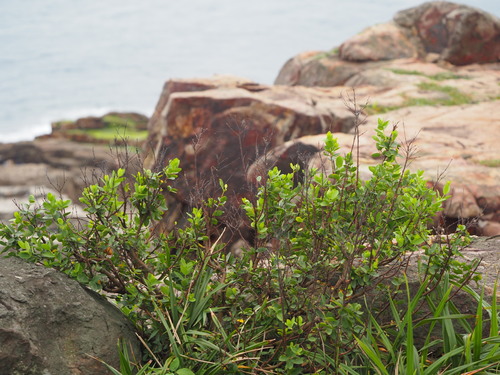
no rights reserved, uploaded by 葉子

(c) Kinmatsu Lin, some rights reserved (CC BY-NC), uploaded by Kinmatsu Lin
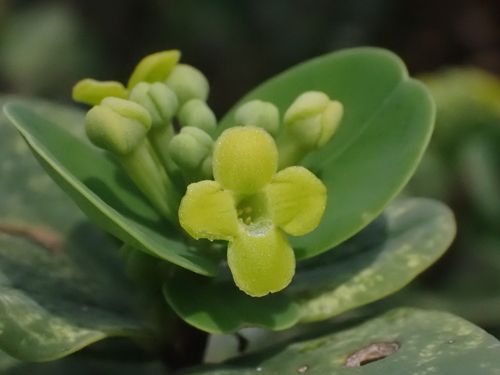
(c) M, some rights reserved (CC BY-NC), uploaded by M
What to Eat
Edible parts: Caution, Toxic, Medicine
CAUTION: Many Wikstroema are poisonous. The fruit are poisonous.
Known Hazards
Where to Find It
A tropical plant. It grows in forests and on rocky slopes below 1,500 m above sea level. It suits hardiness zones 9-12. In XTBG Yunnan. In Sichuan.
Asia, Australia, China, Fiji, India, Indochina, Malaysia, Mauritius, Myanmar, Pacific, Philippines, SE Asia, Sri Lanka, Taiwan, Thailand, Vietnam,
How to Identify
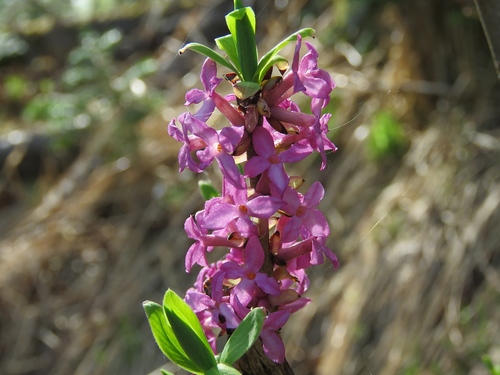
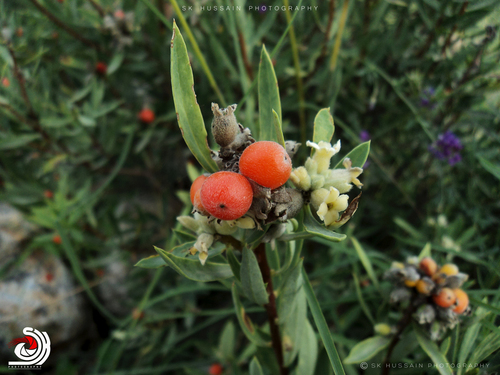
A shrub or small tree. It grows 1.5 m high and spreads 0.9 m wide. The leaves are oval and 6 cm long. The flowers are white, cream or greenish and in heads at the ends of the branches. The fruit are red to dark purple and 7-8 mm across. POISONOUS.
How to Grow
Wikstroemia species generally grow best in a moist, well-drained soil in full sun or partial shade.
Medicinal Uses
Has anticancer properties.
Other Uses
The leaves can be used as an insecticide in agriculture. The smooth trunk has a tough bark that can be torn off in strips and used as string. The fibre from the inner bark is light colored and has a somewhat silky appearance. It can be used for making rope etc and to make a high quality paper. It has at times been harvested in quantity for making bank notes and other strong papers. Thw wood is of a deep red colour, and coarse-grained, though rather small.
Wikipedia
Source ↗Wikstroemia indica, also known as tie bush, Indian stringbush, bootlace bush, or small-leaf salago (Chinese: 了哥王; pinyin: liǎo gē wáng; Vietnamese: dó liệt) is a small shrub with glossy leaves, small greenish-yellow flowers and toxic red fruits. It grows in forests and on rocky, shrubby slopes in central and southeastern China, Vietnam, India, Australia and the Philippines.
Notes
There are about 70 Wikstroema species. It has anticancer properties.
Names & Synonyms
References (10)
- Bodkin, F., 1991, Encyclopedia Botanica. Cornstalk publishing, p 1027
- Bull. Cl. Phys.-Math. Acad. Imp. Sci. Saint-Petersbourg 1:357. 1843
- Burkill, I.H., 1966, A Dictionary of the Economic Products of the Malay Peninsula. Ministry of Agriculture and Cooperatives, Kuala Lumpur, Malaysia. Vol 2 (I-Z) p 2300 (As Wikstroema viridiflora)
- Cundall, P., (ed.), 2004, Gardening Australia: flora: the gardener's bible. ABC Books. p 1486
- Haslam, S., 2004, Noosa's Native Plants. Noosa Integrated Catchment Assn. Inc. p 37
- Jackes, B.R., 2001, Plants of the Tropics. Rainforest to Heath. An Identification Guide. James Cook University. p 84
- Kintzios, S. E., 2006, Terrestrial Plant-Derived Anticancer Agents and Plant Species Used in Anticancer research. Critical Reviews in Plant Sciences. 25: pp 79-113
- Lazarides, M. & Hince, B., 1993, Handbook of Economic Plants of Australia, CSIRO. p 249
- Mot So Rau Dai an Duoc O Vietnam. Wild edible Vegetables. Ha Noi 1994, p 278
- Williams, J.B., Harden, G.J., and McDonald, W.J.F., 1984, Trees and shrubs in rainforests of New South Wales and Southern Queensland. Univ. of New England, Armidale. p 120