Yucca elephantipes
Hort.
Giant Yucca
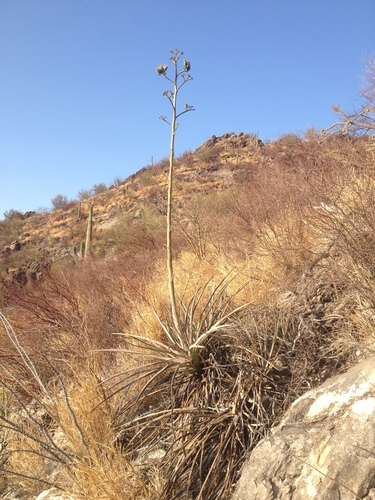
(c) David Douterlunge Rotsaert, some rights reserved (CC BY-NC)
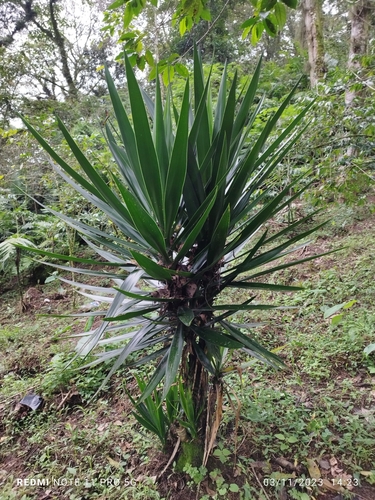
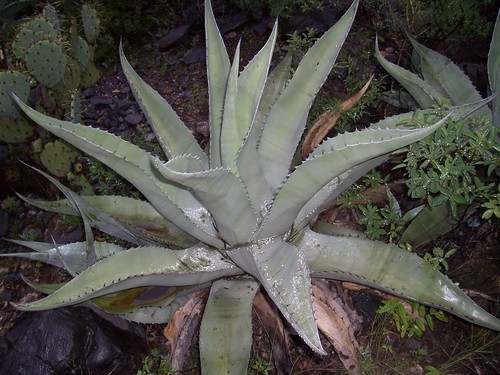
(c) Axel Ariel López Morales, some rights reserved (CC BY-NC)
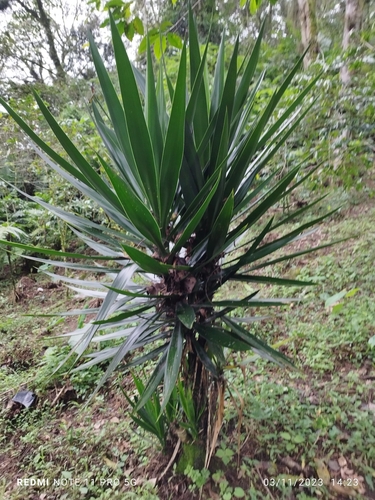
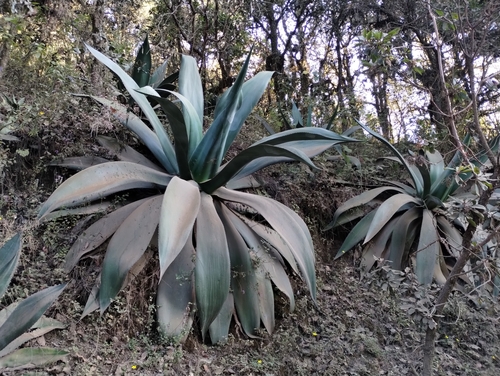
(c) Axel Ariel López Morales, some rights reserved (CC BY-NC)
What to Eat
Edible parts: Leaves, Pods, Flowers, Shoots
This section describes the gastronomic use of the flower in Latin America, but it is important to note that the specific examples are not unique to that region. There are hundreds of ways the flower is used in cooking due to the hundreds of indigenous tribes spanning from North to South America that ate Yucca flowers. The flower petals are commonly eaten in Central America, but its reproductive organs (the anthers and ovaries) are first removed because of their bitterness. The petals are blanched for 5 minutes, and then cooked a la mexicana (with tomato, onion, chile) or in tortitas con salsa (egg-battered patties with green or red sauce). In Guatemala, they are boiled and eaten with lemon juice. In El Salvador, the tender tips of stems are eaten, and known locally as cogollo de izote.
Where to Find It
A tropical plant. In Adelaide Botanical Gardens. In Brisbane Botanical Gardens. Melbourne Botanical Gardens. It suits hardiness zones 10-12.
Asia, Australia, Belize, Central America, Costa Rica, El Salvador, Guatemala, Hawaii, Indonesia, Mexico, North America, Pacific, SE Asia, USA,
How to Identify
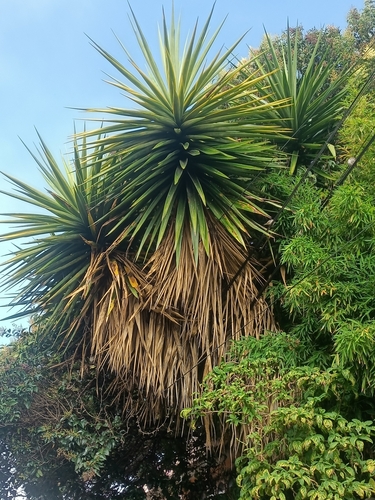
A small tree. It grows 8 m tall. It has a single trunk. This is thickened at the base. It spreads 3 m wide. The leaves are stiff and pointed. They are less than 1 m long. The flowering shoot is at the end of the plant. It is about 60 cm long and has branches with many small with flowers. The fruit is a fleshy capsule about 8 cm long. The flesh is green or white with many seeds. The seeds are small and black.
How to Grow
It can be grown from seeds or by cuttings.
Notes
There are about 40 Yucca species. Also put in the family Agavaceae. Probably now Yucca gigantea.
Names & Synonyms
Bulbstem yucca, Itabo, Izote, Prstasta juka, Spineless Yucca, Yuka raksasa
References (17)
- Bodkin, F., 1991, Encyclopedia Botanica. Cornstalk publishing, p 1031
- Brickell, C. (Ed.), 1999, The Royal Horticultural Society A-Z Encyclopedia of Garden Plants. Convent Garden Books. p 1066
- Cundall, P., (ed.), 2004, Gardening Australia: flora: the gardener's bible. ABC Books. p 1492
- D'Ambrosio, U., & Puri, R. K., 2016, Foodways in transition: food plants, diet and local perceptions of change in a Costa Rican Ngäbe community. Journal of Ethnobiology and Ethnomedicine (2016) 12:3 p 22
- Facciola, S., 1998, Cornucopia 2: a Source Book of Edible Plants. Kampong Publications, p 4
- Hermandez Bermejo, J.E., and Leon, J. (Eds.), 1994, Neglected Crops. 1492 from a different perspective. FAO Plant Production and Protection Series No 26. FAO, Rome. p17
- Hibbert, M., 2002, The Aussie Plant Finder 2002, Florilegium. p 310
- http://www.botanic-gardens-ljubljana.com/en/plants
- Kiple, K.F. & Ornelas, K.C., (eds), 2000, The Cambridge World History of Food. CUP p 1856
- Larios, et al., 2013, Plant management and biodiversity conservation in Náhuatl homegardens of the Tehuacán Valley, Mexico. Journal of Ethnobiology and Ethnomedicine 2013 9:74.
- Martin, F.W. & Ruberte, R.M., 1979, Edible Leaves of the Tropics. Antillian College Press, Mayaguez, Puerto Rico. p 202
- Morton, J. F., & Dowling, C. F., 1991, The Spineless Yucca needs more attention as an ornamental and food plant. Proc. Fla. State Hort. Soc. 104:341-345
- Standley, P. C. & Record, S. J., 1936, The Forests and Flora of British Honduras. (Belize). p 85
- Staples, G.W. and Herbst, D.R., 2005, A tropical Garden Flora. Bishop Museum Press, Honolulu, Hawaii. p 589
- Sukarya, D. G., (Ed.) 2013, 3,500 Plant Species of the Botanic Gardens of Indonesia. LIPI p 1048
- Turreira-Garcia, N., et al, 2015, Wild edible plant knowledge, distribution and transmission: a case study of the Achi Mayans of Guatemala. Journal of Ethnobiology and Ethnomedicine. 11:52
- Zuchowski W., 2007, Tropical Plants of Costa Rica. A Zona Tropical Publication, Comstock Publishing. p 112