Yucca glauca
Nutt.
Soapweed, Dwarf Yucca, Spanish bayonet

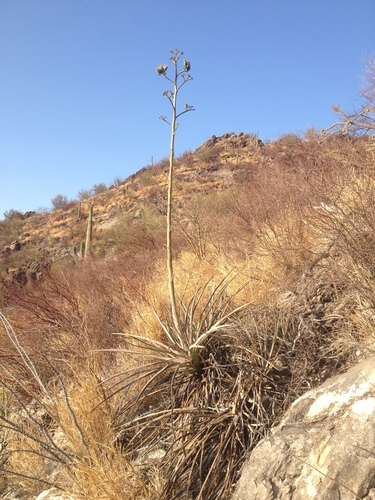
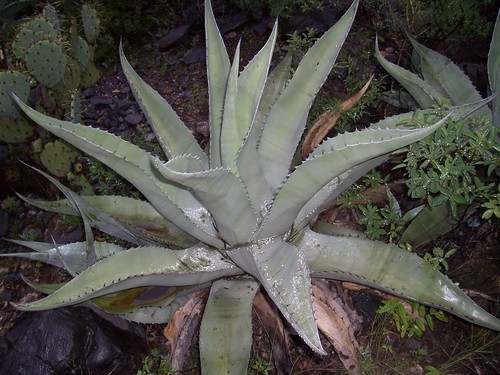
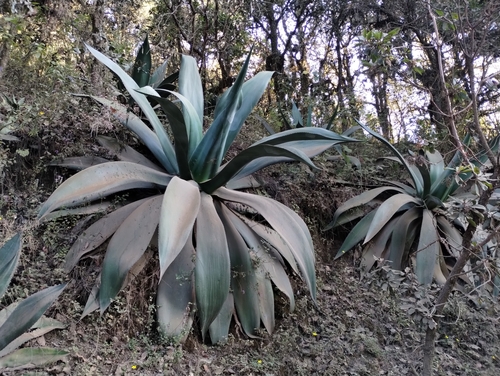
(c) amkatros, some rights reserved (CC BY-NC)
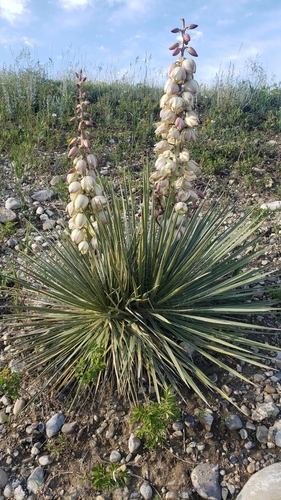
(c) jmarmand, some rights reserved (CC BY-NC), uploaded by jmarmand

(c) Suzanne Dingwell, some rights reserved (CC BY-NC), uploaded by Suzanne Dingwell
What to Eat
Edible parts: Flowers, Fruit, Leaves, Seed pod, Stem
The fruit can be eaten raw or cooked; it is dry with a bitter skin, up to 8cm long and 12mm wide. It can be baked and eaten immediately or formed into cakes and dried. Raw fruit can also be dried for winter use. Immature fruits are peeled, boiled and served with seasonings, and soaked cooked fruit can be made into a syrup used like hot chocolate. Flowers and flower buds are delicious raw and can be used as a potherb or dried, crushed and used as a flavouring. The flowering stem can be eaten raw or cooked like asparagus — the white inner portion is the part consumed. Seedpods are boiled or roasted as a vegetable. Plant crowns have been roasted and eaten in times of food shortage.
Known Hazards
Where to Find It
It is a temperate plant. It grows on dry slopes. It will grow on most soils. It is resistant to frost and drought. It suits hardiness zones 4-9.
Australia, Britain, Canada, Europe, North America*, Tasmania, USA,
How to Identify
A small shrub. It grows 60 cm high and spreads 90 cm wide. It forms clumps. The leaves are narrow and blue-green. There are thin straight threads along the edges. The flower stalk is 0.9 m tall. The flowers are off-white and bell shaped. Sometimes there are tinges of green or red-brown. The fruit are about 8 cm long and 1 cm wide. These capsules contain many seeds.
How to Grow
Thrives in most soils but prefers a sandy loam and full exposure to the south. Dislikes chalky or peaty soils. Can succeed in light shade. Plants are hardier when grown on poor sandy soils. Prefers a hot dry position and a poor soil. Established plants are very drought tolerant. Hardy to at least -30°c according to one report, whilst another one says that it is hardy to about -15°c. A very ornamental plant, it rarely flowers unless in a dry sandy soil. The scent of the flowers is most pronounced at night. In the plants native environment, its flowers can only be pollinated by a certain species of moth. This moth cannot live in Britain and, if fruit and seed is required, hand pollination is necessary. This can be quite easily and successfully done using something like a small paint brush. Individual crowns are monocarpic, dying after flowering. However, the crown will usually produce a number of sideshoots before it dies and these will grow on to flower in later years. Plants in this genus are notably resistant to honey fungus. Members of this genus seem to be immune to the predations of rabbits.
Propagation: Sow seed in spring in a greenhouse; pre-soaking for 24 hours in warm water may reduce germination time. Seed typically germinates within 1–12 months at 20°C. Prick seedlings into individual pots and grow on under glass for at least their first two winters. Plant out in early summer with winter protection — a simple pane of glass usually suffices — for at least the first outdoor winter. In Britain, seed is only produced if flowers are hand pollinated. For root cuttings, lift in April/May, remove small buds from the base of the stem and rhizomes, dip in dry wood ash to prevent bleeding, and pot in sandy soil in a greenhouse until established. Divide suckers in late spring; larger divisions can go straight to permanent positions, while smaller ones are best potted and grown in light shade until well established before planting out the following spring.
Medicinal Uses
A soap made from crushed roots is said to effectively treat dandruff and skin irritations. A cold infusion of the root has been used to speed the delivery of a child or placenta. The root is also poulticed and applied to inflammations, wounds, bleeding cuts and sprains. Rotten root can be crushed and boiled to produce suds; drinking these suds is said to induce menopause in women, rendering them infertile.
Other Uses
The leaves and leaf fibre are used to make cloth, ropes and mats; split leaves can be woven into baskets or used as temporary tying material. The leaves also serve as paint brushes and brooms, and the sharp leaf tips have been used as needles. Root saponins make an effective soap substitute and a hair shampoo said to be effective against dandruff and to act as a tonic against hair loss. The shampoo is also reported to rid the body of lice and other parasites.
Wikipedia
Source ↗Yucca glauca (syn. Yucca angustifolia) is a species of perennial evergreen plant, adapted to xeric (dry) growth conditions. It is also known as small soapweed, soapweed yucca, Spanish bayonet, and Great Plains yucca. Yucca glauca forms colonies of rosettes. Leaves are long and narrow, up to 60 cm long but rarely more than 12 mm across. Inflorescence is up to 100 cm tall, sometimes branched sometimes not. Flowers are pendent (drooping, hanging downward), white to very pale green. Fruit is a dry capsule with shiny black seeds.
Notes
There are about 40 Yucca species. Also put in the family Agavaceae.
Names & Synonyms
Adam's palm, Bear-grass, Dagger plant, Palmillo
References (17)
- Beckstrom-Sternberg, Stephen M., and James A. Duke. "The Foodplant Database." http://probe.nalusda.gov:8300/cgi-bin/browse/foodplantdb.(ACEDB version 4.0 - data version July 1994)
- Bodkin, F., 1991, Encyclopedia Botanica. Cornstalk publishing, p 1031
- Cat. pl. Upper Louisiana no. 89. 1813
- Castetter, E. F., 1935, "Uncultivated native plants used as sources of food." University of New Mexico biological series, v. 4, no. 1, University of New Mexico bulletin, whole no. 266, Ethnobiological studies in the American Southwest, 1 4, 1
- Cormack, R. G. H., 1967, Wild Flowers of Alberta. Commercial Printers Edmonton, Canada. p 47
- Cundall, P., (ed.), 2004, Gardening Australia: flora: the gardener's bible. ABC Books. p 1492
- Elias, T.S. & Dykeman P.A., 1990, Edible Wild Plants. A North American Field guide. Sterling, New York p 134
- Esperanca, M. J., 1988. Surviving in the wild. A glance at the wild plants and their uses. Vol. 2. p 227
- Etkin, N.L. (Ed.), 1994, Eating on the Wild Side, Univ. of Arizona. p 70
- Facciola, S., 1998, Cornucopia 2: a Source Book of Edible Plants. Kampong Publications, p 4
- Hedrick, U.P., 1919, (Ed.), Sturtevant's edible plants of the world. p 691
- Hibbert, M., 2002, The Aussie Plant Finder 2002, Florilegium. p 310
- Jordan, J., et al, 2006, Vascular Plants Utilized by the Plains Apache in Southwestern Oklahoma, Publications of the Oklahoma Biological Survey. 2nd Series. Volume 7: 24-33, 2006
- Kermath, B. M., et al, 2014, Food Plants in the Americas: A survey of the domesticated, cultivated and wild plants used for Human food in North, Central and South America and the Caribbean. On line draft. p 934
- Moerman, D. F., 2010, Native American Ethnobotany. Timber Press. p 607
- Plants for a Future database, The Field, Penpol, Lostwithiel, Cornwall, PL22 0NG, UK. http://www.scs.leeds.ac.uk/pfaf/
- Robbins, W. W., 1916, Tewa Ethnobotany. An annotated List of Plants