Zanthoxylum avicennae
(Lam.) DC.
Chinese prickly ash
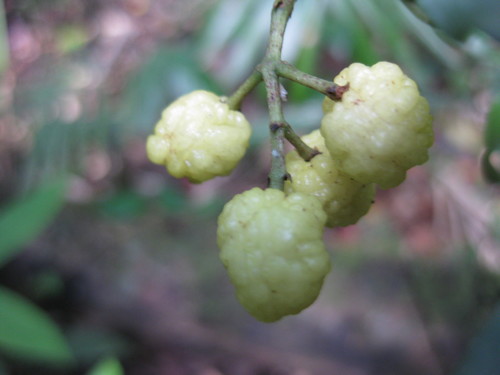
no rights reserved, uploaded by 葉子

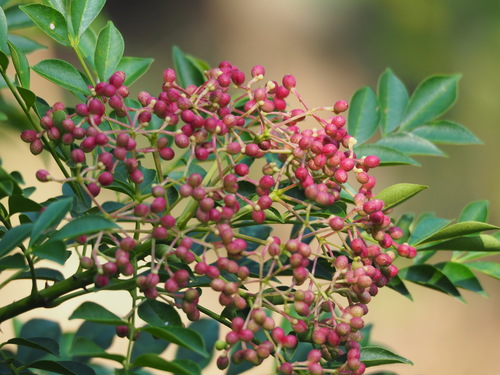
(c) Stargazer, some rights reserved (CC BY-NC)
What to Eat
Edible parts: Seeds, Leaves, Fruit, Spice
The seeds have a sweet peppery taste and are used as a spice. The leaves and fruit are used to flavour food.
Where to Find It
A tropical plant. It grows in mountainous provinces. It is a light demanding tree. It is often in bushy savannah below 1500 m altitude. It is drought tolerant. It is smaller in dry open mountainous regions. In Yunnan.
Asia, China, India, Indochina, Indonesia, Laos, Malaysia, Pacific, Philippines, SE Asia, Taiwan, Thailand, Vietnam,
How to Identify
A small tree or shrub. It grows 8-14 m high. The trunk is 10-20 cm across. The trunk is straight. It has prickles on the branches. These can be straight or curved. The leaves are alternate. They are 5-30 cm long. There are 2-11 pairs of leaflets with a leaflet at the end. The leaf stalk has narrow wings. The leaflets are almost opposite and 1-8 cm long by 103 cm wide. Male and female flowers are separate. The flowers grow on side buds along the flower stalk and this arrangement can be 5-21 cm long. The flowers are 3 mm long. The flowers are white to yellow-green. The fruit is an almost round dry fruit with many seeds. It is 4.5 mm across. These can occur singly or in pairs.
How to Grow
A dioecious species, both male and female forms need to be grown if seed is required.
Propagation: Seed - best sown as soon as it is ripe. Stored seed may requires up to 3 months cold stratification, though scarification may also help. Germination should take place within 6 months, though it might take another 12 months. Prick out the seedlings into individual pots when they are large enough to handle and grow them until large enough to plant out. Cuttings of half-ripe wood. Root cuttings, 3cm long, planted horizontally in pots. Good percentage. Suckers, removed when the plant is dormant, and planted direct into their permanent positions.
Medicinal Uses
A decoction of the stem and bark are used as a stomach tonic and to treat snake bites.
Other Uses
The reddish wood is hard, dense and heavy. It is used to make small tool handles.
Wikipedia
Source ↗Zanthoxylum avicennae is a woody plant in the family Rutaceae.
Production
It is fast growing.
Notes
There are about 200 Zanthoxylum species.
Names & Synonyms
Adas kastela, Bagatambal, Bungi, Cay sen lai, Hoang moc, Kangai, Karangeang, Mu(oof)ng tr(oof)ng, Samirin, Truong la nho
References (5)
- Forest Inventory and Planning Institute, 1996, Vietnam Forest Trees. Agriculture Publishing House p 640
- forests-366202-SI
- Martin, F. W., et al, 1987, Perennial Edible Fruits of the Tropics. USDA Handbook 642 p 78
- PROSEA handbook Volume 13 Spices. p 266
- World Checklist of Useful Plant Species 2020. Royal Botanic Gardens, Kew