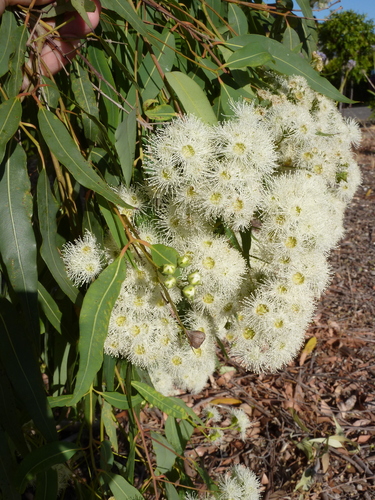
Psidium acutangulum
Mart. ex DC.
Para guava
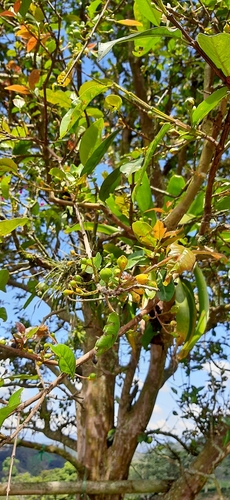
(c) Juan Gabriel Molano, some rights reserved (CC BY-NC), uploaded by Juan Gabriel Molano
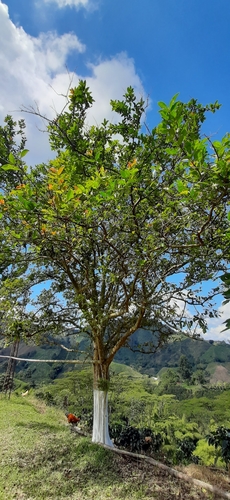
(c) Juan Gabriel Molano, some rights reserved (CC BY-NC), uploaded by Juan Gabriel Molano

(c) Guillaume Léotard, some rights reserved (CC BY-NC)
What to Eat
Edible parts: Fruit
The acidic fruit are eaten raw, made into jellies, or used to make drinks by diluting and sweetening the sour juice, sometimes combined with honey or sugar.
Where to Find It
A tropical plant. It does best in a tropical climate with a high rainfall. It grows naturally in the northern part of South America. It grows in seasonally flooded savannah.
Amazon, Asia, Australia, Bolivia, Brazil*, Central America, Colombia, Costa Rica, Ecuador, Guiana, Guianas, Guyana, Myanmar, North America, Paraguay, Peru, SE Asia, South America, Suriname, USA, Venezuela,
How to Identify
A shrub or small tree. It grows 6-13 m tall. The trunk is 14 cm across. The new branches are angular. The leaves are simple and papery. They are 4-13 cm long. There are 6-9 pairs of side veins. The flowers are in the axils of leaves and can be single or in groups of 2-3. The fruit is medium sized and yellow. They are 5-6 cm across. The pulp is translucent and white-yellow.
Nutrition
| Part | Moisture | kJ | kcal | Protein | Vit A | Vit C | Iron | Zinc |
|---|---|---|---|---|---|---|---|---|
| Fruit | 82.5 | — | — | — | — | 61 | — | — |
How to Grow
Plants are grown from seed. The seeds are collected from ripe fruit that have been allowed to partly decompose and the seeds are washed out under running water. Seeds should be planted fresh in light shade. Seedlings emerge in 20-30 days.
Propagation: Seed - best sown as soon as it is ripe. Sow the seed in a nursery seedbed in partial shade. A germination rate of around 80% can be expected, with the seeds sprouting within 20 - 30 days.
Medicinal Uses
The bark is astringent. A decoction is used to treat diarrhoea. An infusion of the young leaves is used as a remedy for dysentery. The fruits are used to make a tonic. Juice of the young fruits is drunk as treatment for dysentery and upset stomachs.
Other Uses
The wood is of medium-texture, straight-grained, heavy and moderately resistant to wood eating organisms. It is hard to cut and, because of its small dimensions, is generally only used for small turned objects. The wood is used for fuel and to make charcoal.
Wikipedia
Source ↗Psidium acutangulum is a species of tree in the family Myrtaceae. It is native to South America.
Production
Plant growth is rapid. A fruit can weigh up to 250 g.
Other Information
It is also cultivated.
Notes
There are about 100-150 Psidium species. They are mostly tropical or subtropical. The fruit are high in Vitamin C with 400 mg per 100 g of pulp.
Names & Synonyms
Acute angled guava, Ampi yacu, Araca, Aracandiba, Aracandiva, Aracanduba, Araca-pera, Araca piranga, Arari, Araza, Arisa, Goiabarana, Guabira, Guava del campo, Guayaba coronilla, Guayaba del agua, Guayaba del monte, Kirimp, Malaka-chin, Pera, Puca yacu, Sach guayaba, Watragoejaba
References (29)
- Bendezu, Y. F., 2018, Arboles nativos de lad Region Ucayali. Instituto Nacional de Innovacion Agraria. p 246
- Bortolotto, I. M., et al, 2018, Lista preliminar das plantas alimenticias nativas de Mato Grosso do Sul, Brasil. Iheringia, Serie Botanica, Porto Alegre, 73 (supl.):101-116
- Cavalcante, P.B. 1991. Frutas comestíveis da Amazônia. Edições CEJUP (As Britoa acida)
- Etkin, N.L. (Ed.), 1994, Eating on the Wild Side, Univ. of Arizona. p 157
- Facciola, S., 1998, Cornucopia 2: a Source Book of Edible Plants. Kampong Publications, p 159
- Grandtner, M. M. & Chevrette, J., 2013, Dictionary of Trees, Volume 2: South America: Nomenclature, Taxonomy and Ecology. Academic Press p 545
- Hedrick, U.P., 1919, (Ed.), Sturtevant's edible plants of the world. p 530
- Hermandez Bermejo, J.E., and Leon, J. (Eds.), 1994, Neglected Crops. 1492 from a different perspective. FAO Plant Production and Protection Series No 26. FAO, Rome. p16
- Hunter, D., et al, 2019, The potential of neglected and underutilized species for improving diets and nutrition. Planta (2019) 250:709-729
- Kermath, B. M., et al, 2014, Food Plants in the Americas: A survey of the domesticated, cultivated and wild plants used for Human food in North, Central and South America and the Caribbean. On line draft. p 721
- Kiple, K.F. & Ornelas, K.C., (eds), 2000, The Cambridge World History of Food. CUP p 1721 (As Psidium angulatum)
- Lopez-Diago, D. & Garcia, N., 2021, Wild edible fruits of Colombia. Biota ColomBiana 22 (2) p 46
- Lorenzi, H., Bacher, L., Lacerda, M. & Sartori, S., 2006, Brazilian Fruits & Cultivated Exotics. Sao Paulo, Instituto Plantarum de Estuados da Flora Ltda. p 235
- Lorenzi, H., 2009, Brazilian Trees. A Guide to the Identification and Cultivation of Brazilian Native Trees. Instituto Plantarum de Estuados da Flora Ltda. Vol. 3 p 277
- Martin, F. W., et al, 1987, Perennial Edible Fruits of the Tropics. USDA Handbook 642 p 39 (As Britoa acida)
- Morton, Julia F., 1987, Fruits of Warm Climates. Creative Resources Systems, Inc. . p. 366
- NYBG herbarium "edible"
- Paz, F. S., et al, 2021, Edible Fruit Plant Species in the Amazon Forest Rely Mostly on Bees and Beetles as Pollinators. Journal of Economic Entomology, XX(XX), 2021, 1–13
- Prodr. 3:233. 1828
- Recher, P, 2001, Fruit Spirit Botanical Gardens Plant Index. www.nrg.com.au/~recher/ seedlist.html p 3 (As Psidium angulatum)
- Reis, S. V. and Lipp, F. L., 1982, New Plant Sources for Drugs and Foods from the New York Botanical Garden herbarium. Harvard. p 207
- Roa, J. A. G. & Boada, D. S. G., 2018, Fundación para el Fortalecimiento de la Fruticultura y Plantas Alimenticias no Convencionales en Colombia.
- Smith, N., Mori, S.A., et al, 2004, Flowering Plants of the Neotropics. Princeton. Plate 32 (Photo)
- Smith, N., et al, 2007, Amazon River Fruits. Flavors for Conservation. Missouri Botanical Gardens Press. p 204
- Torre, de la, L., et al, 2008, Enciclopedia de las Plantas Útiles del Ecuador. Herbario QCA. Pontificia Universidad Católica del Ecuador. p 469
- Van den Eynden, V., et al, 2003, Wild Foods from South Ecuador. Economic Botany 57(4): 576-603
- van Roosmalen, M.G.M., 1985, Fruits of the Guianan Flora. Utrecht Univ. & Wageningen Univ. p 330
- World Checklist of Useful Plant Species 2020. Royal Botanic Gardens, Kew
- www.colecionandofrutas.org