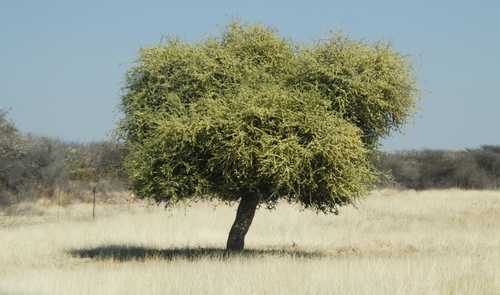
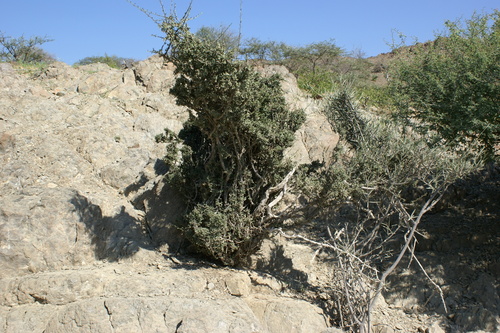
Crateva tapia
L.
Gally Pear, Garlic Pear Tree

(c) FRANCISCO MIGUEL FARRIOLS ESTRADA, some rights reserved (CC BY-NC), uploaded by FRANCISCO MIGUEL FARRIOLS ESTRADA
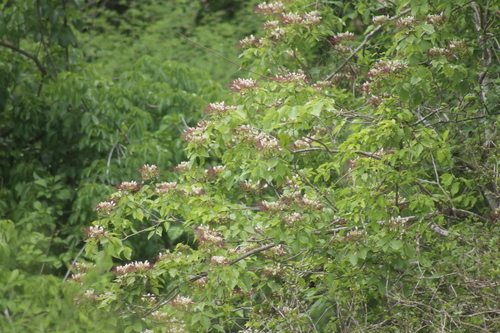
(c) Obed Palagot Echavarria, some rights reserved (CC BY-SA)
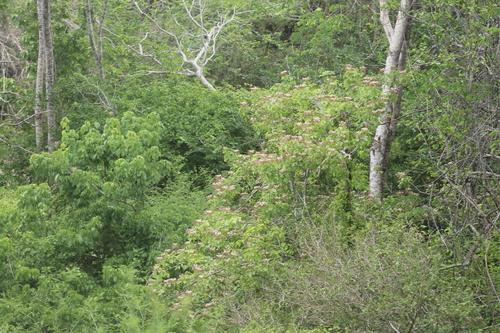
(c) Obed Palagot Echavarria, some rights reserved (CC BY-SA)
What to Eat
Edible parts: Fruit, Spice
Fruit - raw. A succulent pulp with a sweet flavour. The gritty pulp of ripe fruit is edible. The globose fruit is 4 to 9 cm in diameter, green, turning yellow when ripe. The fruits give off a disagreeable odour after they have fallen from the tree and begin to decompose - this has led to people believing that it is not edible.
Known Hazards
Where to Find It
It is a tropical plant. It grows in damp areas near the seashore. It grows from sea level to 1200 m altitude. In Argentina it grows below 500 m above sea level. It suits hardiness zones 10-12.
Argentina, Belize, Bolivia, Brazil*, Central America, Colombia, Costa Rica, Curacao, Dominican Republic, Ecuador, El Salvador, Guatemala, Guiana, Guianas, Guyana, Honduras, Jamaica, Mexico, Nicaragua, North America, Panama, Paraguay, Peru, South America, Suriname, Venezuela, West Indies,
How to Identify
A tree which grows 5-25 m high. The bark of the trunk is grey and smooth. The leaves have 3 leaflets. The leaflets are elliptic and taper to a point. The leaflets are 5-15 cm long and 3-7 cm wide. The flowers are in a cluster. They have a smell. The petals are enlarged and creamy white. The stamens are purple. The fruit are 4-5 cm across and greenish orange when ripe. The outer layer is leathery. The flesh is whitish and with many seeds. The seeds are 0.8 cm across. The fruit have a bad smell but are edible.
How to Grow
Plants can be grown from seed. The seed need cold treatment. Plants can also be grafted. The seed from ripe fruit germinate in 2-3 weeks.
Propagation: Seed - best sown as soon as it is ripe in a sunny position in a nursery seedbed. Germination rates are usually below 50%, with the seed sprouting within 2 - 3 weeks.
Medicinal Uses
The bark, fruits and leaves are used medicinally. The bark is a bitter tonic and febrifuge. It is used in poultices to treat whitlow. The stembark contains beta-amyrin, lupeol and betulinic acid.
Other Uses
The wood ashes are a rich source of potash. The heartwood is yellow; the thick band of sapwood is nearly white, sometimes becoming yellowish upon exposure to light. Texture is medium; grain is very fine; it has an odour suggestive of garlic. It is only moderately hard; moderately heavy; not very strong fairly; brittle; not durable. It is very easy to work. A low value wood, it is suitable for minor carpentry, is used in rural construction, for fence posts, boxes, traditional canoes etc. The wood is a source of pulp for making paper. A natural pioneer species within its native range, it is suitable for use in reforestation projects of degraded areas. Healthy looking plants are seen as an indication of fertile soils. The flowers are a good source of honey for bees.
Wikipedia
Source ↗Crateva tapia, commonly known as toco, payaguá, naranjuelo, or beach apple, is a member of the genus Crateva, belonging to the family Capparaceae. It is native from Mexico through Central America into South America as far as south Brazil.
Production
It is very fast growing.
Notes
There are 6 Crateva species. This is possibly now in the Brassicaceae family.
Names & Synonyms
Bat and ball, Cabaca, Cabaceira-do-pantanol, Cabeceira, Ishiri, Pan y agua, Pau-d'alho, Spider flower tree, Tapia fruit, Tapia, Trapia
References (25)
- Adams, C. D. , Flora of Jamaica,
- Bendezu, Y. F., 2018, Arboles nativos de lad Region Ucayali. Instituto Nacional de Innovacion Agraria. p 82
- Bortolotto, I. M., et al, 2018, Lista preliminar das plantas alimenticias nativas de Mato Grosso do Sul, Brasil. Iheringia, Serie Botanica, Porto Alegre, 73 (supl.):101-116
- Condit, R., et al, 2011, Trees of Panama and Costa Rica. Princeton Field Guides. p 118
- Cruz, M. P., et al, 2014, Local perceptions and consumption of native wild edible plants from seasonal dry forests in Brazil. Journal or Ethnobiology and Ethnomedicine 10:45
- Flores, Y., 2018, Arboles nativos de la Region Ucayili. Estacion Experimental Agragia Pucallpa. Pucallpa Peru, 375 p. p 82
- Fouqué, A. 1972. Espèces fruitières d'Amérique tropicale. Institut français de recherches fruitierès outre-mer
- Grandtner, M. M. & Chevrette, J., 2013, Dictionary of Trees, Volume 2: South America: Nomenclature, Taxonomy and Ecology. Academic Press p 173
- Hedrick, U.P., 1919, (Ed.), Sturtevant's edible plants of the world. p 226
- Llamas, K.A., 2003, Tropical Flowering Plants. Timber Press. p 151
- Lopez-Diago, D. & Garcia, N., 2021, Wild edible fruits of Colombia. Biota ColomBiana 22 (2) p 34
- Lorenzi, H., 2002, Brazilian Trees. A Guide to the Identification and Cultivation of Brazilian Native Trees. Vol. 02 Nova Odessa, SP, Instituto Plantarum p 76
- Lorenzi, H., Bacher, L., Lacerda, M. & Sartori, S., 2006, Brazilian Fruits & Cultivated Exotics. Sao Paulo, Instituto Plantarum de Estuados da Flora Ltda. p 98
- Martin, F. W., et al, 1987, Perennial Edible Fruits of the Tropics. USDA Handbook 642 p 90
- Nascimento, V. T. D., et al, 2013, Knowledge and Use of Wild Food Plants in Areas of Dry Seasonal Forests in Brazil. Ecology of Food and Nutrition, 52:317–343
- Nunes, E. N., et al, 2018, Local botanical knowledge of native food plants in the semiarid region of Brazil. Journal of Ethnobiology and Ethnomedicine (2018) 14:49
- Omawale, 1973, Guyana's edible plants. Guyana University, Georgetown p 4 (As Crateva gynandra)
- Roa, J. A. G. & Boada, D. S. G., 2018, Fundación para el Fortalecimiento de la Fruticultura y Plantas Alimenticias no Convencionales en Colombia.
- Scarpa, G. F., 2009, Wild food plants used by the indigenous peoples of South American Gran Chaco: A general synopsis and intercultural comparison. Journal of Applied Botany and Food Quality 83:90-101
- Segura, S., et al, 2018, The edible fruit species in Mexico. Genet Resour Crop Evol (2018) 65:1767–1793
- Seidemann J., 2005, World Spice Plants. Economic Usage, Botany, Taxonomy. Springer. p 120
- Smith, N., Mori, S.A., et al, 2004, Flowering Plants of the Neotropics. Princeton. Plate 10 (Photo)
- Sp. pl. 1:444. 1753
- TodaFruta.com.br
- www.colecionandofrutas.org