Aspalathus linearis
(Burm. f.) R. Dahlgren
Rooibos tea
(c) Felix Riegel, some rights reserved (CC BY-NC), uploaded by Felix Riegel

(c) Charles Stirton, some rights reserved (CC BY-SA), uploaded by Charles Stirton
(c) Tony Rebelo, some rights reserved (CC BY-SA), uploaded by Tony Rebelo
What to Eat
Edible parts: Leaves - tea
Edible Parts: Edible Uses: Condiment Tea A tea made from the dried fermented leaves tastes similar to oriental tea made from Camellia sinensis. It is less astringent, however, due to the lower tannin content. It is caffeine-free, but has a higher content of fluoride which might help to protect against tooth decay. Recent research has shown that this tea contains a substance similar to superoxide dismutase, an antioxidant compound that is thought to retard the ageing process. The leaves and stems are harvested in the summer, fermented and sun dried for later use. The leaves are sometimes used as a flavouring in foods and in baking.
Where to Find It
It is a Mediterranean climate plant. It grows in the Western Cape Province of South Africa. It suits cold wet winters and hot dry summers. It grows in areas with a rainfall of 300-350 mm per year. It can tolerate frost. It grows above 500 m above sea level. It can grow in arid places.
Africa, South Africa, Southern Africa,
How to Identify
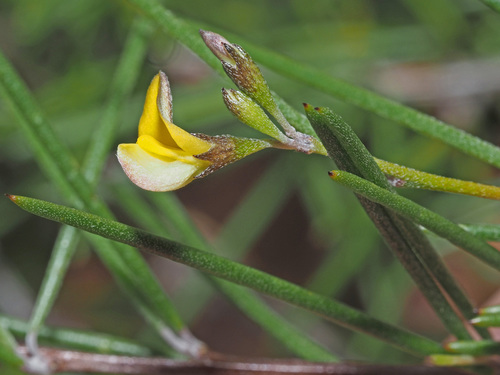
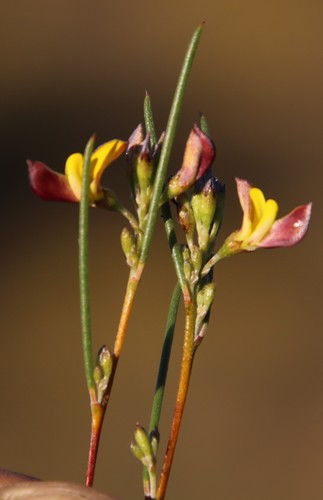
A shrub. It grows 2 m high. It can be upright or weeping. The branches have a red tinge. The leaves are needle-shaped and bright green. They turn reddish-brown when processed. The flowers are small and yellow and pea shaped. The fruit are single seeded pods.
Nutrition Score: 45/100
| Part | Moisture | kJ | kcal | Protein | Vit A | Vit C | Iron | Zinc |
|---|---|---|---|---|---|---|---|---|
| Leaves | 8 | 859 | 206 | 6.3 | — | — | — | — |
How to Grow
The plants are grown from seed. The seed need treatment before they will grow. Seeds are treated with acid then warm water for 12 hours to break the hard seed coat. The seedlings are transplanted into deep, acidic sandy soil.
Propagation: Seed - sow late spring in a greenhouse covering the seed with about 10mm of soil. It will probably be beneficial to pre-soak the seed for 12 hours in warm water prior to sowing. Prick out the seedlings into individual pots of well-drained sandy soil as soon as they are large enough to handle. Grow them on in the greenhouse for at least their first winter and plant them out in late spring or early summer after the last expected frosts. It will probably be wise to give the plants protection from the cold and from excessive rain for at least their first winter outdoors. Cuttings of half-ripe wood in a closed frame in early summer.
Medicinal Uses
Antipsoriatic Antispasmodic Eczema Tonic Rooibos was traditionally used by the Bushmen and Hottentots of South Africa and is becoming increasingly popular in the West as a pleasant tasting tea that also has health benefits. A tea made from the leaves and stems of rooibos is generally beneficial to the digestive system and relaxes spasms, it has been used in the treatment of vomiting, diarrhoea and other mild gastric complaints. It has also been shown to be of benefit when used internally and externally in the treatment of a wide range of allergies especially milk allergy, eczema, hay fever and asthma in infants.
Other Uses
None known Special Uses Nitrogen Fixer
Wikipedia
Source ↗An evergreen shrub reaching 2 m tall, hardy to UK zone 9. It flowers from July to August and is hermaphroditic. The plant fixes nitrogen, grows in light sandy to medium loamy well-drained soils, and tolerates mildly acid to neutral pH. It requires full sun and can tolerate drought conditions.
Production
Plants are topped or rounded after 2 years and first harvests are made after 3 years. Plants can last for 6-18 years. The leaves are gathered in 30-45 cm long branches then carved into 1 cm long pieces, These are crushed in rollers to release the sap. The tea is put in heaps and covered for 8-11 hours to allow it to sweat. It is then spread out to dry and sorted.
Other Information
It is grown commercially in South Africa for tea.
Notes
It contains no caffeine. Ii is low in tannin.
Names & Synonyms
Kaffree, Redbush tea, Red tea
References (18)
- Bircher, A. G. & Bircher, W. H., 2000, Encyclopedia of Fruit Trees and Edible Flowering Plants in Egypt and the Subtropics. AUC Press. p 45 (As Aspalathus cedarbergensis)
- Brown, D., 2002, The Royal Horticultural Society encyclopedia of Herbs and their uses. DK Books. p 135
- Facciola, S., 1998, Cornucopia 2: a Source Book of Edible Plants. Kampong Publications, p 102
- Fox, F. W. & Young, M. E. N., 1982, Food from the Veld. Delta Books. p 225
- ILDIS Legumes of the World http:www;ildis.org/Legume/Web
- Kew Plants of the World On line
- Opera Bot. 9(1):213, 283. 1963
- Royal Botanic Gardens, Kew (1999). Survey of Economic Plants for Arid and Semi-Arid Lands (SEPASAL) database. Published on the Internet; http://www.rbgkew.org.uk/ceb/sepasal/internet [Accessed 28th April 2011]
- Ruiters-Welcome, A. K., 2019, Food plants of southern Africa. Ph.D. thesis. Univ. of Johannesburg p 56
- Sprent, J. I., et al, 2009, African legumes: a vital but under-utilized resource. Journal of Experimental Botany. Vol. 61 No. 5 pp. 1257-1265
- van Wyk, B., 2005, Food Plants of the World. An illustrated guide. Timber press. p 71
- van Wyk, B., 2000, A Photographic Guide to Wild Flowers of South Africa. Struik Nature. p 40
- van Wyk, Be., & Gericke, N., 2007, People's plants. A Guide to Useful Plants of Southern Africa. Briza. p 100
- van Wyk, B-E., 2011, The potential of South African plants in the development of new food and beverage products. South African Journal of Botany 77 (2011) 857–868
- van Wyk, Ben-Erik, 2019, The diversity and multiple uses of southern African legumes. Australian Systematic Botany, 2019, 32, 519–546
- Wehmeyer, A. S, 1986, Edible Wild Plants of Southern Africa. Data on the Nutrient Contents of over 300 species
- Wiersema, J. H. & Leon, B., 2013, World Economic Plants. A Standard Reference CRC Press. 2nd Ed. p 76
- World Checklist of Useful Plant Species 2020. Royal Botanic Gardens, Kew




