Cordia tetrandra
Aubl.
Clammy cherry, Four stamen cordia
(c) Sébastien SANT, some rights reserved (CC BY-NC), uploaded by Sébastien SANT

(c) Guillaume Léotard, some rights reserved (CC BY-NC)

(c) Guillaume Léotard, some rights reserved (CC BY-NC)
What to Eat
Edible parts: Fruit
The fruit pulp is eaten raw, and is especially popular with children.
Where to Find It
A tropical plant. It grows in damp or wet areas near the coast.
Barbados, Bolivia, Brazil, Central America, Colombia, Ecuador, French Guiana, Guianas, Guyana, Panama, Peru, South America, Suriname, Venezuela,
How to Identify
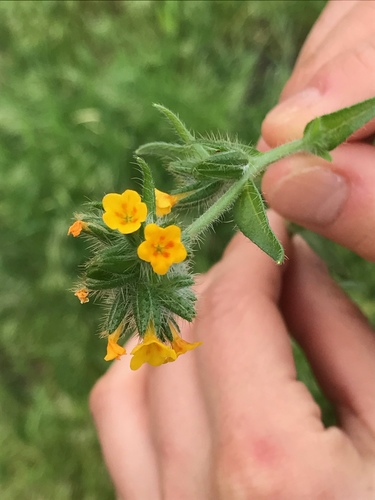
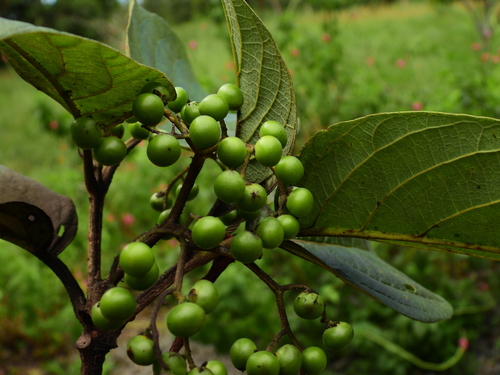
A tree. It grows 18 m tall. The flowers are at the ends of branches. The flower groups are 10-30 cm wide. The fruit is a flattened oval shape. It is 0.8 cm across. It is pale yellow.
How to Grow
A dioecious species, both male and female forms need to be grown if fruit and seed are required.
Medicinal Uses
A decoction of the dried, finely crushed leaves in water is used as a treatment for high blood pressure. The leaf extract is used to treat stomach ailments. Smoke from the burning bark is used in fumigations to disinfect dwellings. (As Cordia umbraculifera).
Other Uses
The sticky fruit pulp is used as a glue to paste paper, kites and books. The sticky fruit pulp is used as a coagulant. The pale brown wood has interlocked or straight-grained; it is medium- or rather coarse-textured ; light in weight; easy to cut, brittle, and takes a highly lustrous polish; checks in drying. It is used for civil construction, internal works, carpentry etc.
Other Information
The fruit are especially eaten by children.
Notes
There are about 300 Cordia species.
Names & Synonyms
Kiiki, Laagland-tafrabon, Yuwanaro
References (7)
- Fouqué, A. 1972. Espèces fruitières d'Amérique tropicale. Institut français de recherches fruitierès outre-mer (ifac)
- Grandtner, M. M. & Chevrette, J., 2013, Dictionary of Trees, Volume 2: South America: Nomenclature, Taxonomy and Ecology. Academic Press p 163
- Kermath, B. M., et al, 2014, Food Plants in the Americas: A survey of the domesticated, cultivated and wild plants used for Human food in North, Central and South America and the Caribbean. On line draft. p 263
- Omawale, 1973, Guyana's edible plants. Guyana University, Georgetown p 14
- Roa, J. A. G. & Boada, D. S. G., 2018, Fundación para el Fortalecimiento de la Fruticultura y Plantas Alimenticias no Convencionales en Colombia.
- van Roosmalen, M.G.M., 1985, Fruits of the Guianan Flora. Utrecht Univ. & Wageningen Univ. p 62
- Vásquez, Ch. R. y S.G. Coimbra. 2002. Frutas silvestres comestibles de Santa Cruz, 2da edición.Editorial FAN, Santa Cruz de la Sierra, Bolivia.